-
Welcome to Cultural Binge

The rating system is simple:
★★★★★ – Terrific, world-standard. Don’t miss.
★★★★ – Great, definitely worth seeing.
★★★ – Good. Perfectly entertaining. Recommended. Individual mileage may vary.
★★ – Fine. Flawed and not really recommended, but you may find something to appreciate in it.
★ – Bad (& possibly offensive).
See more reviews over at The Queer Review.
Instagram: @culturalbinge
Substack: culturalbinge.substack.com
Email: chad at culturalbinge.com
-
Cost of Living (Sydney Theatre Co.) ★★★½

Written by Martyna Majok. Sydney Theatre Company. Wharf 1 Theatre. 18 Jul – 18 Aug, 2024.
If you cringe at the mention of the phrase “cost of living” these days, or are thinking STC is just remarkably quick to get a play about the current economic moment on the stage, then I’m here to gently let you down – Cost of Living is not a play about inflation or Coles & Woolies gouging consumers. No, this is Martyna Majok’s 2018 Pulitzer Prize winning play about four people navigating complex physical, emotional and financial relationships. Okay, I lied, it is kinda about modern economics…
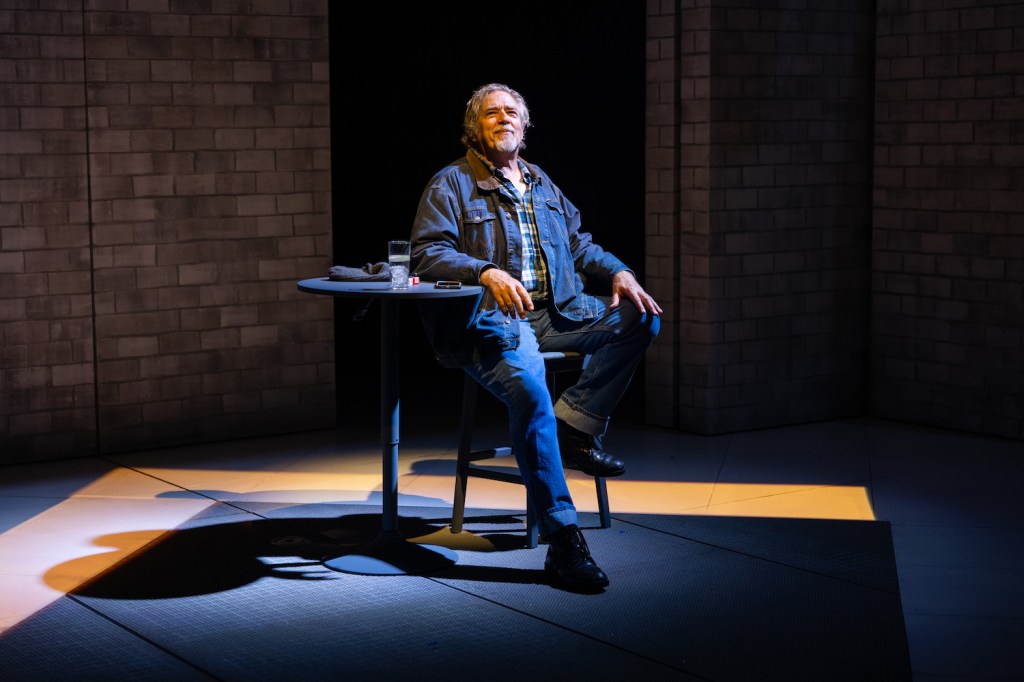
Phillip Quast. Photo: Morgan Roberts We first meet Eddie (Phillip Quast), a former truck driver sitting in a bar telling a story about how he still sends his departed wife text messages. Next we see John (Dan Daw) interviewing Jess (Zoe de Plevitz) to take the role of his carer. He is well off and fiercely intelligent, but requires help with day to day activities due to his cerebral palsy. Finally we meet Ani (Kate Hood), a recent quadriplegic with a fiery temper and sharp wit who reluctantly accepts Eddie’s help.
The “cost” of living of the title is that of carers and those who need external care. Majok carefully navigates these four characters with respect and careful consideration as they tie a complex knot of power dynamics and friendships. Ani and John may present their difficulties more clearly, but Eddie and Jess are just as in need of support in many ways.
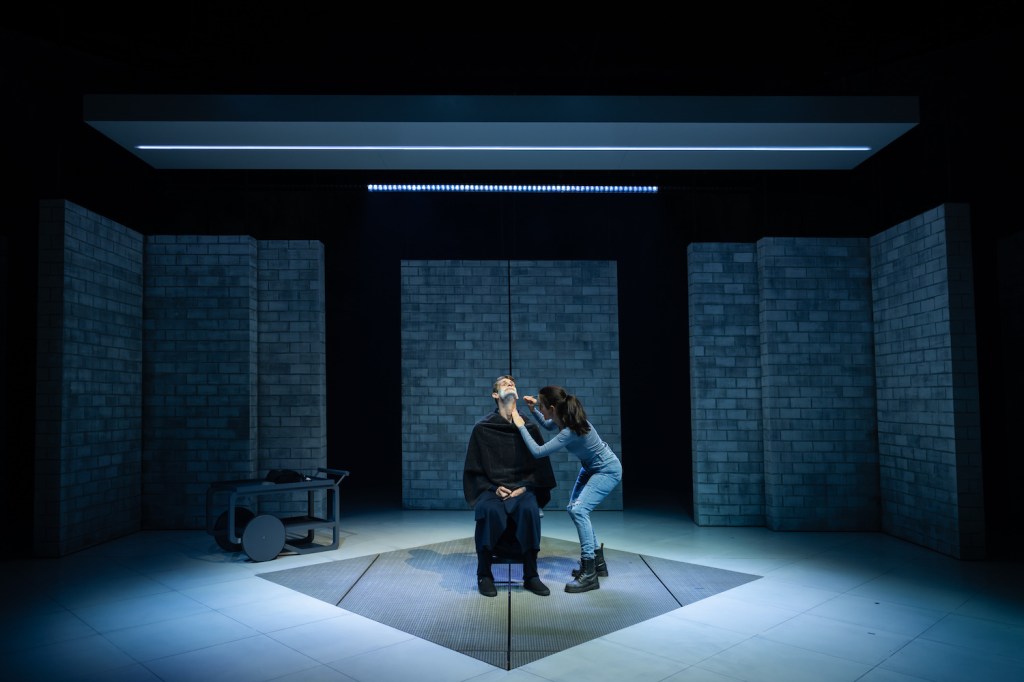
Dan Daw and Zoe de Plevitz. Photo: Morgan Roberts Designer Michael Scott-Mitchell has produced a set that is concrete-chic or brutally depressing, depending on the scene. Aided by lighting by John Rayment and sound design by Guy Webster, the presentation does its best to accent the story and not draw attention to itself.
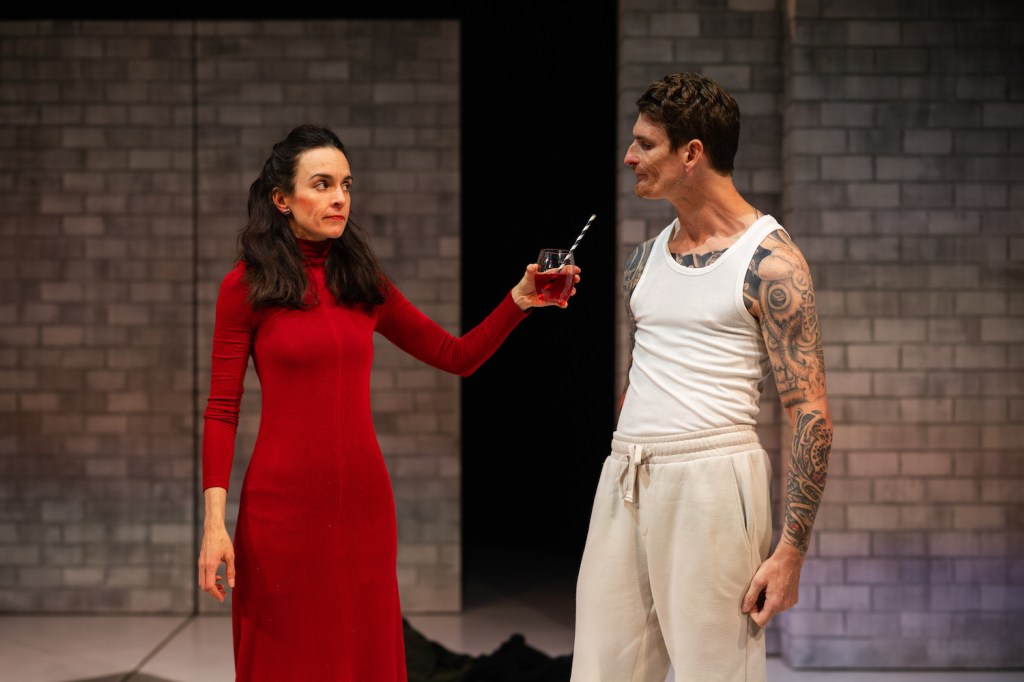
Zoe de Plevitz and Dan Daw. Photo: Morgan Roberts The performances are excellent across the board. Dan Daw (who is also the show’s co-director) makes John an inquisitive, frank and bold character who pushes the boundaries of his relationship with Jess, who is clearly attracted to him (but whether it is to his intellect, his body or his wealth is anyone’s guess – and that ambiguity makes the tension intoxicating). In comparison, the abrasive warmth of Quast’s Eddie and Hood’s Ani is instantly charming. Kate Hood is easily the show’s standout giving us a vibrant and exciting performance.
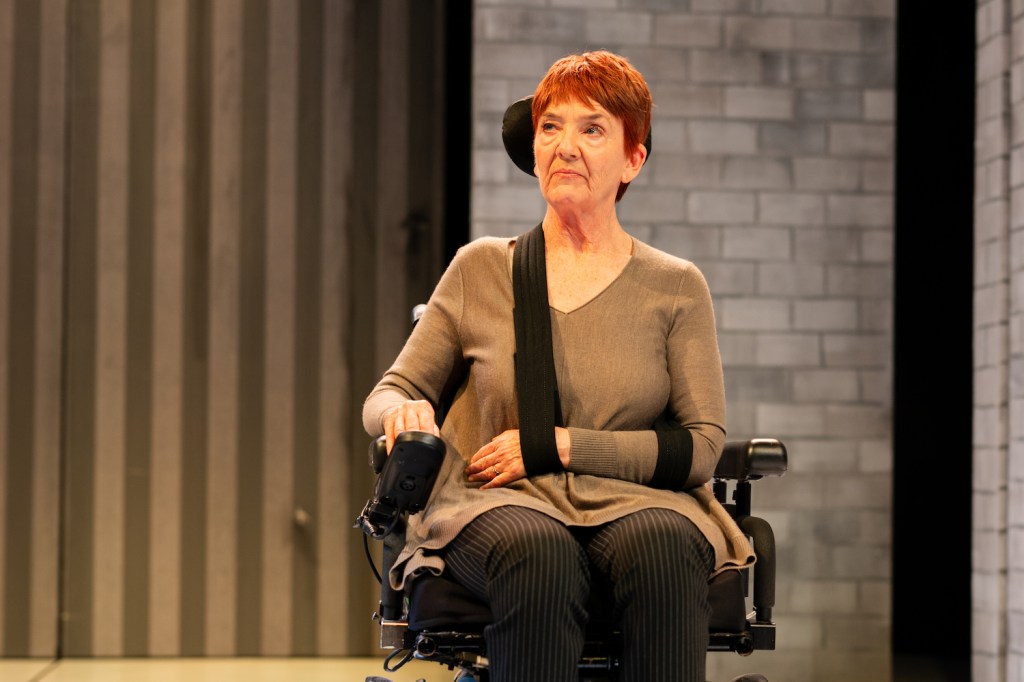
Kate Hood. Photo: Morgan Roberts It’s impressive how Majok presents each character in ways that bucks any sense of stereotype. John may suffer from cerebral palsy but he is the smartest, richest character on stage. Jess is desperate for work despite her high level of education. Ani may be the most physically confined, but her personality fills the theatre. Majok refuses to treat any of the characters as victims or helpless.
The neat resolution might strain credulity but it thematically hits the nail on the head. The breathless reviews from the play’s Broadway run speak more to the American love of a neat resolution rather than any sense of verisimilitude, but it is a grace note on an inquisitive play that delivers an ultimately safe look at a different side of life.
-
Little Women (Hayes) ★★★
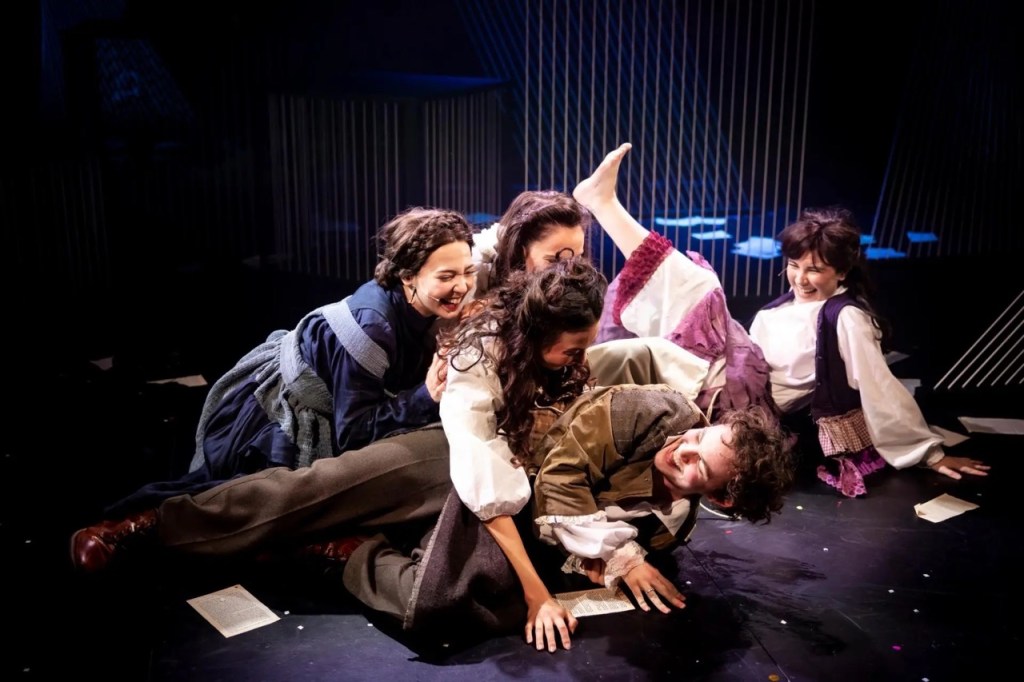
Book by Allan Knee. Music by Jason Howland. Lyric by Mindi Dickstein. Based on the novel by Louisa May Alcott. Hayes Theatre. 12 Jul – 11 Aug, 2024.
Little Women is beloved, both the novel and the 2019 film adaptation by pre-Barbie Greta Gerwig. The new revival at the Hayes strips it back to the core with an abstract staging that puts the focus on the words and vocals.

Molly Bugeja, Kaori Maeda-Judge, Madeleine Betts & Shannen Alyce Quan. Photo: Grant Leslie Photography. As a celebration of strong-willed young women defying the social graces of the time, Little Women has proven to be an enduring hit, but the musical version has had a rougher ride of it. A four month Broadway run didn’t set the box office aflame, despite the presence of Sutton Foster, but over the years it’s held onto a cult following thanks to its quirky, singable score. In many ways, it’s a better concert album than a full show, which works in the favour of this Hayes production.

Shannen Alyce Quan. Photo: Grant Leslie Photography. Shannen Alyce Quan has been a great actress in search of a suitable role for a while now. Her recent parts in shows like The Dismissal and Metropolis didn’t quite know what to do with her, and Belvoir’s Holding The Man showed she had the acting and comedic chops to do more than she was being given. A role like Jo, designed for a leading lady to step into, gives her the space required to let both her vocals and acting shine.
The full cast cut sharp, defined characters keeping each of the March sisters truly unique. Under the direction and very energetic choreography of Amy Campbell, the cast excel at highlighting the immaturity of each of the characters, which goes a long way toward smoothing out some of the quick shifts required in reducing the novel into a musical.

Kaori Maeda-Judge & Emily Cascarino. Photo: Grant Leslie Photography. Poor Vitoria Hronopoulos is stuck with Amy, one of the most annoying characters in literature, managing to make her suitably annoying and dislikable (she is genuinely one of my most loathed literary creations). Lawrence Hawkins shines as the charming but vacuous Laurie, and Emily Cascarino gives a stoic grace to Marmee despite clearly being too young for the role. The presence of Peter Carroll adds some gravitas to the young cast.
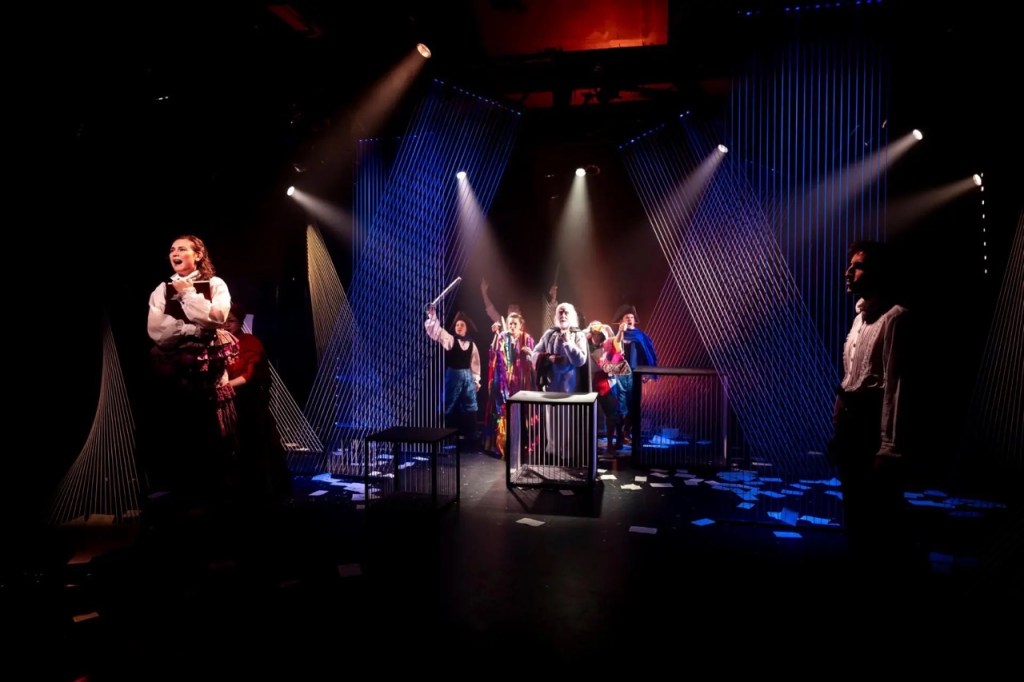
Full Company of Little Women. Photo: Grant Leslie Photography. Tanwee Shrestha’s set design is a real standout for visual impact. It’s definitely not what you expect when you walk into the space and I applaud a bold choice. I’ll be honest, I don’t think it works to the show’s advantage however. In a story full of familial warmth and life, it comes across cold and inhuman. Lily Mateljan’s costumes mix the make-shift with striking silhouettes, giving the March girls quirky, individual looks but does few favours to the shorter members of the cast who look frumpy in an excess of frills.
But there are limitations to how a musical can replicate the book, and key moments underwhelm (Amy falling into the ice, for example, has very little impact) and at times the show’s book seems to simply step through the novels major moments without any thought to pacing the story out for a satisfying musical experience. It’s saved by Howland and Dickstein’s tunes which are melodic and playful. It sticks to a fairly standard musical theatre recipe, and the result is pleasing, if not exceptional music.
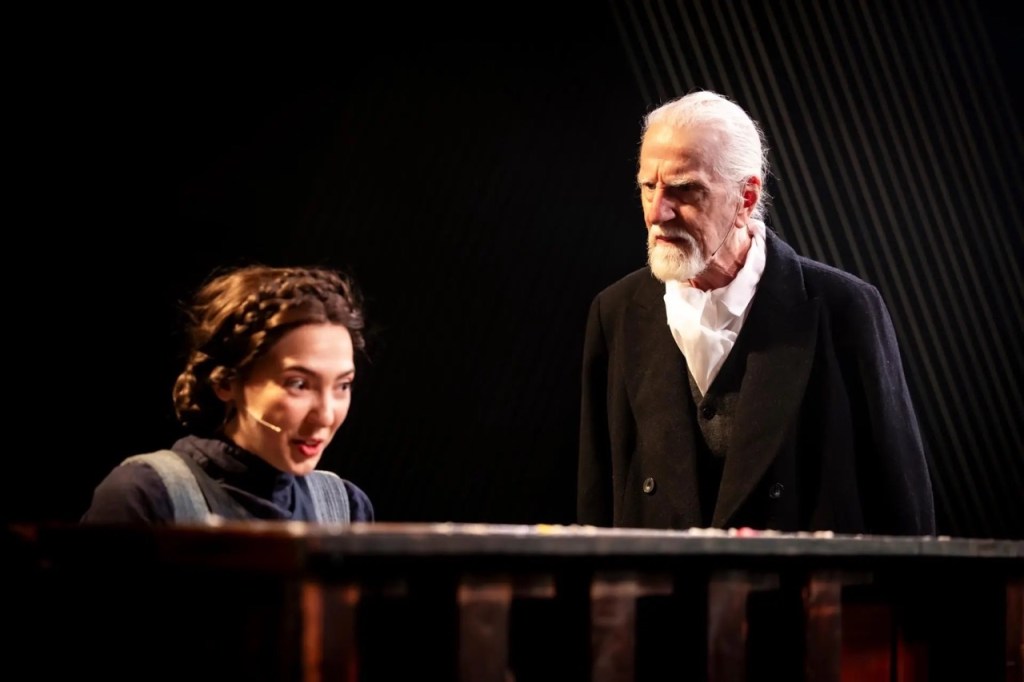
Molly Bugeja & Peter Carroll. Photo: Grant Leslie Photography. The real selling point here is hearing Shannen Alyce Quan belt out the big musical theatre numbers like “Astonishing” and she provides your money’s worth of vocals. As we expect all the vocals are excellent and make the most of the material. For a mediocre musical, this production pushes it to be more than it is and almost succeeds.
-
Too Human (KXT on Broadway) ★★½

Written by Michael McStay. KXT on Broadway. Jul 5 – 20, 2024.
Part ‘Percy Jackson’, part 80s teen sex farce, Too Human is funny as long as you don’t think about it too deeply but don’t worry, you’re not supposed to think deeply about it.
14-year old Monty (Rhiaan Marquez) is being bullied at school. The daughter of a mermaid and a minotaur, she looks freakishly different from everyone else in her community. While they are all human/animal hybrids, she is simply… human. In a quest for popularity, Monty adopts a disguise as an ibis named Danielle to attract the leonine bad boy Harry (Lachie Pringle) and earn some cred in the school (with some support from her mum Beverly (Luisa Galloway) who is missing her former life as a siren). But will Monty sell out her best friend Lewis (Rachel Seeto) for a chance at scoring a pash at the Year 8 disco?

Rhiaan Marquez. Photo: Phil Erbacher. A lot of the time, Too Human feels like a comedy sketch that has been stretched beyond its premise. Even at just over 90 minutes in duration, it quickly loses its punch and becomes predictable. The juvenile humour is simply that, and while the odd one-liner may tickle your knowledge of antiquity, to call it “sophomoric” would be giving the gags more academic credit than they’re due. For all the banter, you can’t avoid the fact that jokes about fingering a 14 year old school-girl aren’t funny or clever.
Coupled with a number of performances that seemed to come straight from the Ministry of Silly Voices (vaguely amusing for the first 10 minutes and then progressively more grating as the show went on) any attempts at subtlety got completely trashed. Director Sammy Jing keeps things moving like a madcap comedy which goes a long way to glossing over the weaknesses of the script, but the pantomime over-acting was hard to see past. This is more a personal thing for me, but I can’t stand “look at me, I’m being funny” performances.
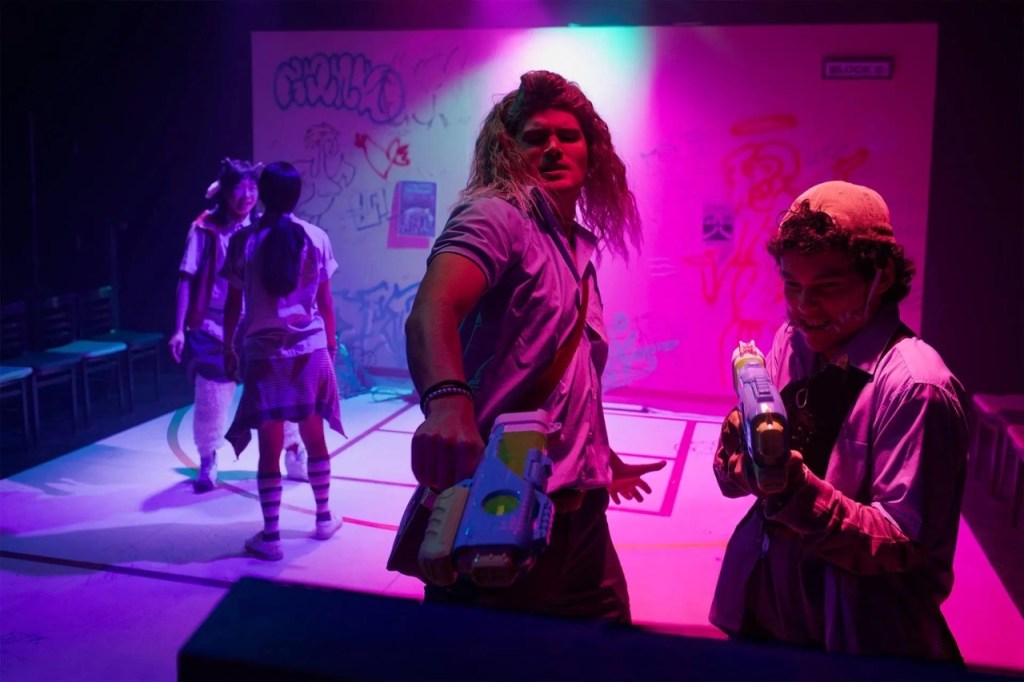
Rachel Seeto, Rhiaan Marquez, Lachie Pringle & Jasper Lee-Lindsay. Photo: Phil Erbacher In the midst of this, Jasper Lee-Lindsay (who I last saw in Belvoir’s Blessed Union in 2023) steals the show as Andy, a moody, angst ridden crocodile poet, with frustratingly small upper arms. Of all the performances on stage, he pitches his ridiculousness at just the right level to let us feel real emotions for Andy as he yearns for his hidden crush. The other real standout is Production Designer Hannah Tayler’s costumes which are inventive and hilarious in their own right.

Jasper Lee-Lindsay & Mason Phoumirath. Photo: Phil Erbacher The script does provide some occasionally fun moments and clever twists based on the mystical/animalistic premise, but sometimes I was left wondering if it had been really thought through. The ending particularly paints Monty in a terrible, narcissistic light to the point where I simply didn’t give a shit what happened to this horrid, entitled teen. Her friends deserve better than her. This wasn’t aided by the fact I’d recently seen Pixar’s Inside Out 2 which walks a similar “will-teen-girl-sell-out-friends-to-be-popular” trajectory but does it with a lot more insight.
For all the bits of witty dialogue, and there are some great lines and sly jokes, Too Human isn’t human enough. There is a lack of genuine character building which robs the play of any resonance, leaving us with nothing more than first-draft dick jokes and over-acting. Too Human takes inspiration from the teen sex comedies of the 80s, but doesn’t elevate them at all. In fact it seems to have dragged up all the bits we should have left behind on the way.
-
Sunday Service (Gingers) ★★★★★
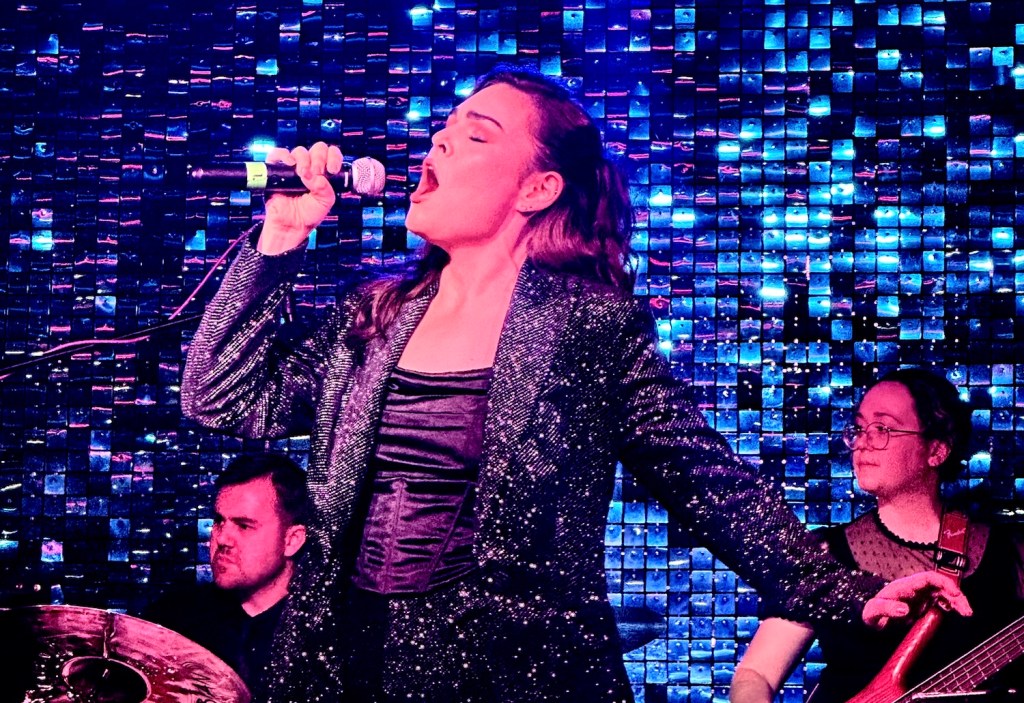
Produced by Sydney Cabaret. Ginger’s at The Oxford. Sun 14 & 28 Jul, 2024.
I don’t believe in god but I do believe in Musical Theatre, and the new Sunday Service, run by Sister Sarah Murr and Sydney Cabaret is a revelation. Some of the most dynamic young lead performers from shows like Miss Saigon, & Juliet, Gentlemen Prefer Blonds, Zombies: The Musical and more, assembled like the Avengers of Sydney Musical Theatre, for a raucous night of tunes. This may not have been a promotional event for upcoming shows, but you’ll be rushing to book for In The Heights, Dear Evan Hansen, Well Behaved Women and more after hearing this group.
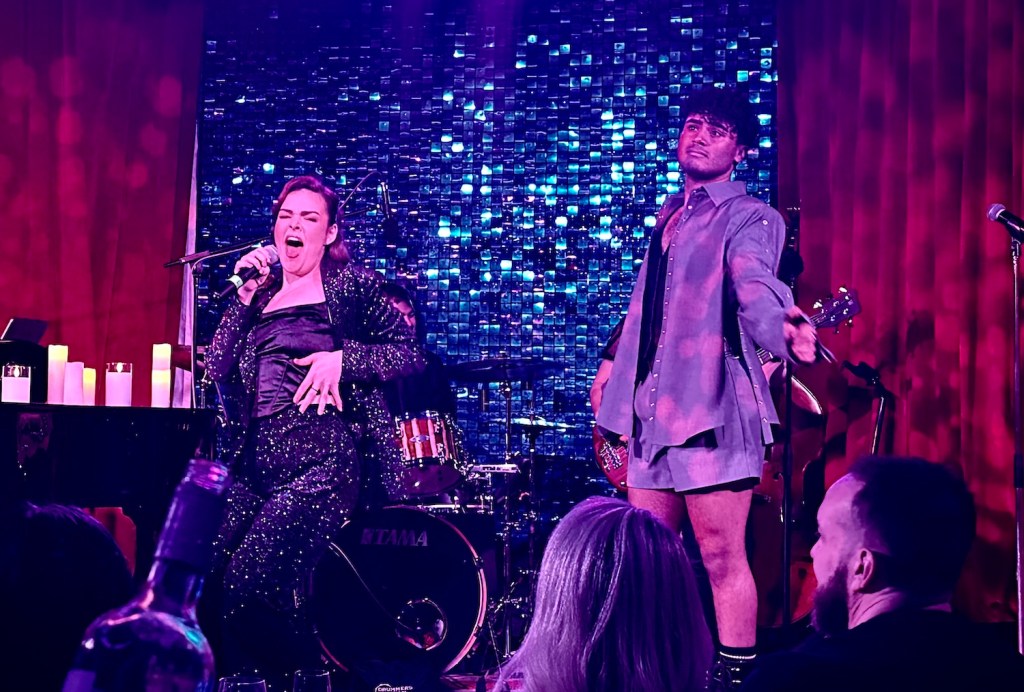
Sarah Murr & Jacob Rozario. Photo: Chad Armstrong. In what felt less like a performance, and more like a group of friends throwing on a show for fun, Murr steered the ship with cheeky banter and lashings of mutual adoration. Murr really is the glue that holds the night together. As one of the hardest working women in musical theatre (she just came off & Juliet, playing Juliet’s mother and covering both Anne Hathaway and Angelique) Murr’s personal connection to the other performers keeps the tone warm and friendly.
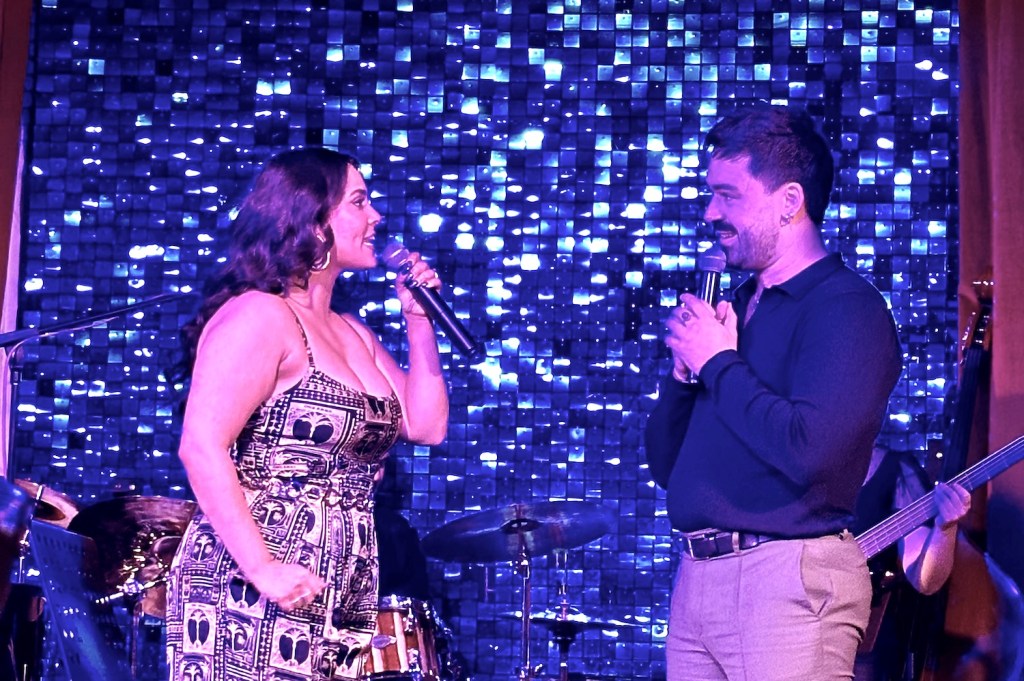
Olivia Vàsquez & Ryan Gonzalez. Photo: Chad Armstrong. Kicking the night off with some Jesus Christ Superstar (proving she’d make a great Jesus), and a bit of Laura Murphy’s The Lovers (recording available for pre-save now), Murr set the tone. Next Olivia Vàsquez knocked out some Whitney Houston, before being joined by Zombies: The Musical stand out Ryan Gonzales for a teaser of their upcoming show, Lin Manuel Miranda’s breakout hit In The Heights. Gonzalez then took us back to the classics with “Somewhere That’s Green” from Little Shop of Horrors. Murr brought up fellow & Juliet alum (& upcoming Dear Evan Hansen cast member) Jacob Rozario for a riotous rendition of “Take Me or Leave Me” from Rent, before Rozario gave us “My Days” from the current Broadway show, The Notebook (nice to see some very modern shows in the mix).
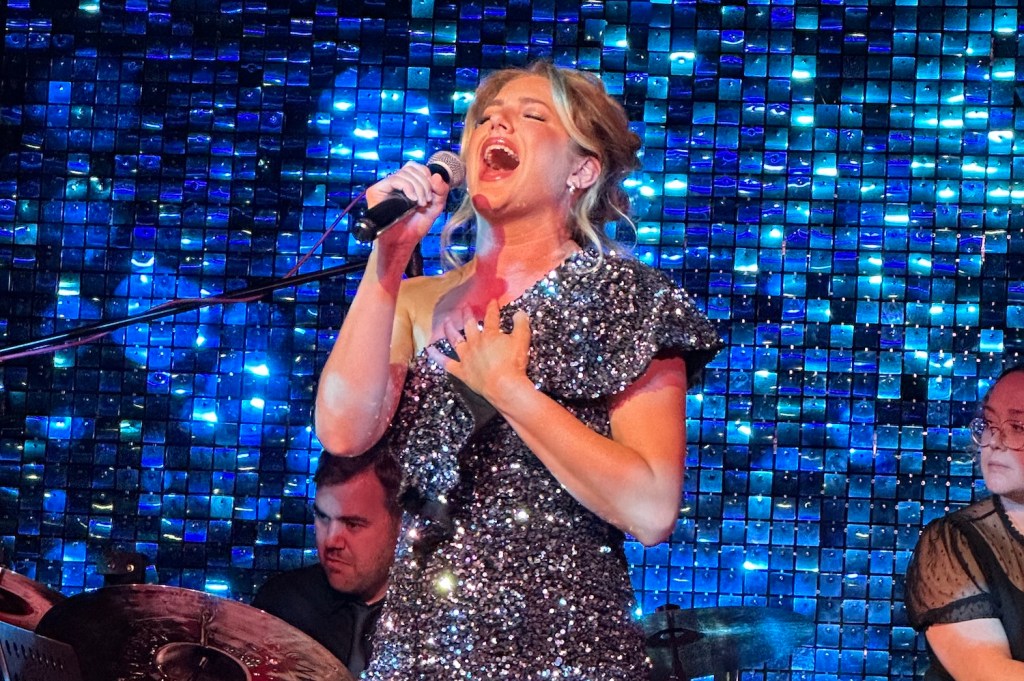
Georgina Hopson. Photo: Chad Armstrong. Phantom of the Opera/Gentlemen Prefer Blondes star Georgina Hopson blew the house down with “Every Night at Seven” and “Out There” before Nigel Huckle, fresh from the Miss Saigon tour, threw in “What is it about Her?” from Andrew Lippa’s The Wild Party (ie. the good The Wild Party) and some Van Morrison. Upcoming Belvoir’s Well Behaved Women star Elenoa Rokobaro sung the classics, “Fever” and “At Last”, before Murr closed the night with the & Juliet / Celine Dion hit “That’s The Way it is”. But the evening didn’t really end till the entire cast returned for a full-throated rendition of the Glee superhit “Don’t Stop Believing” (bringing us back to the semi-religious theme)

Nigel Huckle. Photo: Chad Armstrong. From the queue of ticket holders waiting outside on the chilly pavement of Oxford St, and the excited energy of the room (filled with a number of A-Listers attending to support their cast mates), Sunday Service was a great night out and showed there’s an appetite for more cabaret in this city, plus it served as strong advertisement for some of the many upcoming shows in town.
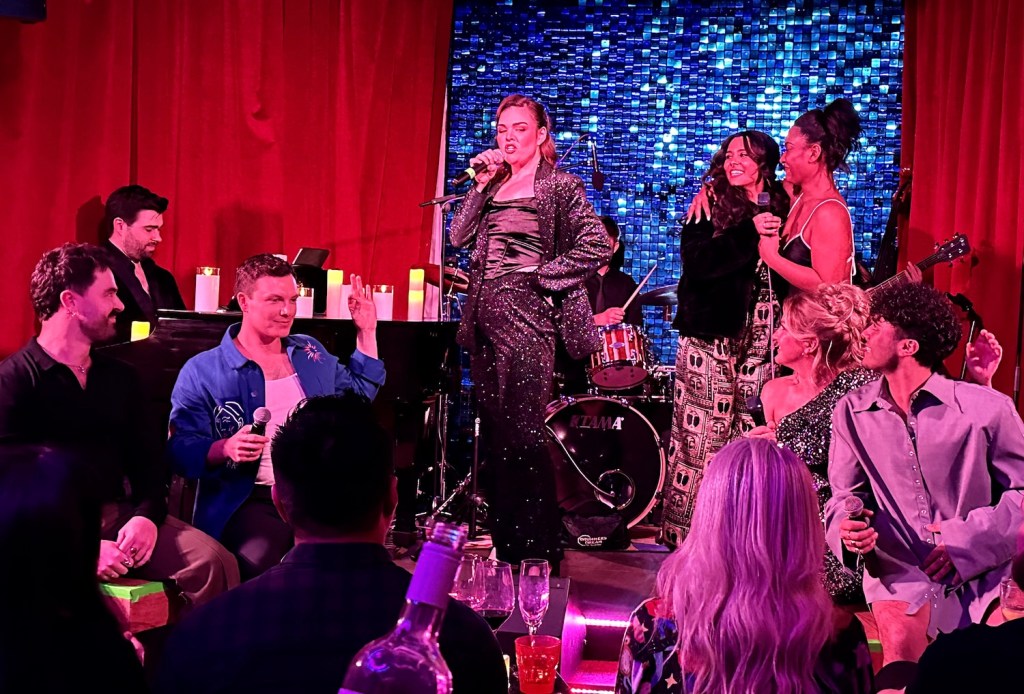
Ryan Gonzales, Ben Kiehne, Nigel Huckle, Sarah Murr, Olivia Vàsquez, Elenoa Rokobaro, Georgina Hopson & Jacob Rozario. Photo: Chad Armstrong. -
swim (Griffin) ★★★½

Written by Ellen van Neerven. World Premiere. Griffin Theatre Company. Carriageworks. 10-27 Jul, 2024.
In Ellen van Neerven’s poetic swim everything is fluid. Memory, emotion and, of course, water. For our protagonist E (Dani Sib) the most fluid thing of all is their sense of self.
E is/was a swimmer. Their earliest memories are of water, playing in a river as a child, or taking swimming lessons from a professional but after an abusive relationship she hasn’t been back in the water for a while. Now, as a non-binary adult returning to the pool for the first time, they’re faced with a choice – to use the ‘Male’ or ‘Female’ changing room.

Dani Sib. Photo: Brett Boardman. On paper, swim appears to be a play about gender, but it’s not really – at least, not exclusively. Gender is integral to the story, but not the true backbone of the narrative. This is an exploration of one human’s ability to overcome abuse and find their identity again.
As a youth, E was groomed and abused by their swimming coach. The relationship turned emotionally manipulative and physically violent, souring E’s relationship with the water they loved. Now E finds the public pool to be a confronting place. But once they’re out in the lanes – life makes more sense and E can unpack their circumstances and rebuild their confidence.

Sandy Greenwood & Dani Sib. Photo: Brett Boardman. Swim is an intersectional story, blending E’s gender, Indigenous heritage and story of abuse into one singular, flawed and fascinating character. It’s more about the specifics than the universal which makes this near-monologue (I’ll get to the brilliant secondary characters in a moment) a compelling journey. There are familiar elements examined from newer angles and the whole becomes something more quixotic and interesting than the parts.
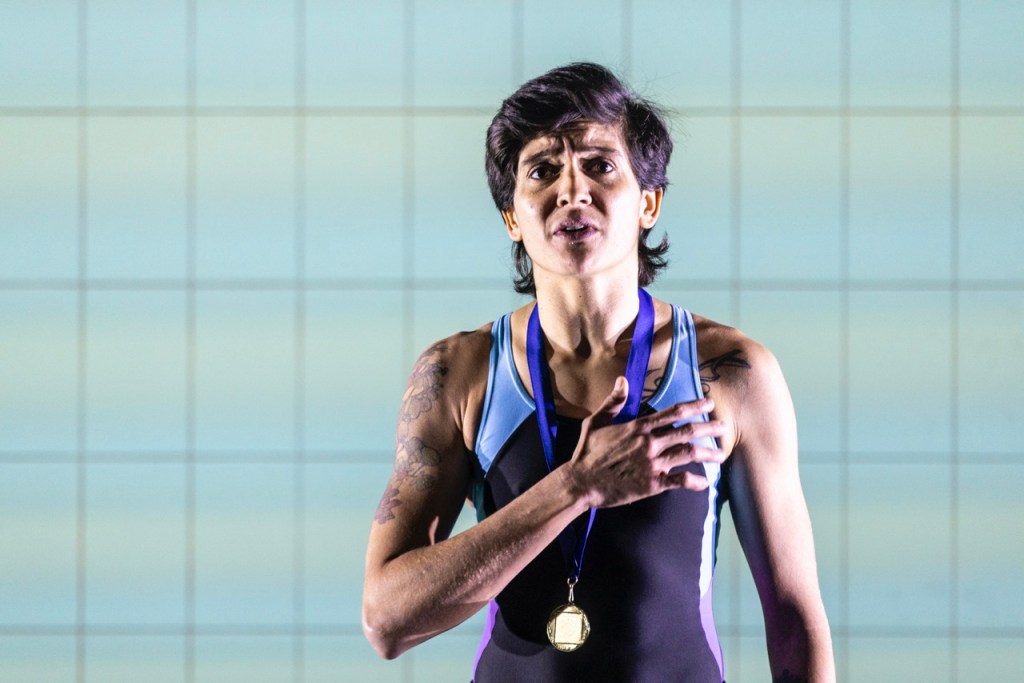
Dani Sib. Photo: Brett Boardman. Dani Sib embodies E’s strength and anxiety in their tightly held body. As a character, E is a convergence of multiple fears – do the white women in the changing rooms avoid E because they are Blak, or because they are non-binary? Can one be separated from the other? Things are more fun when E hits the pool, the world they know best, and revels in the hierarchy and diversity of the lanes and the mindfulness of the rhythms… swim, touch the wall, turn – swim, touch the wall, turn… In this space, E can rediscover their own power.
Director Andrea James, with the whole team of Romanie Harper (designer), Karen Norris (lighting), Brendon Boney (composer & sound) and Samuel James (video), has produced a handsomely immersive space to tell this story. The tiled surfaces of the pool transform into countryside vistas, underwater worlds and abstract mind-spaces with elegant ease. The unnerving slight opening of a door does more to convey E’s personal fear than their own words allow. Similarly a fun twist on a costume tells us everything we need to know about co-star Sandy Greenwood’s multiple roles.

Dani Sib & Sandy Greenwood. Photo: Brett Boardman. Ah yes, and now we get to Sandy Greenwood, the absolute MVP of the show. Almost always on the fringes of the stage, Greenwood plays a trio of very different roles. As E’s Aunty she is a warm, playfully parental figure of support. As E’s abuser she menaces the top of the stage in all black. But as Samena, the pool’s hilariously flirty young life guard, she is the cherry on top of this cake. It’s a moment of near-drag-excess and so perfectly timed it is a work of art. From the wiggle of her booty as she mops the changing rooms, to the well-timed placement of a “slippery when wet” sign – just genius.
At just over an hour in duration, I definitely felt like there was more story to tell, and more exploration/resolution that could have been given to the many threads at play. But swim keeps things personal and this is E’s story to tell. When they’re finished, and have found their happiness, who am I to cry for more?
-
Counting & Cracking (Belvoir) ★★★★★

Written by S.Shakthidharan with Eamon Flack. Belvoir. Carriageworks. 28 Jun – 21 Jul, 2024.
If you’ve been on the edge deciding whether to see Counting & Cracking, what are you waiting for? The show has had a steady stream of five star reviews, multiple returning runs and received international acclaim. True, the 3hr 30min running time is daunting on a cold “school night” but trust me when I tell you, Counting & Cracking is as good as they say. It may be the best Australian play of the last decade.
Telling the story of one Sri Lankan woman, Radha (played by the powerhouse duo of Nadie Kammallaweera as the adult Radha, and Radhika Mudaliyar as the younger), who flees sectarian violence and comes to Australia on her own to set up a new life for herself and her unborn son. It’s about family, how politics can elevate and tear us apart, and how our connection to land can be a powerful force.
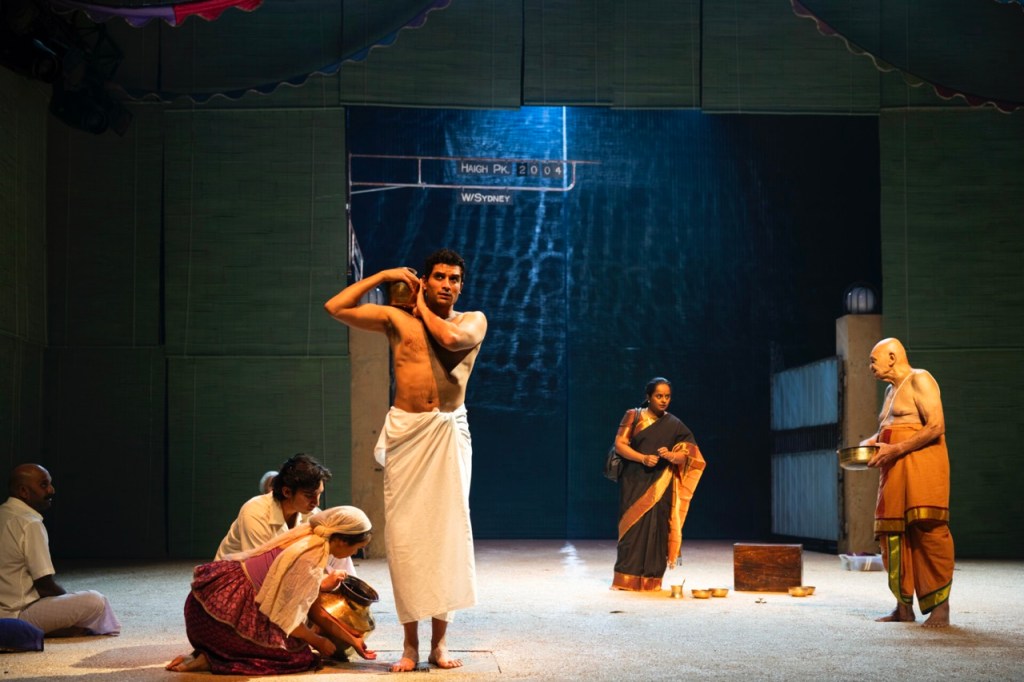
Ahilan Karunaharan, Kaivalya Suvarna, Abbie-lee Lewis, Shiv Palekar, Nadie Kammallaweera & Gandhi MacIntyre. Photo: Pia Johnson. I kept hearing about how good this show was but kept missing it. I was overseas when it premiered in 2019, I was back in Sydney when it was touring the world, so when it returned this year it was high on my “let’s see for myself” list. So I grabbed one of my trusty theatre-friends and booked.
Firstly, the buzz at Carriageworks was infectious. A strong South East Asian audience was in attendance (along with an inordinate number of actors I recognised from recent STC and Belvoir shows). The coldness of the cavernous concrete expanse was washed away by Dale Ferguson’s warm, towering set that created a wooden amphitheatre inside the towering space. It makes for great people watching, and as the audience filed in and the ambient chatter rose, the energy in the space built.

Sukania Venugopal & Nipuni Sharada. Photo: Pia Johnson. For all its heavy topics, Counting & Cracking is very much alive. It fizzes with exuberance, aided by Eamon Flack’s direction which keeps the long set moving with a sea of people. The minimal props appear and disappear in a flurry of fabric and bustle. Like watching a group of children at play, the noise of the ensemble moving around and chattering is inviting and warm. For a long play, it never feels static or languid.
S. Shakthidharan’s script balances the humour with the human drama. We laugh at Radha’s irascible nature as a mother, but cry at the pain she’s suffered. We beam with her intelligence and verve, and cheer at her successes. Both Kammallaweera and Mudaliyar excel here. They have created a coherent, multifaceted and rich character that is easy to love.
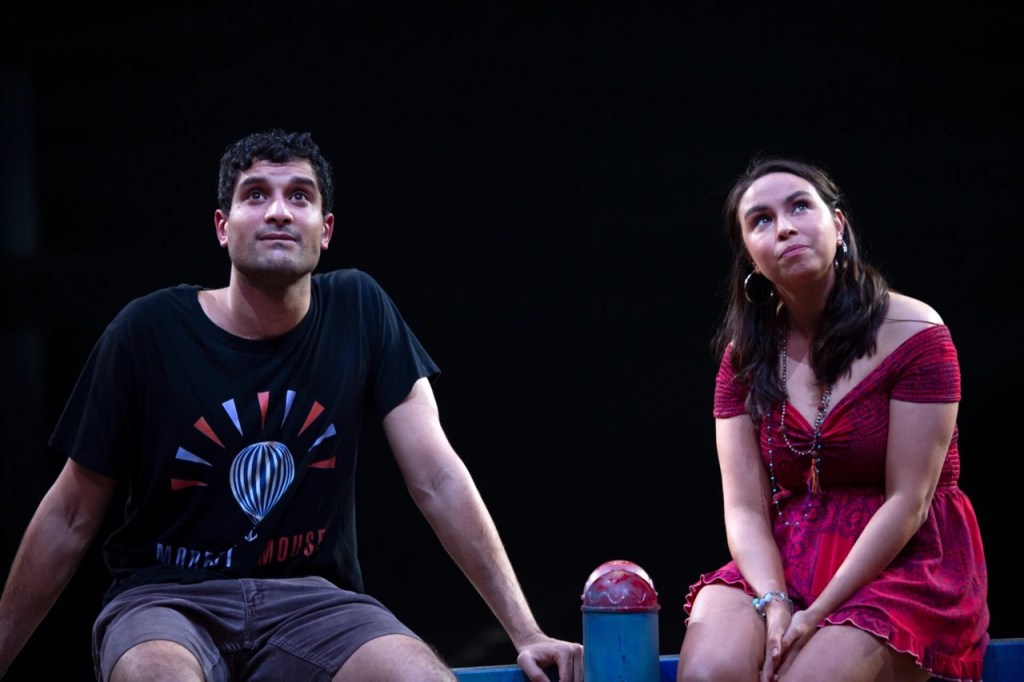
Shiv Palekar & Abbie-lee Lewis. Photo: Pia Johnson. Through the eyes of Radha’s twenty-something son, Siddhartha (Shiv Palekar) we see the experience of the young and restless second generation. In love with freedom of Coogee but missing the spices and warmth of his Sri Lankan-infused home in Pendle Hill. His budding romance with Lily (Abbie-lee Lewis), a Yolngu woman in Sydney feeling the same disconnect, adds a layer of optimism and sweetness to the story.
Flack has filled the show with beautiful directorial moments. From the ensemble holding up props and embodying their essence. To the fourth-wall breaking moments where the translators get pulled into the story. The theatrical storytelling makes the time fly by.
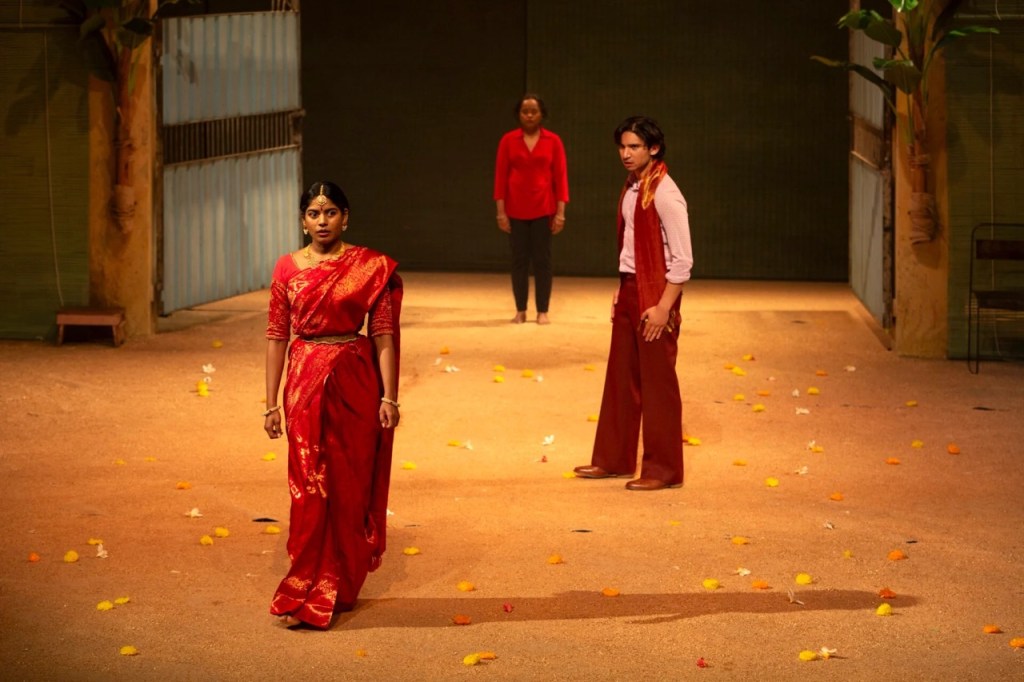
Radhika Mudaliyar, Nadie Kammallaweera & Kaivalya Suvarna. Photo: Pia Johnson. My abiding memory of the show isn’t of any of the pain, politics or despair the story weaves its way through – it’s of dancing, and joy, and love. It’s of warmth and colourful clothes in constant motion. It’s of life.
Not that Counting & Cracking needs another five star review this late in its lifespan – but I’m happy to give it one for posterity.
-
Sunset Strip (New Theatre) ★★★
Written by Suzie Miller. New Theatre. 9 Jul – 3 Aug, 2024.
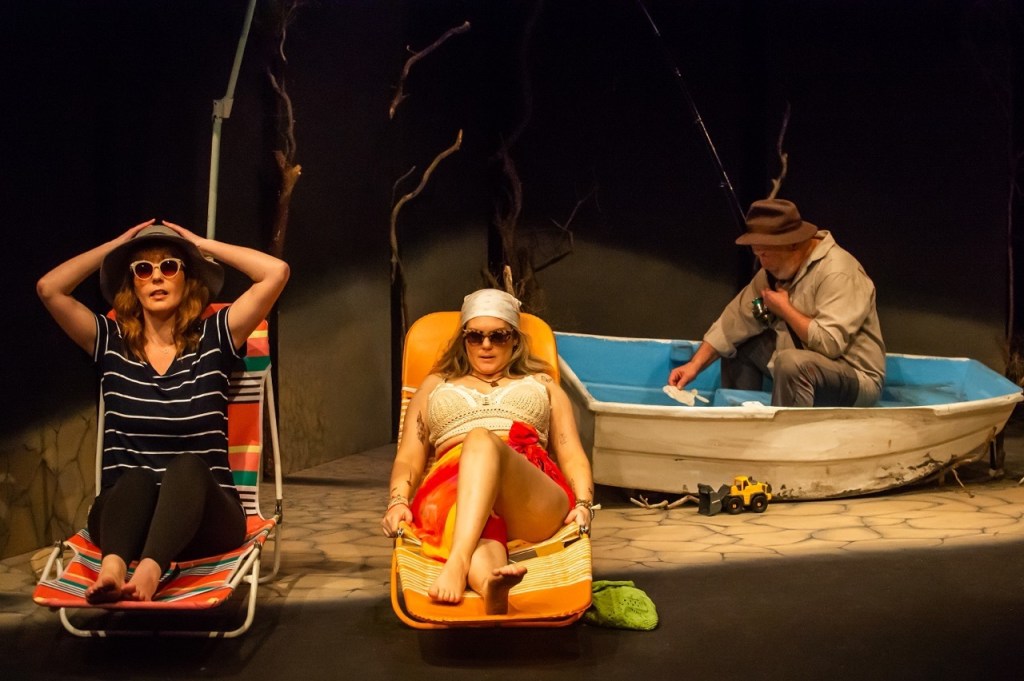
Misery loves company, and Suzie Miller’s Sunset Strip sees two sisters deal with their own pain in different ways. This revival production at New Theatre (seven years after the play’s debut at Griffin) serves as a showcase for its two leading performers and a look back at Miller’s own journey as a playwright.
Caroline (Erica Nelson) has come back to the old family home to find things are not as they were. The lake outside has dried up, leaving a bed of silt and dirt. Her father Ray (Vincent Melton) dips in and out of lucidity as dementia takes grip. And her sister Phoebe (Molly Haddon) is excited and desperate to prove to Caroline that things are good. But Caroline is tired. A cancer survivor, she is worn down by chemotherapy and the end of her relationship, and now she has come home to help her sister regain custody of her two children.
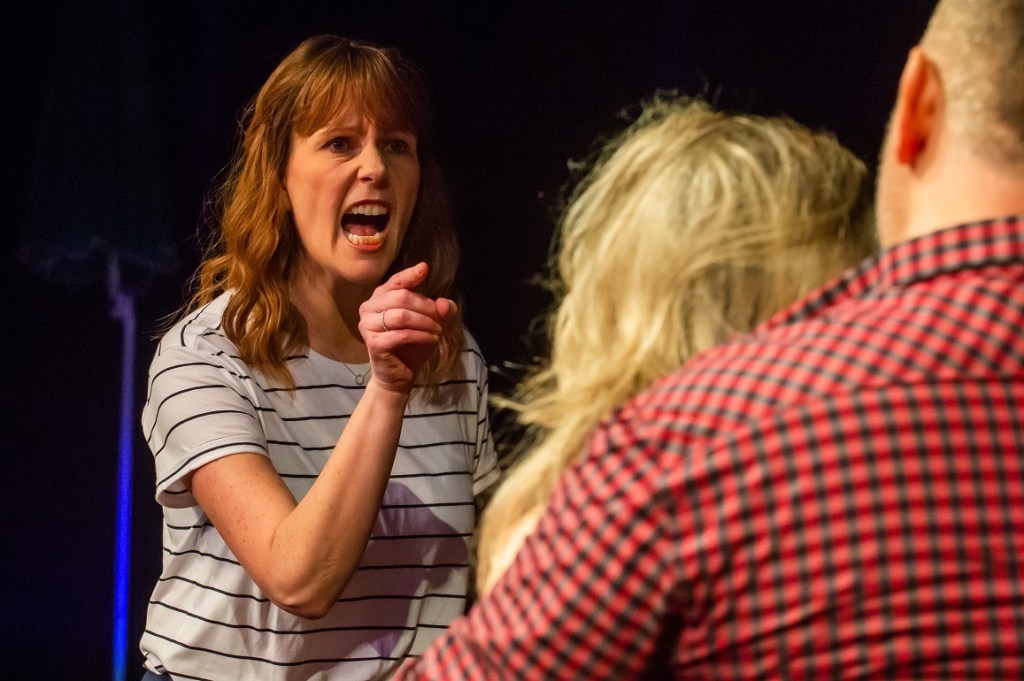
Erica Nelson in Sunset Strip. Photo: Chris Lundie. There is a familiar duality to Caroline and Phoebe. Caroline, the urbane, successful city lawyer who is disappointed by a world that isn’t the way it should be, and Phoebe, the impulsive one who reacts to life as it comes. But deep down the similarities start to come to the fore. Both women have a habit of running away from their problems and both have dangerous chemicals running through their veins that are helping them survive.
Miller’s great strength is her ability to pace out a story, and by playing with our expectations she lets the details of the plot drop neatly into place. Phoebe’s erratic behaviour and Caroline’s reserve are understandable in context, as is Caroline’s shock to discover that Phoebe is planning to marry her boyfriend Teddy (Shane Davidson) on short notice. Both women believe they are making the right decisions for their lives and it brings them into conflict with each other.
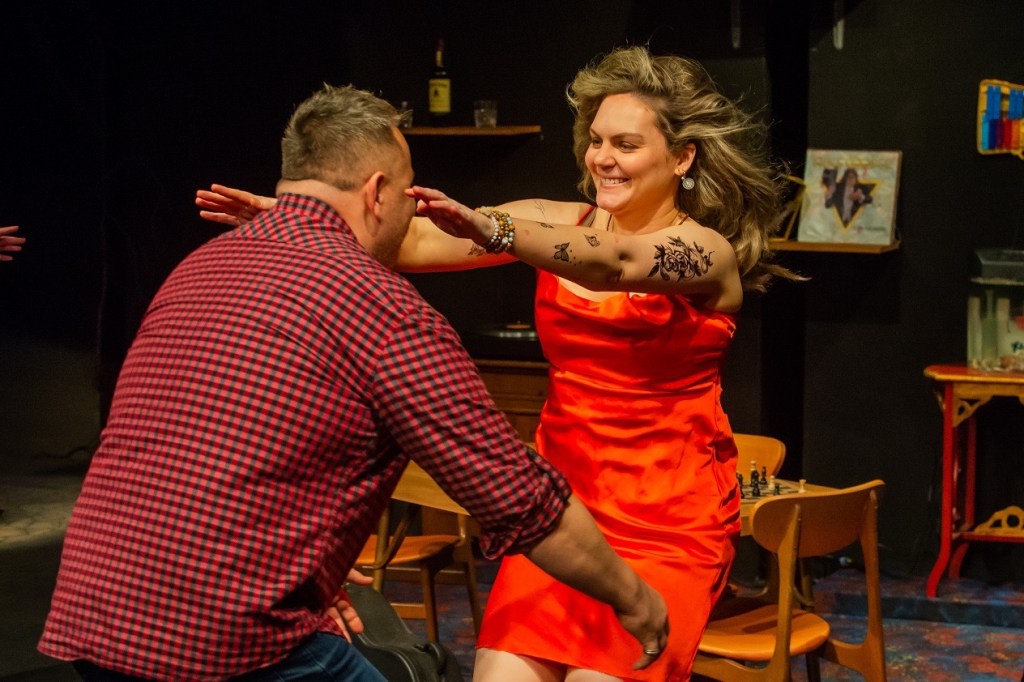
Shane Davidson & Molly Haddon in Sunset Strip. Photo: Chris Lundie. Haddon has the showier role in the nervous/vivacious Phoebe whose nature covers darker problems. After having her children taken away by the state, Phoebe is desperate to prove she is clean and able to be the mother she wants to be, but it’s clear she is constantly on the edge of tipping over. This is the kind of juicy part actors love to throw themselves into and Haddon doesn’t hold back.
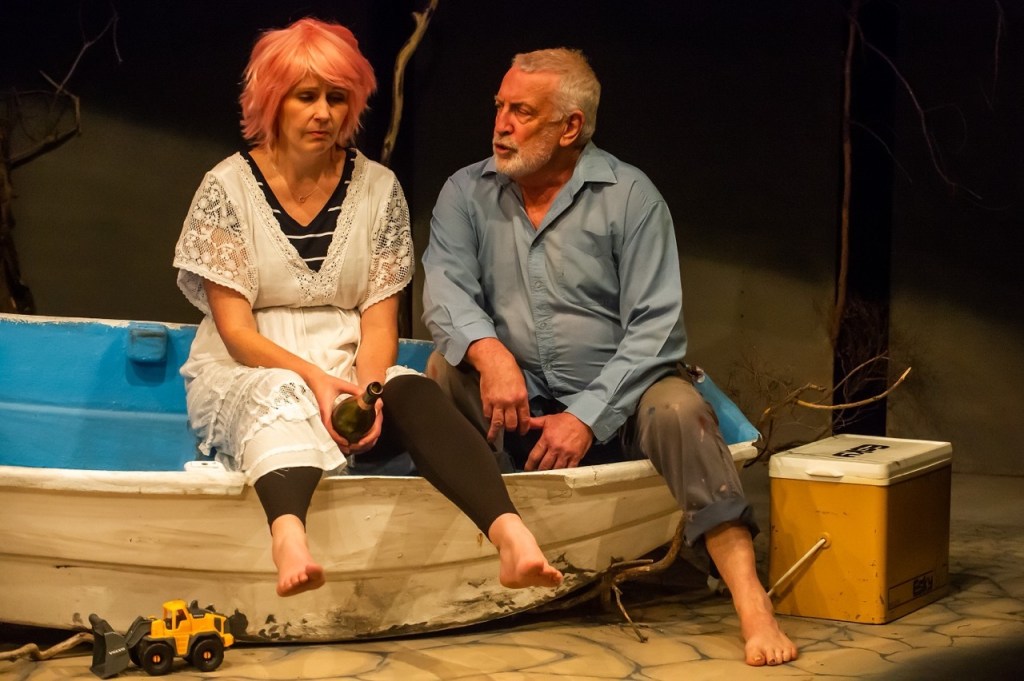
Erica Nelson & Vincent Melton in Sunset Strip. Photo: Chris Lundie. In contrast Nelson’s Caroline is grieving multiple things at once while still recovering. The result could be a loss of on-stage energy, but Nelson keeps Caroline’s mind active. She may not be running around in circles like Phoebe, but you can feel her watching, analysing and weighing up her options.
Director/designer Annette van Roden’s production thankfully encloses the large space to give us intimacy, with a playful set that evokes a much larger environment. At times the production dips into arms-flailing-to-show-emotion/melodrama but Caroline’s core dilemma was strongly felt. Should she choose the safer path and walk away, leaving her sister’s life in ruins, or commit to the long hard road ahead by staying… Miller weaves this into a complex web of motivations meaning the character could conceivably go either way and the audience would buy it.
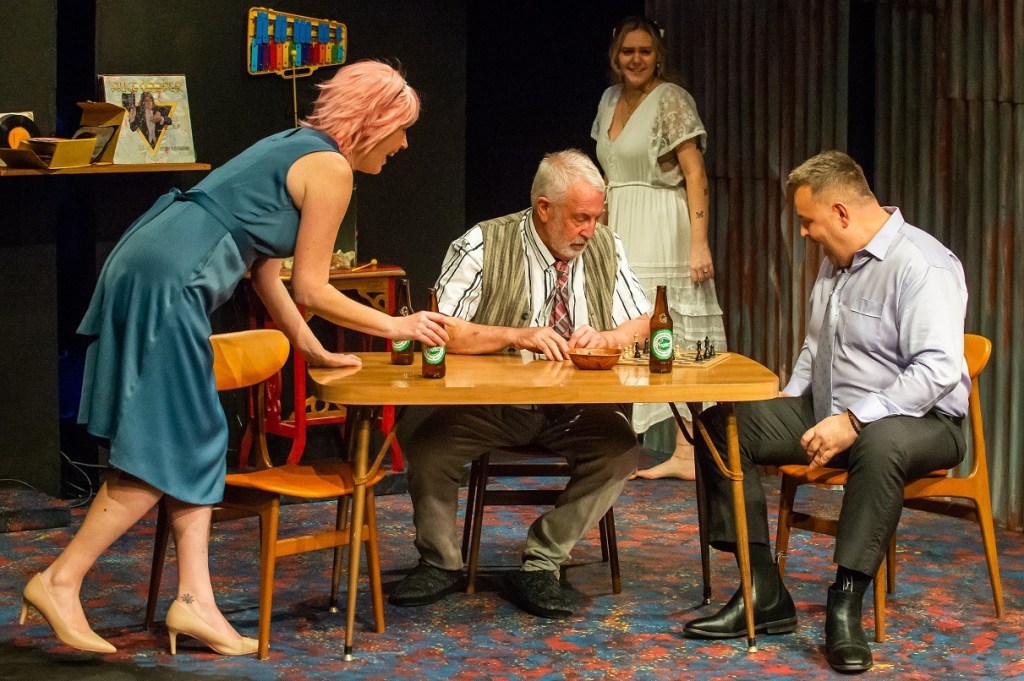
Erica Nelson, Vincent Melton, Molly Haddon and Shane Davidson in Sunset Strip. Photo: Chris Lundie. We know Miller is a great writer and in these earlier plays we can feel her working out ideas within the constraints of familiar theatrical tropes (‘returning sibling unearths family trauma’ is a genre all its own). Sunset Strip feels like Miller was still using the training wheels of this set-up to do a few laps before she would step outside them to something even greater. If like me, you never saw the original production, this is a great chance to play catch up.
-
Dracula (Sydney Theatre Co) ★★★★

Adapted by Kip Williams. Based on the novel by Bram Stoker. Sydney Theatre Company. Roslyn Packer Theatre. 2 Jul – 4 Aug, 2024.
Sydney Theatre Company’s Dracula isn’t just theatre, it’s an event and a milestone. The final part of a technologically intensive stage trilogy and the symbolic swan-song for outgoing Artistic Director Kip Williams. Laden with so much expectation and import, it’s hard to simply view it as a show in its own right, but here we go.
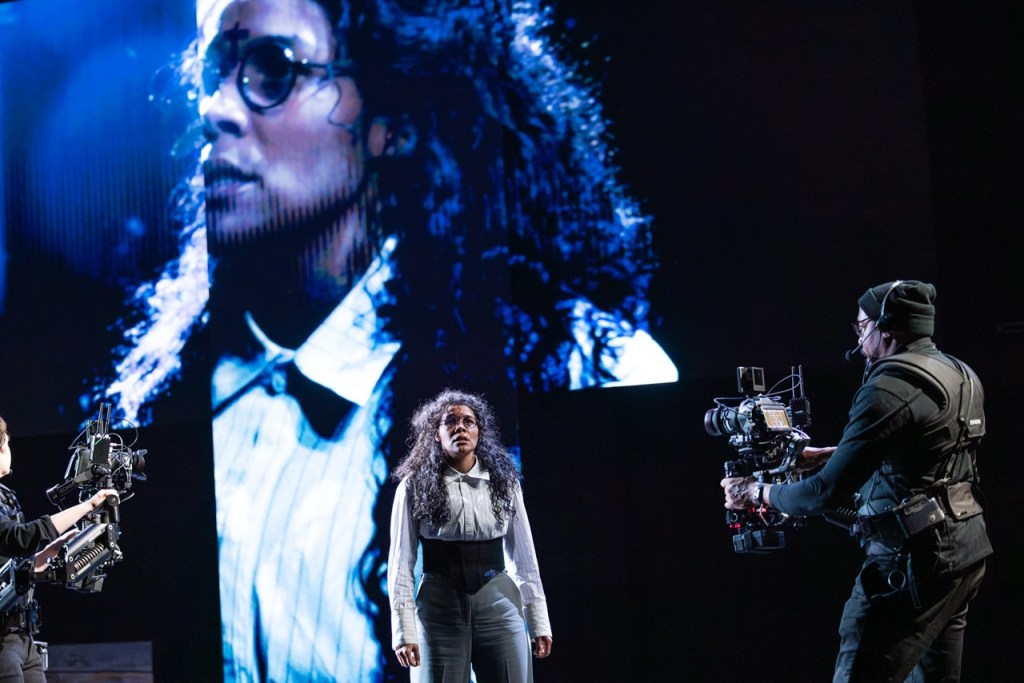
Zahra Newman as Mina and camera operators Lucy Parakhina and André Morton. Photo: Daniel Boud. Zahra Newman is fang-tastic (forgive me, but I just had to) as she leads the cast of camera-crew, stage hands, costume and make-up in the now-familiar cine-theatre style. Playing over twenty roles, turning each into their own clear caricature, her personal charisma is the glue that holds it all together. Well, her charisma and 17 different wigs, quick changes, facial hair and more thanks to the well choreographed stage team.
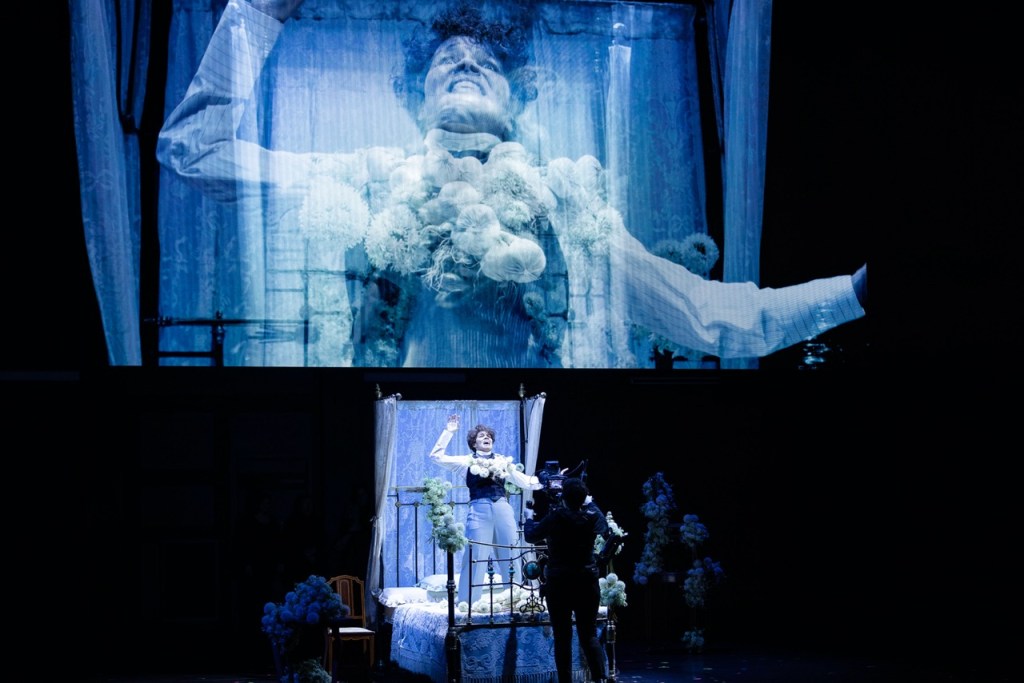
Zahra Newman and camera operator Lucy Parakhina. Photo: Daniel Boud. Dracula is aware of its own camp comedy and Newman relishes in it. The variety of character accents are each slightly ridiculous. Newman’s Dracula comes across like a mix of an 90s european raver (the red hair reminded me of Run Lola Run) and The Room’s Tommy Wiseau (“I vant to suck your blaaad”). Van Helsing looked like the wise karate teacher from a 70s blaxploitation film. When Newman dons a curly blonde wig to play Lucy Westerna the irrepressible silliness of the look gets its own hearty laugh. It’s clear the whole production team was having a lot of fun.
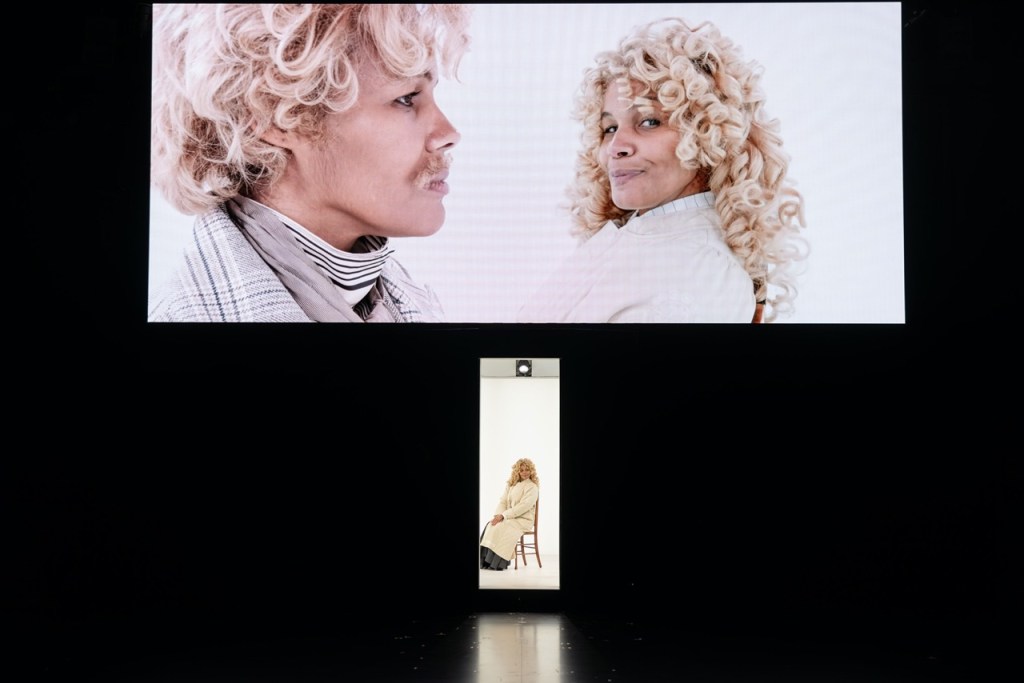
Zahra Newman as Arthur and Lucy. Photo: Daniel Boud. STC’s Dracula plays with the novel’s themes of sexuality and race without ever truly calling attention to itself. The basic premise of a single performer playing all the roles, regardless of gender or nationality, instantly questions your assumptions. As Dracula seduces Harker, the audience sees two drag-kings before them giving a performance of gender roles.
There is a surprising simplicity to Dracula that had me constantly second guessing myself, looking to see what the next innovation would be. The giant screen moves up and over the stage, at times acting as a curtain hiding the changing of the set, or showing the otherworldliness of Dracula himself. One highlight comes early as Jonathan Harker is shaving, only to realise the Count behind him has no reflection – to the audience he is only visible on the screen, as Newman shaves alone on stage.
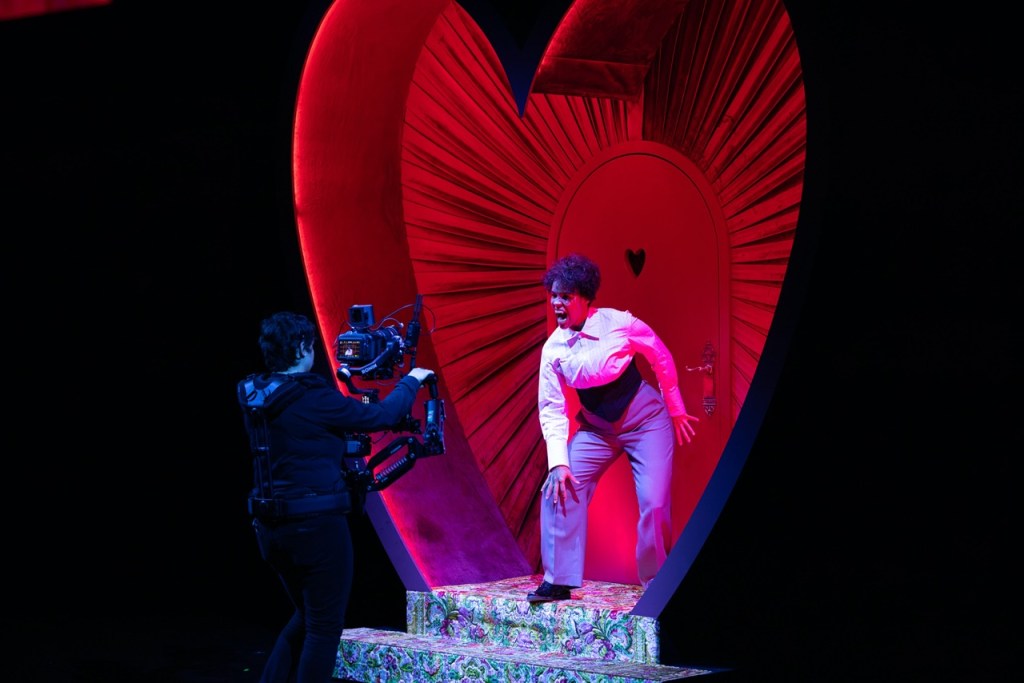
Zahra Newman as Dracula and camera operator Lucy Parakhina. Photo: Daniel Boud. Williams’ use of a “god’s-eye” view of the stage adds some intriguing elements to the staging (this was more evolved than a similar style used in Benjamin Millepied’s Romeo & Juliet Suite at the Opera House recently). Watching this ominous dark orb descend and rise over the stage with coldly mechanical precision actually added to the inhuman air.
Given the supernatural nature of the story I expected more invention in the use of the cine-theatre technique, and at times the screen became a crutch. Complex scenes with multiple characters moving around each other lose their impact over time and the play becomes more traditional as we adjust. When the giant screen reaches the floor down-stage and Newman has a walking conversation with multiple versions of herself, the effect is simply two-dimensional.
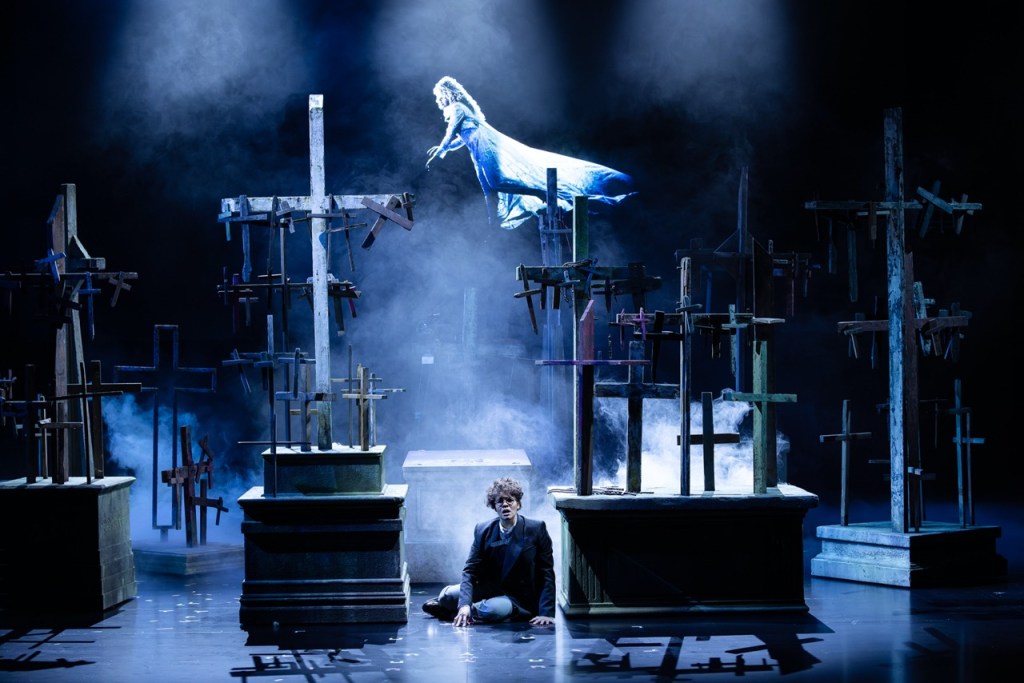
Zahra Newman as Jack and Vampire Lucy. Photo: Daniel Boud. Ironically, I was left wanting more real stage magic to compliment the visual effects on screen. Give me a visceral splatter of blood, or show me Newman’s Dracula flying across the stage on a wired rig (not just a projection) – I wanted something more I could sink my teeth into. It lacked the transformative use of tech the previous two instalments of the trilogy had.
But the reductive question on everyone’s lips will be “Is it as good as Dorian Gray”? The short answer is “no it’s not”, but to be fair that is a very high bar Williams’ has set for himself. Is Dracula an entertaining play with a stellar central performance that will leave you leaping to your feet at the finale? Hell yes!
-
[Your Name] (KXT on Broadway) ★★★★
![[Your Name] (KXT on Broadway) ★★★★](https://culturalbinge.com/wp-content/uploads/2024/06/untitled-design-55.jpeg?w=1024)
Written by Kate Bubalo. KXT on Broadway. 14-29 Jun, 2024.
[Your Name] (not related to the adored anime of the same name) plays with the specific corner of fandom that is slash-fiction to hilarious and heartwarming results. It’s horny, fumbling, silly and strangely emotional – like watching the early years of Tumblr being brought to life on stage.
Back in 2013, three fourteen year old schoolgirls, the headstrong Petra (Evelina Singh), the nervous Kris (Lola Bond) and self-doubting Nadine (Georgia McGinness) are writing anonymous sultry fan-fiction about a boy wizard named Larry (Andrew Fraser) and his school rival, Your Name (as in, “insert [Your Name] here”). They’re working out their anxieties and dreams about puberty and sex through their writing, and publishing it online. But when Kris accidentally submits Petra’s latest chapter to their young teacher Mr. Isaacs (also Andrew Fraser) instead of their group report… things get weird for everyone.
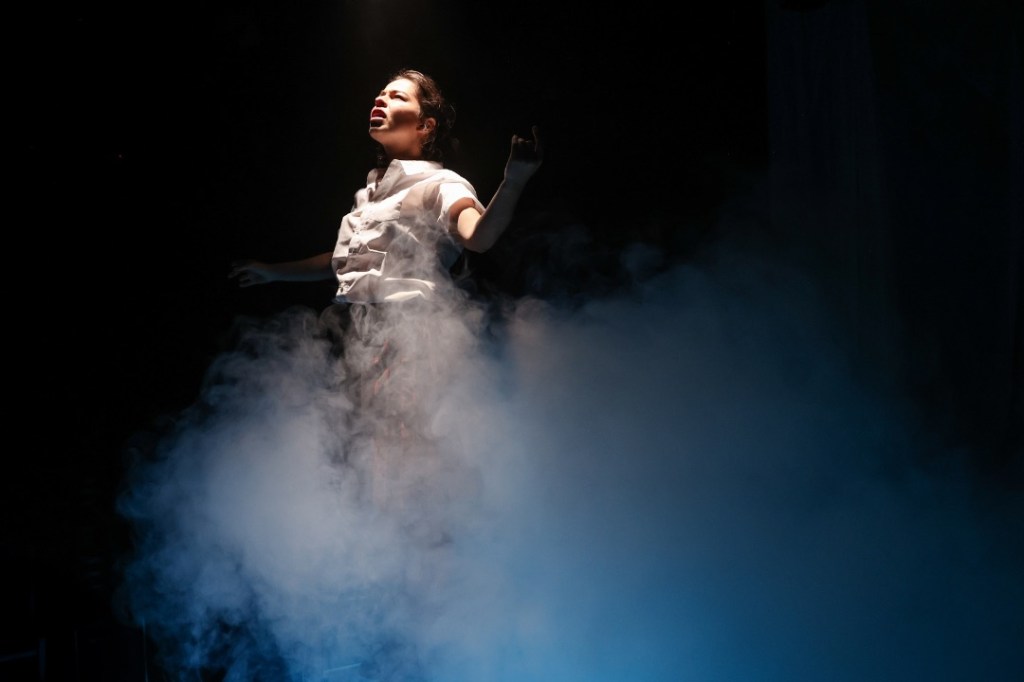
Evelina Singh in [Your Name]. Photo: Georgia Brogan If you’ve never been a part of a fandom, whether it’s a TV show, a film franchise, novels, comics, games, sports, even deities (what is religion other than glorified fandom), then you don’t know the intricate ways it can be both liberating and repressive. It’s clear writer Kate Bubalo knows that world, because [Your Name] is full of loving and insightful specificity that can only come from inside the community.

Lola Bond, Evelina Singh and Georgia McGinness in [Your Name]. Photo: Georgia Brogan Grounding the story in Harry Potter-esque teen fandom (with a liberal dose of Twilight as well), Bubalo and director Lily Hayman use every opportunity to layer in more phallic imagery and dry humping, without losing grip on the core of the story – the complexities of female friendship in those fraught pubescent years.

Evelina Singh and Lola Bond in [Your Name]. Photo: Georgia Brogan Bubalo’s script is full of great lines (Nadine’s quick-witted take down of Petra’s use of the phrase “slut shaming” had the packed audience in stitches), and cheeky references to the books & films of the Potter franchise. The words are elevated (or… levitated?) to greater heights by some fearless camp performances. Bond’s Kris is adorably disastrous as she goes from raucous laughter to full-blown panic attack. Singh throws herself into Petra’s purple prose with gusto (Intimacy Co-ord Shondelle Pratt had her work cut out for her). McGinness shows us there is more behind Nadine’s eyes at all times, she is the glue that holds these three together. When McGinness gets to play Nadine’s mother for a scene – she steals the show.

Lola Bond in [Your Name]. Photo: Georgia Brogan Not to take the spotlight off the women in this female-centred story, but Fraser’s dual role as the increasingly frazzled Aussie teacher Larry Isaacs and the much lusted after English boy wizard, also named Larry – it’s a whole plot thing – needs to be singled out. Fraser is running a marathon doing quick changes, being acrobatically thrown around the stage (by magic and the horny girls) and tearing his hair out as a young teacher on the verge of a nervous breakdown. When he takes on a show-stopping third role, somehow channelling both Ralph Fiennes and Leigh Bowery… well, it hits new heights.

Evelina Singh, Andrew Fraser and Georgia McGinness in [Your Name]. Photo: Georgia Brogan The unsung hero of the play is director Hayman who not only keeps things running at a brisk pace (the show is just over 90 minutes but completely satisfying on every level), but never sacrifices the comedy or the heart. A quick glance at the show’s programme says she’s come up through the glory days of Tumblr (a safe space for niche, queer fandoms), and it shows. There is a breadth and depth of knowledge and love here. Together with Tyler Fitzpatrick’s stage & lighting (which is more evolved than I expected it to be) and Clare Hennessy’s sound which brings the ‘magic’ to life, this is a real hit.

Andrew Fraser in [Your Name]. Photo: Georgia Brogan I’m no stranger to nerdy fandoms, and take exception to shows that mock them (it was my one real complaint about Ride The Cyclone) but [Your Name] is a comedy full of appreciation for the bonds and joy that being a freak in your own little world can bring.
-
Ink (New Theatre) ★★★★
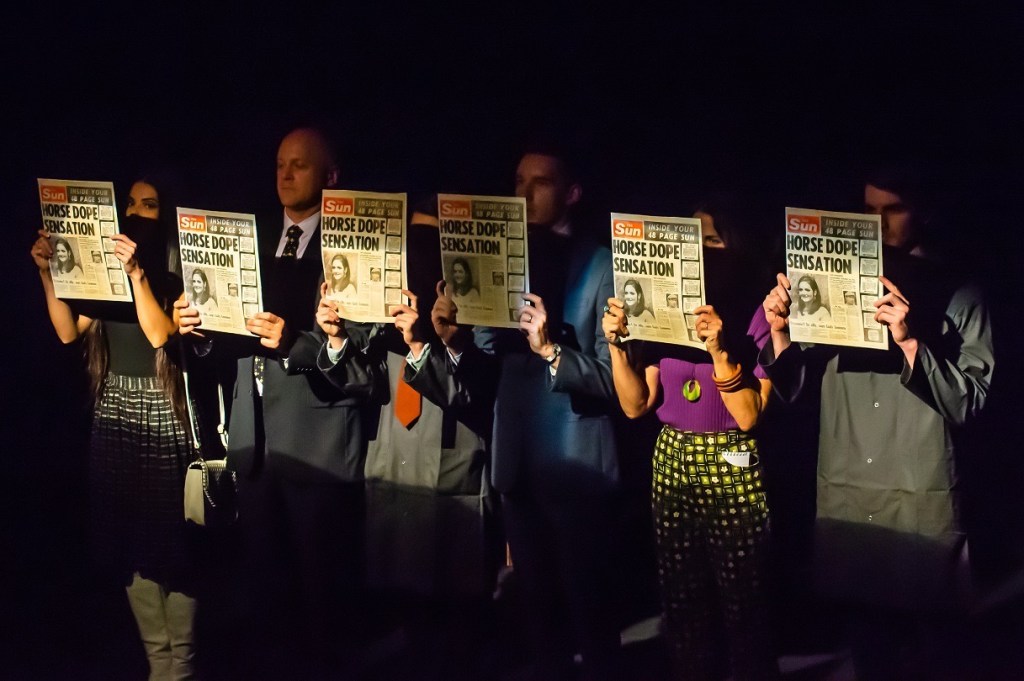
Written by James Graham. New Theatre. 29 May – 29 Jun, 2024.
Ink is, and isn’t, about Rupert Murdoch. It’s really about Larry Lamb, the man Murdoch chose to edit the UK newspaper The Sun and how he transformed it from an irrelevant rag, into a mass hit by appealing to the common man… for better or for worse.

Adrian Adam. Photo: Chris Lundie for New Theatre James Graham is one of the busiest writers in the UK with hits like Quiz (which became a great TV miniseries), Best of Enemies, This House, Dear England, plus TV work like The Crown, Brexit: The Uncivil War and Sherwood. 2017‘s Ink was one of his earliest West End hits. He’s one of those playwrights who knows when to let the dialogue roll and when to stop and make his point, which does primarily through the character of Hugh Cudlipp, the editor of the rival The Mirror.
Cudlipp: “This is it. You realise that, this is one of those moments, people look back on, and say, ‘When was it, that it all fell away?’ (Pointing) This is it.”

Ensemble. Photo: Chris Lundie for New Theatre Graham shapes the narrative as a classic Underdog vs The Establishment and has the audience rooting for Murdoch (Adrian Adam), Lamb (Nick Curnow) and their team of upstarts. Not an easy thing to achieve. Murdoch himself is felt more as a presence than as a character. Lamb looks after the day-to-day operations of The Sun, coming up with ridiculous idea after ridiculous idea to drive readership and send gusts of fresh air into the stuffy world of Fleet Street. At first it’s all fun and scrappy bravado, but it doesn’t take long for things to turn sour.

Daniel Tompson. Photo: Chris Lundie for New Theatre I’d been wanting to see this new production at New Theatre since it opened, but life kept getting in the way. I saw the original production at London’s Almeida Theatre, which would eventually win Bertie Carvel an Olivier and a Tony Award for his portrayal of Murdoch. I was a little bit worried that an independent production in Sydney could never live up to that original, but boy was I wrong. Director Louise Fischer has taken an excellent script and worked wonders on a micro-budget. The beauty and curse of independent theatre is that you can’t hide behind the wizardry of the theatre – no fancy sets to distract the audience with, it lives or dies on the writing and the performances. And these performances are, frankly, stunning.

Nick Curnow and Adrian Adam. Photo: Chris Lundie for New Theatre Adrian Adam’s Murdoch is brash and single-minded, with no time for ceremony. His pragmatism and drive are disturbingly admirable. Instead of playing Murdoch as a moustache twirling villain, which I’m sure is a temptation. Here he is a businessman chasing success. His faith and friendship with Lamb is almost heartwarming.
But this is Nick Curnow’s show and he slips into Lamb’s skin so completely you forget you’re watching an actor in a role. A mix of empathy and charm, he turns frighteningly ferocious. You can watch Curnow’s Lamb lose his joy and his soul as the traumatic events of the second act overtake him. The moment of his final creation, the infamous topless Page Three girl, plays like a man eating his final meal before execution. It’s one of the best all-round performances I’ve seen so far this year.

Nick Curnow. Photo: Chris Lundie for New Theatre It’s not just these two who so completely inhabit their roles as to almost become invisible. Emily Weare, William Baltyn, Daniel Tompson, Jack Elliot Mitchell and Chad Traupmann all create vivid characters to form the ensemble of Sun editors – each getting moments to really shine.
In 2017 when Graham wrote the line, “Promote the base instincts of people all you like, fine, create an appetite, but I warn you. You’ll have to keep feeding it.” It stung hard. After the dual disasters of 2016 – Brexit and Trump’s election, both fueled by news organisations that lied to the public and stirred populist rhetoric. In 2024 it only takes a quick look at Twitter/X, or TikTok, or Youtube etc to see how base people can really be, especially when they can hide behind avatars. The demons people like Lamb and Murdoch unleashed are still destroying us.

Daniel Tompson and Sophie Highmore. Photo: Chris Lundie for New Theatre With less than a week left in the run, book quickly. And if any of our mainstages are looking for something to add to their 2025 season, they could do a lot worse than grab this director and cast and restage Ink, giving it the budget to really elevate this already excellent production.
-
Subscribe
Subscribed
Have a WordPress.com account? Log in now.

