-
Welcome to Cultural Binge

The rating system is simple:
★★★★★ – Terrific, world-standard. Don’t miss.
★★★★ – Great, definitely worth seeing.
★★★ – Good. Perfectly entertaining. Recommended. Individual mileage may vary.
★★ – Fine. Flawed and not really recommended, but you may find something to appreciate in it.
★ – Bad (& possibly offensive).
See more reviews over at The Queer Review.
Instagram: @culturalbinge
Substack: culturalbinge.substack.com
Email: chad at culturalbinge.com
-
First, Do No Harm (KXT/NIDA) ★★★½

Written by Grace Malouf. NIDA in association with Bakehouse Theatre and Talia M-K presents. KXT on Broadway. 24 Jun – 4 Jul, 2026.
I get a real thrill out of a play that brings me a new idea or a new conundrum to mull over, and, to quote the great Danny Zuko, “I’ve got chills, they’re multiplying”. First, Do No Harm has strong performances and a fantastic premise to work from.
Surgeon Melissa (Kate Bookallil) and her former-Olympic swimmer partner Robbo (Richard Hilliar) have a healthy, athletic, smart 19 year old son, Alexei (Josh Merten). Training to be an Olympic hopeful himself, Alexei hits a wall in training. When they send him to a sports psychologist, who refers him to another psychiatrist, Alexei starts to open up about the unease he’s always felt about his body. When he approaches his parents with a request for unexpected elective surgery, the family is thrown into a dilemma that tangles with medical ethics and body autonomy. What can a parent do when their adult child wants something they find abhorrent?

Kate Bookallil & Josh Merten. Photo: Laura Elaine. For a small independent show with a short run, the performances are truly excellent. Of all the characters, the most complex and difficult is that of Alexei, in which Josh Merten is a standout. Merten gives Alexei an authentic sense of self that ripples through the events of the play. It’s a beautifully rich performance marked by its conviction.
Kate Bookallil and Richard Hilliar are polar opposites as Alexei’s parents. Hilliar’s Robbo is a big, gregarious, emotional man with a firm foundation in his own beliefs. Bookallil’s Melissa is the serious, driven parent with a high powered career that often keeps her apparently aloof from family matters. They demonstrate their love for Alexei in different, sometimes contradictory ways. They’re great characters, giving the narrative a yin and a yang from which to bounce around the plot’s moral and ethical questions.
I can only imagine how much deeper and richer these roles could be with a longer process to work on them. It’s great stuff.

Kate Bookallil & Richard Hilliar Photo: Laura Elaine. Playwright Grace Malouf, a screenwriter and MFA graduate from NIDA, has constructed a juicy scenario for the characters to respond to (I’m trying REALLY hard not to name it so as not to give out spoilers), and is happy to play with your expectations.
For the first third of First, Do No Harm I had a sinking feeling. Thinking I knew where the story was going I was getting fidgety expecting another well-meaning but undramatic polemic that did little more than preach to the already liberal choir in the audience. And Malouf is deliberately pushing us in that direction. It’s a heavy-handed misdirect and one I suspect would be better served as subtext for the audience to intuit than to be so clearly signposted, but…
Once the real matter is revealed, I was all in.
This is the kind of moral/intellectual/ethical grey area many modern plays are lacking. First, Do No Harm had suddenly earned my interest.

Kate Bookallil, Richard Hilliar & Shan-Ree Tan. Photo: Laura Elaine. The story is unavoidably exposition heavy – this deals with a genuine medical issues and the knotty nuance of medical ethics – and Malouf succeeds in communicating the details without losing the emotional core. There are side-stories that weave in and out of Alexei’s core narrative that, to be honest, didn’t quite land for me and I could happily see excised. Melissa’s career prospects didn’t add the level of intrigue that was intended and I was far more invested in the family drama. There are some minor pacing issues, and the climactic event suffers from being awkward and un-theatrical – hard to execute convincingly in a stage environment – and could do with a reframing.
But it’s undeniable that Malouf has constructed an impressive debut play – and thank the theatre gods above for a new, fresh take on a topic that has wider resonance, supported by engaging performances all round. Great situation, great characters – this is a fantastic way to burst out the gates and I personally look forward to more from everyone involved.
-
The Roommate (Ensemble) ★★★★
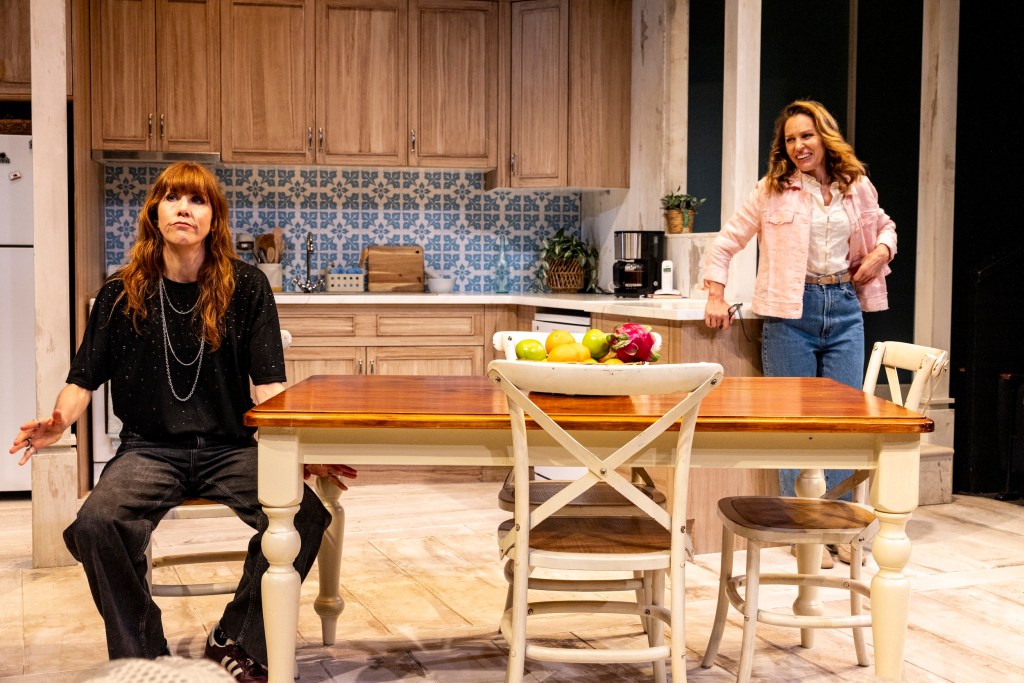
Written by Jen Silverman. Australian Premiere. Ensemble Theatre. 19 Jun – 25 Jul. 2026.
Two women, both seeking a later-in-life change, share more than just a home in Jen Silverman’s play The Roommate. This may sound like I’m damning with faint praise – but it’s just nice to sit back and enjoy an easy, funny, mild play that’s produced perfectly. It’s not much to ask for, but sadly, it’s all too rare.
Meek Iowan divorcee Sharon (Lucy Bell) is setting out on a new, unexpected chapter of her life. Single for the first time in decades she’s decided to rent out a room in her big home to a flatmate. Enter Robyn (Belinda Bromilow), a slightly shady lady from New York with a lot of secrets. Together they embark on an all-new adventure that breathes new life into them both.
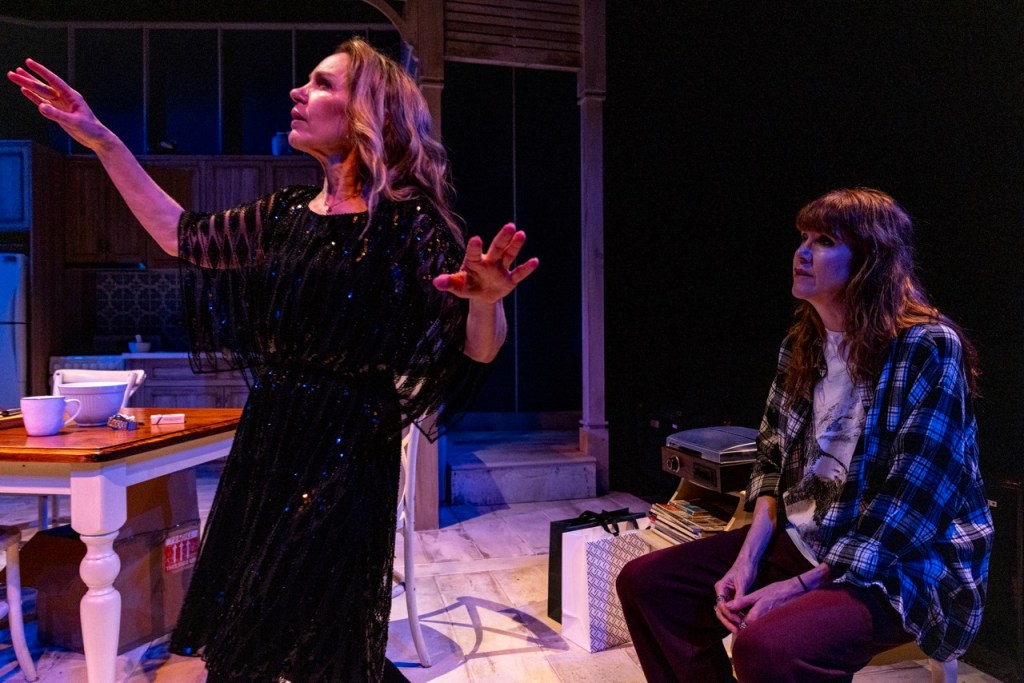
Lucy Bell & Belinda Bromilow. Photo: Brett Boardman. The closest analog I can think of would be the Netflix series Grace & Frankie (which coincidentally debuted the same year as The Roommate – there must have been something in the water back in 2015), it’s a flawed comparison but you get the vibe of two very different women sharing space and growing to appreciate each other in unexpected ways. As the warm but brittle Sharon rubs up against the guarded but generous Robyn she starts to see there is more to life than her failed marriage and distant, adult son (a nice voice cameo by Jeremy Waters).
From afar it looks like Silverman has recycled rote caricatures – the friendly but naive mid-Western mother and the tough, streetwise, jaded New Yorker – but their writing layers in textures and specificity, which Bell and Bromilow fully utilise. Both Sharon and Robyn are mothers, both have failed marriages, both are trying to leave parts of their past behind them and start afresh and both performers bring a whole history to their characters.
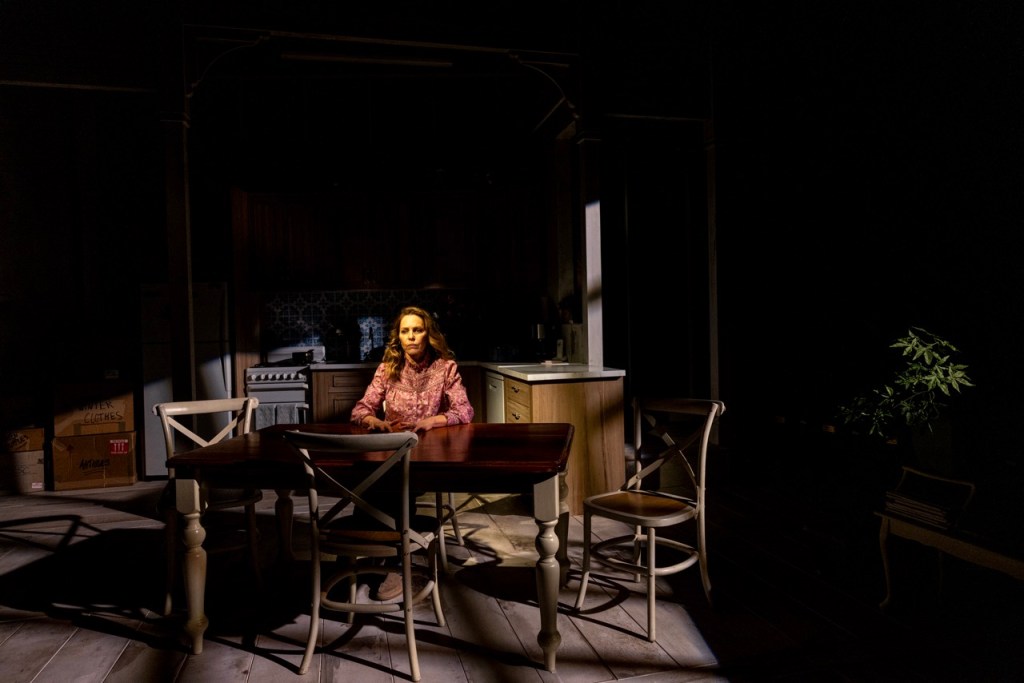
Lucy Bell. Photo: Brett Boardman. Bell’s Sharon is a delight to watch. A bundle of awkward uneasiness wrapped in civility and innocence, her joy at finding new hobbies and new experiences is as heartwarming as it is funny. Quirky without veering into annoying, Bell manages to embody every new discovery in her whole physicality. Against her, Bromilow’s Robyn is more calm, an observer cautiously interacting with the wildlife she’s discovered. Her guardedness never reads as rough or aggressive, but as wounded and wary. Both characters have hidden depths. Together the two navigate a whole relationship in the 95 minutes that tugs at your heart enough to elicit an audible awww in the final scene.
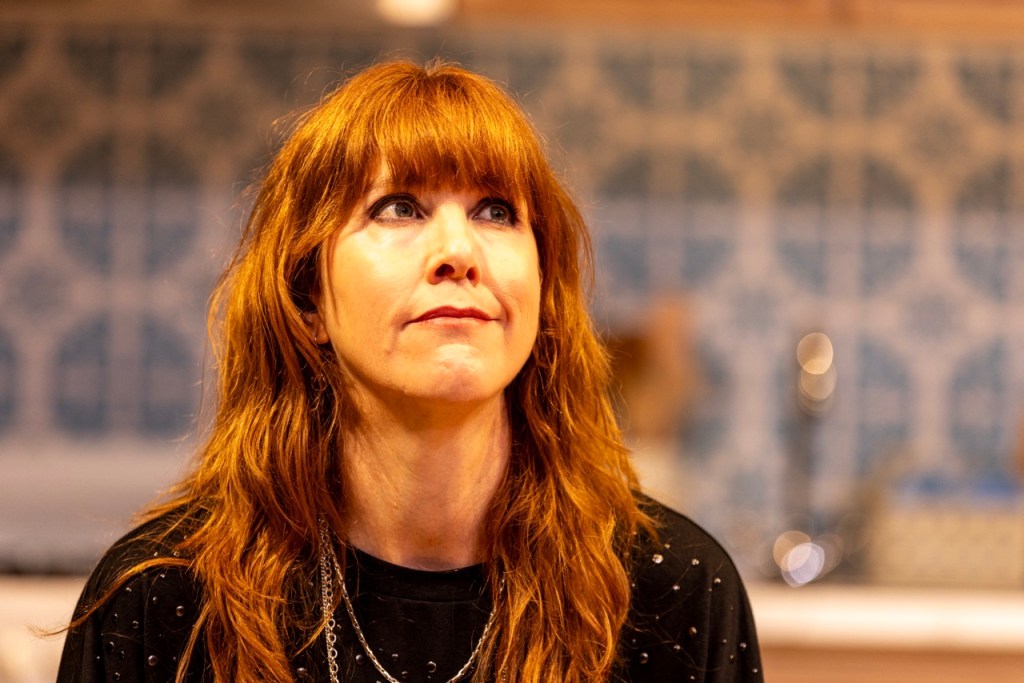
Belinda Bromilow. Photo: Brett Boardman. Director Lee Lewis keeps the action tight, in a small kitchen space, focused on the two women at the play’s core. This focus lets the characters go deeper, the dynamics of the story are writ in their reactions, not in large movements or set changes. Madeleine Picard’s sound knows when to step to the foreground for effects, as does Matt Cox’s naturalistic lighting.
Yes, this is a domestic two-hander about women in their 50s. It has no gigantic plot twists or shocking revelations. But it has a rhythm, a grace and an attention to character that elevates it above its apparent simplicity. And this production captures all that with refreshing and enjoyable ease.
-
Straight Panic (ATYP)
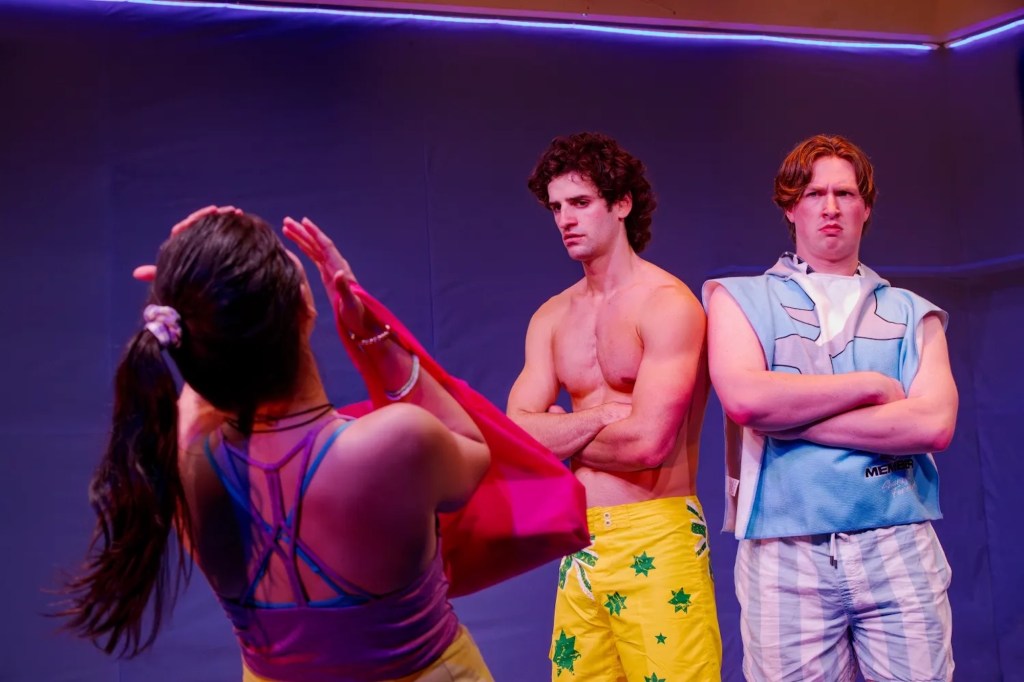
Written by Lachlan Parry. Presented by the Australian Theatre for Young People with support from Purple Tape Productions. The Popsy, ATYP. 16-27 Jun, 2026
Three short comedies combine to make up Straight Panic, the triptych of one-act plays by Lachlan Parry poking fun at the gays, the straights and most importantly, the 00s. It’s not deep, it’s borderline with its humour, and it’s devoid of meaning — but it passed the three-laugh rule.
From the travails of the staff at Myer trying to deal with cruising gays loudly fucking in the bathroom, to poor rich-kids of homophobic conservative politicians, and the “no homo” bros of Cronulla, Lachlan Parry flips the idea of “gay panic” around. Mocking heterosexual Sydney for the way it struggles to respond to its homo neighbours makes for easy comedic picking.
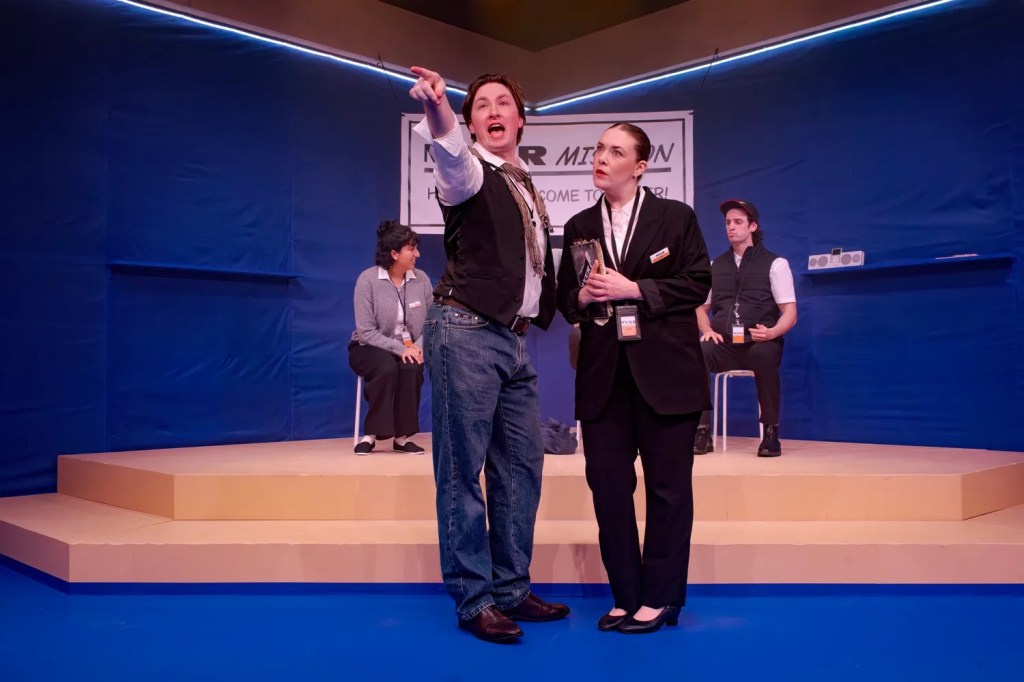
Esha Jessy, Andrew Fraser, Emma Kew & Pierse Cant. Photo: Phil Erbacher. Director Lily Hayman aims for camp, sketch comedy and hits the mark (the transitions between the individual plays are as entertaining as the main action). The cast — Andrew Fraser, Evelina Singh, Esha Jessy, Pierse Cant and Emma Kew — lay it on thick with impeccable timing and silly voices, playing different caricatures in each story. Emma Kew in particular was a real standout for the sheer breadth of her roles.
The design team of Soham Apte, Daniel Herten and Tyler Fitzpatrick have delivered an effectively multipurpose space that manages to cover each story with a clean simplicity that stays visually interesting.
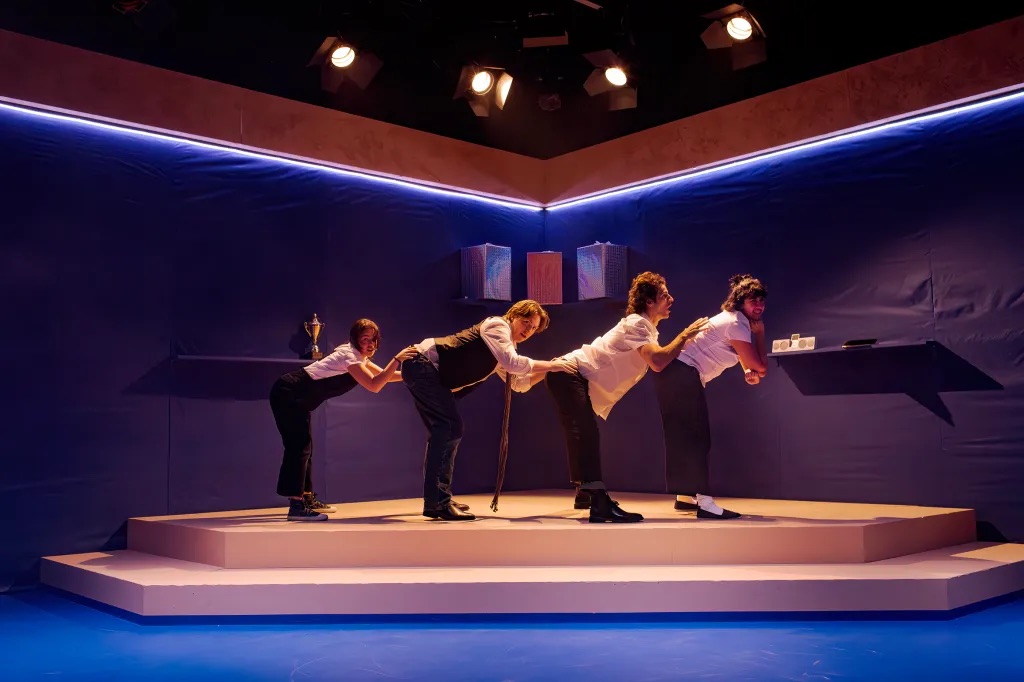
Evelina Singh, Andrew Fraser, Pierse Cant & Esha Jessy. Photo: Phil Erbacher. These three short stories show that playwright Parry understands structure and can work a joke. Combined with a good ear for dialogue, it’s a strong start, but Straight Panic feels less like a show and more like a writing exercise put on stage. Not all of the stories justify their near-identical sub-30-minute running time (the middle piece especially feels like it’s just running out the clock) and there isn’t much of a sense of message holding the three pieces together other than a single joke. Things get a little shakier with the writing that makes some glib choices with one piece set at the start of the 2005 Cronulla race riots, and another liberally using pejorative gay slurs.
Straight Panic has some genuinely funny, if juvenile, moments, but in the end doesn’t really make a case for its existence on the stage (other than to give the assembled talents some more experience). All theatre is ephemeral, but this feels more ephemeral than most.
-
A Queer Little Murder (Qtopia)
Written by Savannah Hankinson. Pride Fest. Qtopia Loading Dock. 15-18 Jun 2026.
Writer/performer Savannah Hankinson imagines a manor house murder mystery of a particularly sapphic sort in A Queer Little Murder, a new work-in-progress playing as part of Pride Fest.
Try Hard, a newly single, soft-masc lesbian from New York has planned a getaway to the queer enclave Rosebush Island, to help get over her ex – and hopefully get laid. When she checks in at her glamorous, and oddly inexpensive rental, she finds herself accidentally in an exclusive power-lesbian mansion with a horny nun, an aloof Ukranian model, their Grand Dame of a host, and her mousy assistant… oh, and her own Ex! When the lights go out, and one of them ends up murdered – Try Hard puts her depressed-binge-watching-of-murder-mysteries to good use and sets out to solve the mystery.
Hankinson shows a good talent for voices and physicality as she inhabits all six characters of the story with some canny accents, a few props and a lot of gusto. As she narrates for the full sixty minute running time, the stories visuals are clear and the characters are sharp. And most importantly, the jokes land – this is a comedy after all.
The very silly adventure runs headfirst into obvious lesbian cliches with abandon, bringing just enough specificity to feel authentic, but not so deep as to exclude those not in the community. It’s clear the show has good bones it can work on to elevate and expand its storytelling and heighten its humour.
This doesn’t feel like A Queer Little Murder’s final form, but it’s already entertaining and well on its way to something even bigger (and sillier).
-
Mackenzie (Bell Shakespeare) ★★★★
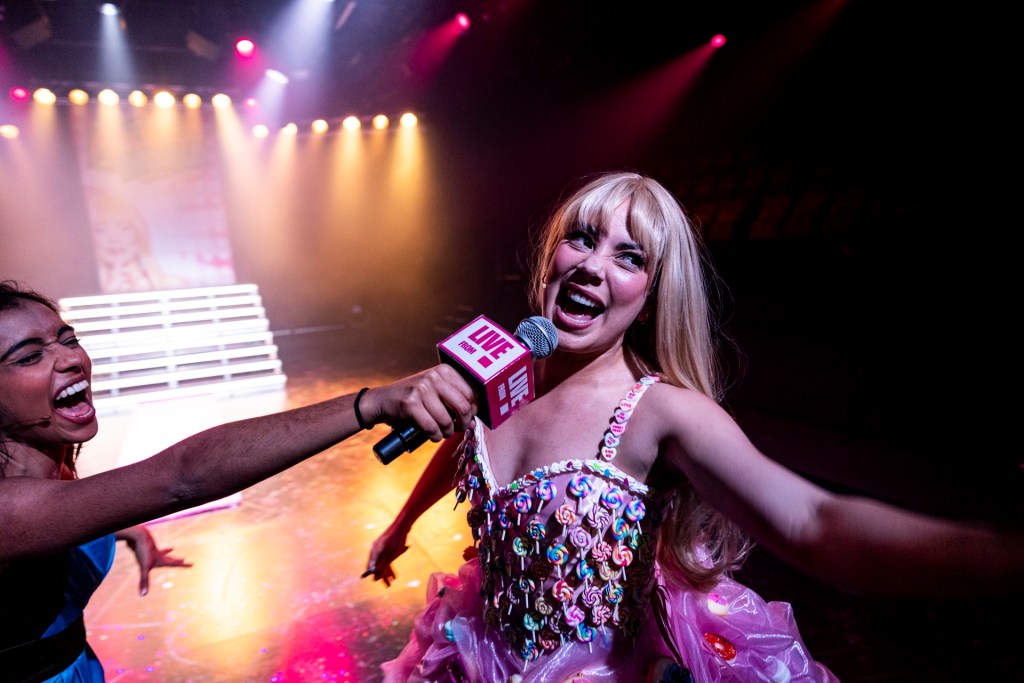
Written by Yve Blake, based on Macbeth by William Shakespeare. World Premiere. Bell Shakespeare Company. Neilson Nutshell. 6 Jun – 18 Jul, 2026.
Proving “fair is foul, and foul is fair”, we enter the world of child TV stars in Mackenzie, where pristine public image hides murderous jealousy and fame brings out the direst cruelty. It’s Macbeth, but done as a very dark teen comedy. And there are a few songs too (but it’s not a musical).
On the set of the tween TV hit The Dahlia Show, the producers have a problem. Dahlia’s “best friend” has been axed from the show and they need a last-minute replacement. What about that weird background kid with the bowl-cut, the one named Mackenzie (Kimberley Hodgson)? When they send the awkward thirteen-year-old for a makeover, the hairstylist has a vision — literally. She sees a future in which Mackenzie is number one on the call sheet and the biggest teen star in the world… but only until a younger performer comes to usurp her. To hang onto her Teen Choice Award crown, Mackenzie must become a deadly diva with no room for remorse.
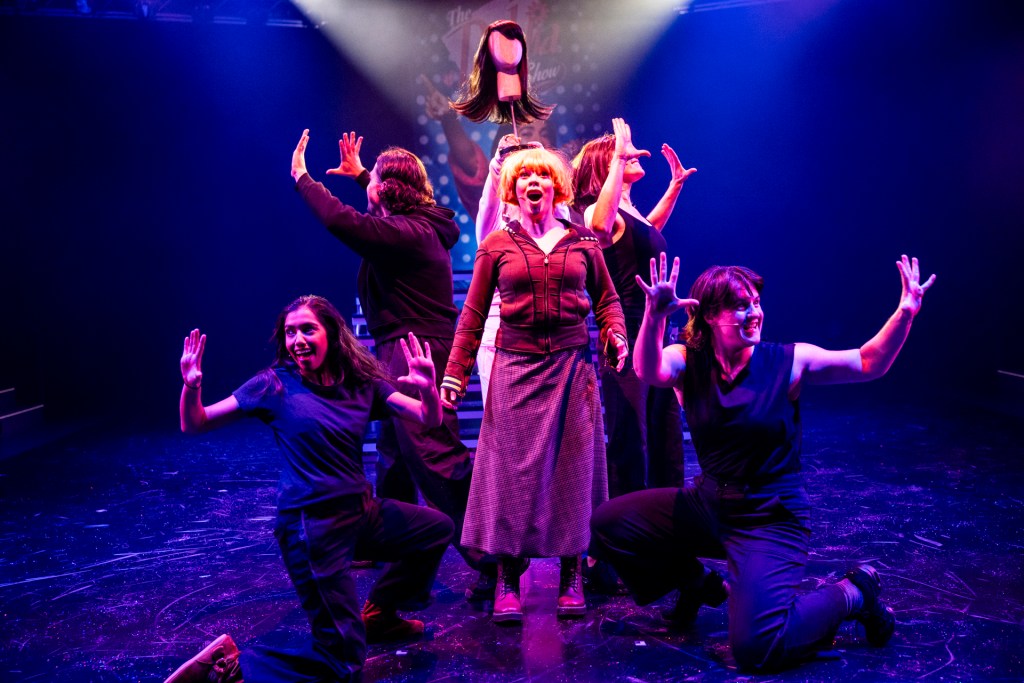
Ensemble of Mackenzie. Photo: Brett Boardman. Okay, I’ll cop to a big misunderstanding — and it’s all my fault. I thought Mackenzie was a musical, despite the marketing clearly saying this is a “play with songs”. With Fangirls’ Yve Blake on writing duty, the teen pop setting and an MT-performer cast, I assumed there’d be more songs than there are. It does have big “musical theatre” energy and there are a couple of Blake’s signature catchy pop pastiches in the show, but they’re very secondary to the action.
With that out of the way, we turn to this tonally hyperactive show: part Lizzie McGuire/Hannah Montana parody, part Kath & Kim comedy, part Heathers teen murder fantasy, part Showgirls dark camp. It takes the broad strokes of Macbeth — including a subtle riff on Lady Macbeth’s “damn spot” and a twist on “none of woman born” that will either make you rejoice or rile you up — and layers in the sick underbelly of washed-up child stars, pushy stage “momagers” and paparazzi up-skirt shots. It’s a lot, no doubt. Wildly genre-smashing but equally wildly entertaining, it has all the ingredients of a cult classic.
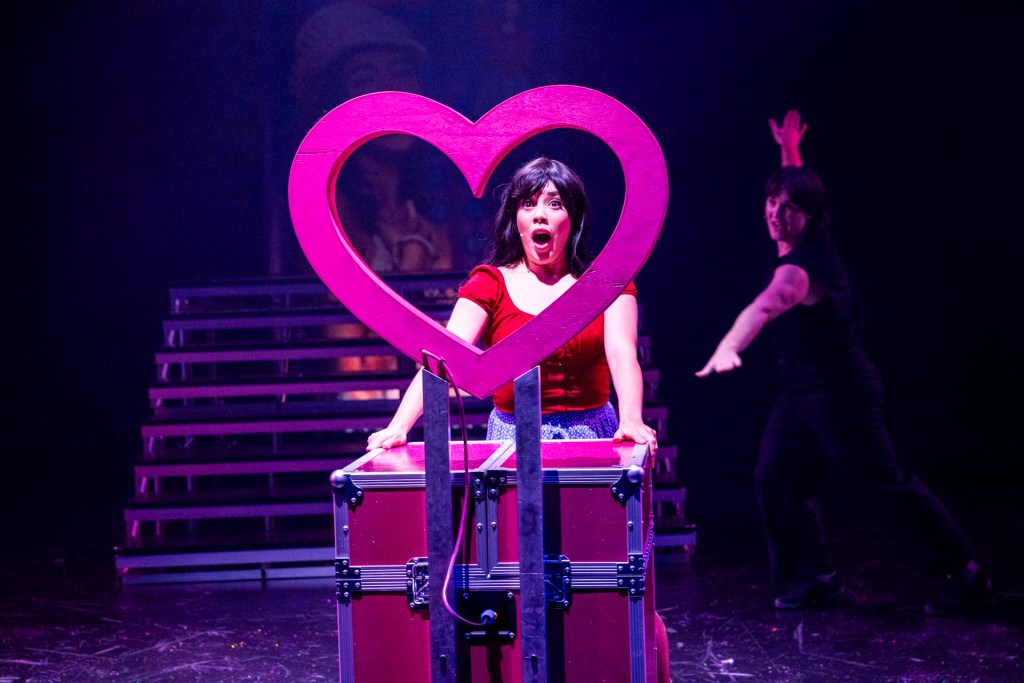
Kimberley Hodgson & Billie Pallin. Photo: Brett Boardman. Blake’s script hits the familiar touchstones of the teen-star life we know from tabloids and Netflix exposé documentaries, threaded together with the kind of love that comes from someone with a genuine connection to that era and those stories just as she showed with Fangirls’ take on boyband mania. The Disney Channel-esque setting gives the story real leeway for its big tonal swings (those shows got away with wild storylines on a handful of props and dedicated performances — just like live theatre does). The more steeped you are, or were, in those shows and their stars fates, the more fun you’ll have.
The “ridiculously talented”TM Virginia Gay directs with real verve, channelling the hyperactive energy of kids TV while letting the emerging teen angst breathe. The clash of tones, crazy wigs and threadbare budget actually enhance the Kids TV vibe rather than distract from it. While the staging is disappointingly minimal, lacking the colour & life of the marketing, Mackenzie moves like a sleek bullet train that never gives you time to get off or question it too deeply.
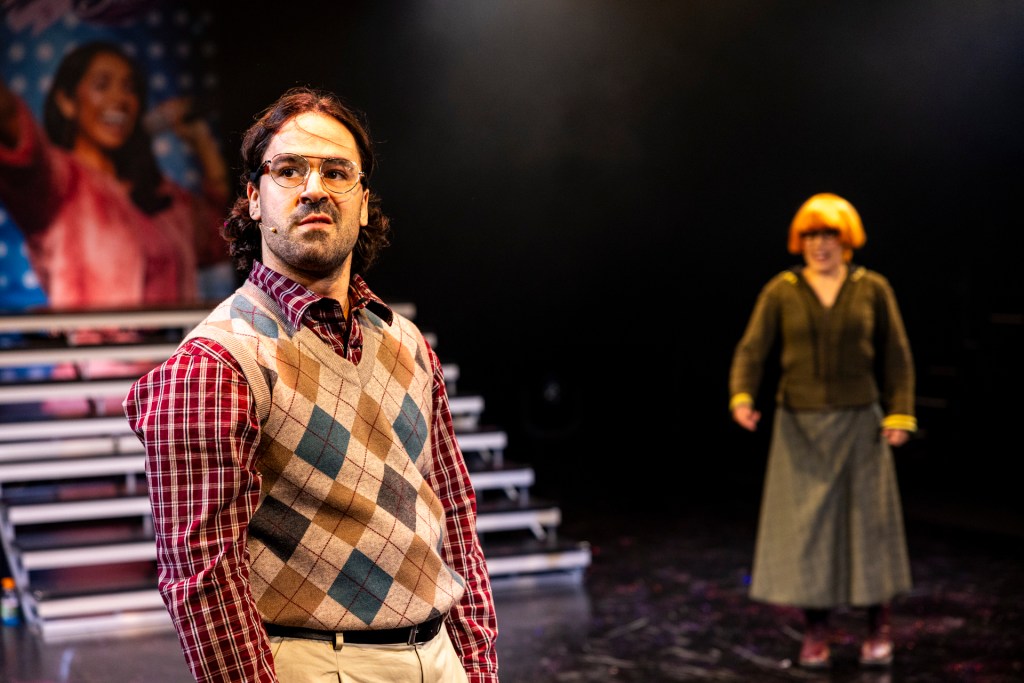
Ryan González & Kimberley Hodgson. Photo: Brett Boardman. The six-strong cast, alongside the Bell Shakespeare backstage crew, have mastered the art of the quick change, covering multiple roles — often in the same scene. Jane Watt is the show’s MVP, nailing a host of roles including the prophetic hairdresser Pickle and the TV producer. Billie Palin matches her, covering smaller roles including show caterer Gayle. Ryan González is reliably funny and adorable as Mackenzie’s co-star Beau, with comedic timing expertly on point. Anusha Thomas is irrepressible as both teen superstar Dahlia and Mackenzie’s long-suffering assistant. Nikki Britton gives us the full emotional range as Mackenzie’s pushy mum Ruth — this show’s Lady Macbeth — moving from comedically grotesque stage parent to a genuinely affecting finale. At the centre is Kimberley Hodgson, whose chameleonic performance takes Mackenzie from excited tween to distraught accomplice to avaricious mini-mogul — emotionally grounded throughout the bizarre extravagance that surrounds her.
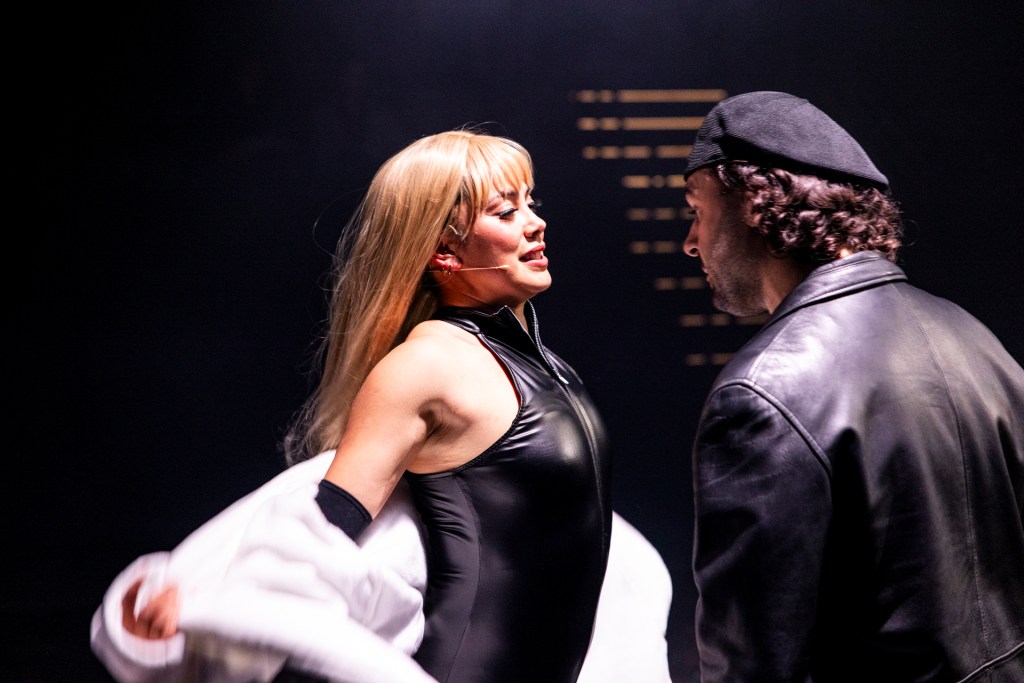
Kimberley Hodgson & Ryan González. Photo: Brett Boardman. There’s no shortage of real life tween-actress-turned-pop-star for generations of audiences to relate to — whether your touchstone is Hilary Duff, Lindsay Lohan, Britney Spears, Miley Cyrus, Demi Lovato or Sabrina Carpenter, it’s much the same story. But I can’t help wondering: who is this show for? The discussion of incest rules out the family-friendly crowd looking for teen-accessible Shakespeare, despite the hyper-pastel marketing appeal. Shakespeare purists will run a mile from this Macbeth-lite, devoid of classic language (yes, I’ve quoted more Macbeth in this review than you’ll find in the play). The musical theatre crowd will want their stars belting ballads and bemoan the paucity of tunes. The opening night crowd loved the insider jokes about independent theatre, but will a mass audience? Can this “Diet Shakespeare” satisfy both unfamiliar newbies and devotees looking for a fresh take? Mackenzie hits the same dilemma its lead character does – can it make itself a bit sexy so it’s appealing, but not try to be so sexy that it’s cringe?
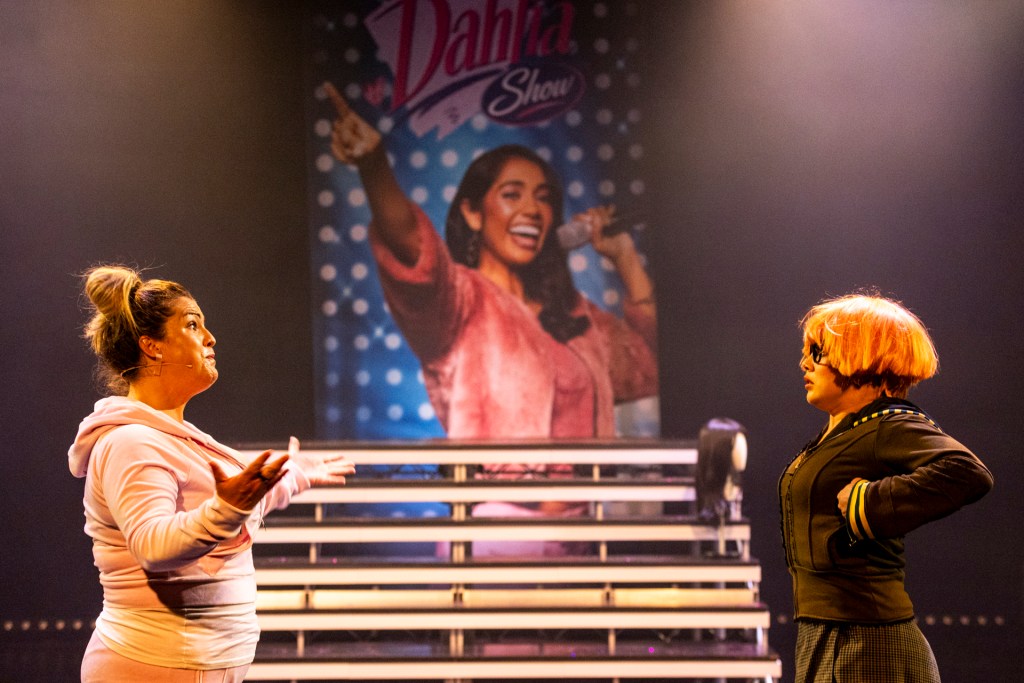
Nikki Britton & Kimberley Hodgson. Photo: Brett Boardman. In a world littered with the used-to-be-famous, whose adult lives are often “but a walking shadow” selling real estate or working behind the scenes, Mackenzie doesn’t really grapple with the aftermath it plays with and in the end, that’s totally fine. “Come what come may”, this is a camp, murderous pantomime covered in candy floss, and it knows exactly what it is.
-
Skank Sinatra: The Name on Everybody’s Lips (Qtopia) ★★★½
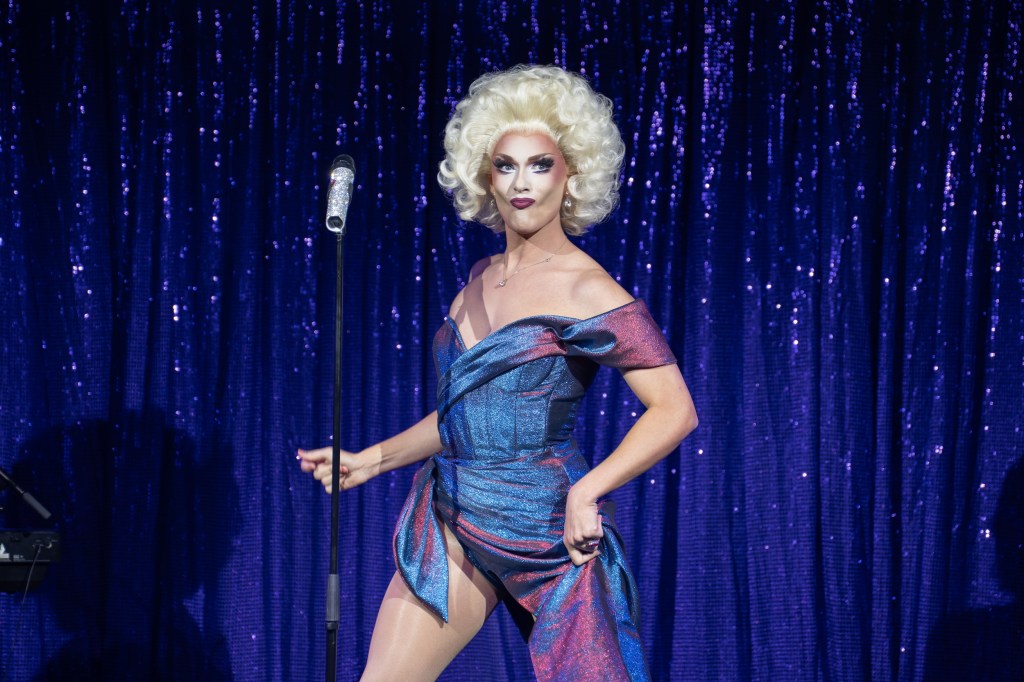
Presented as part of Pride Fest. Qtopia Loading Dock. 10-14 Jun, 2026.
Ol’ Blue Thighs is back, and she’s serving Broadway with a slice of skank. Jens Radda, aka Skank Sinatra, brings a wide selection of musical theatre hits to the stage with her own unique twist in a semi-pseudo-autobiographical show.
Skank Sinatra is here to impart some wisdom and perform for the gays — teaching us all how to succeed in show business (without really trying). From a disappointing early audition in a Danish production of Evita to the travails of the musical-theatre-porn industry, it’s a wild ride from Denmark to South Africa to Australia and beyond.
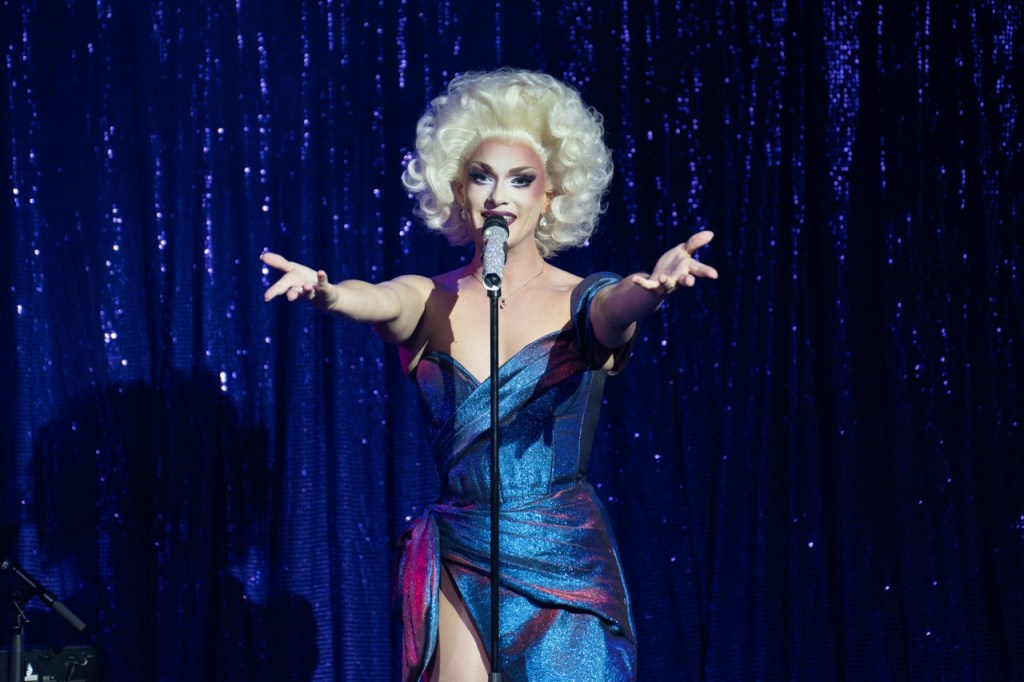
Jens Radda. Photo: Kate Arnott. The night’s playlist spans classic to contemporary Broadway, hitting shows like Guys & Dolls, Hamilton, The Lion King, Oklahoma!, Little Shop of Horrors and Death Becomes Her, with some surprising lyrical substitutions that will make you blush. There are also conversations with Broadway legend Liza Minnelli — sort of. Well, it’s more convincing than her AI-Liza audiobook, anyway.
But this isn’t just a musical theatre cabaret — it’s a drag show, and Jens Radda knows how to throw a look and work a room. There are costume changes, a lot of sequins, and a lot of innuendo.
Vocally, Radda has a solid voice to carry most of the tunes, but their strength lies in the comedic moments. The narrative of a performer’s trials makes for fertile laughs and gives ample room for moments of flair, aided by some simple but effective lighting cues. It’s not all gay jokes and sassy comebacks — there are some nicely intimate tunes, and a surprisingly touching performance of ‘Don’t Cry For Me Argentina’ in Danish.
Does she hit every joke or every note? No. It’s a bit more frazzle-dazzle than razzle-dazzle at times — but that’s not the point. This is an hour of silliness with a musical theatre through-line. If you like your Broadway bangers served with a side of maniacal mash, you’ll get a kick out of this.
-
W (Old Fitz) ★★★½
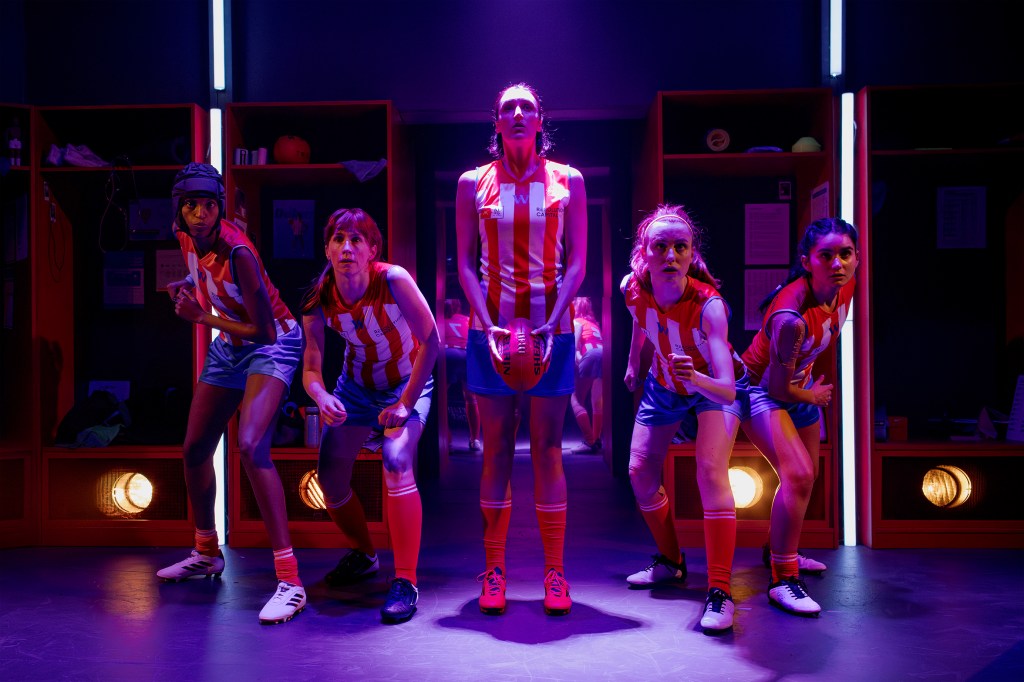
Written by Madelaine Nunn. World Premiere. New Ghosts Theatre Company. The Old Fitz. 29 May – 19 Jun, 2026.
Big ambition is at the core of W, the AWFL themed play at the Old Fitz. Both the ambition of the players and their coach in the story, and ambition in the writing that could easily step out of the black box space onto a larger stage.
Rosie (Shannon Ryan), the team captain of an AWFL team, is at the peak of her career. She’s a media spokesperson, a wife to her teammate Alex (Grace Smibert) and a role model for younger players. She and Alex are trying to have a child, which doesn’t always fit with the schedule of an athlete and is causing the pressure to mount at home as well as on the field. Things only get worse as the team unity is starting to wobble with the addition of a new member, Casey (Celesté Cortes-Davis) who quickly earns the nickname “Mouth” for her outspoken attitude. As the team head to the Grand Final Rosie starts to realise she may not be able to get everything she wants in life.
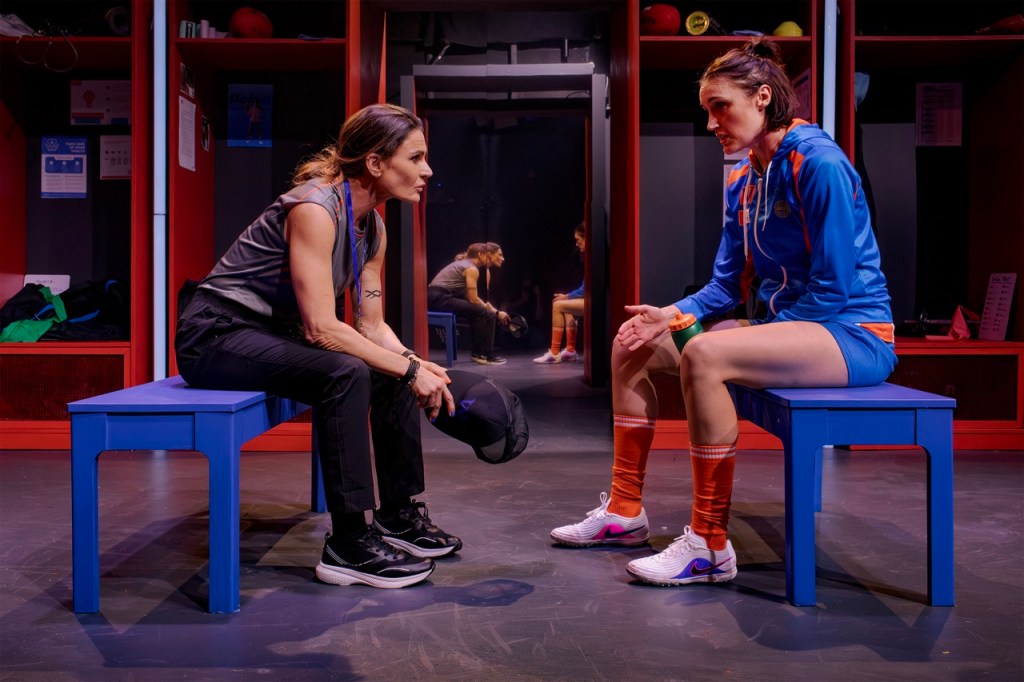
Danielle Cormack & Shannon Ryan. Photo: Phil Erbacher. The strength of playwright Madelaine Nunn’s writing is her willingness to withhold. Together with director Rachel Chant, the themes of the play are ever-present but never over-laboured. The relative lack of respect for women’s sports, the creepy attention from male fans, the players’ sexuality and more are handled with a frankness that doesn’t try to milk them for obvious and well-worn drama. Nunn’s focus is on the characters and the combination of female ambition with the shifting realities of life.
And what’s in the design waters at The Old Fitz this year? It feels like every set designer has raised their game in transforming the space into something new. This time Meg Anderson gives us a high energy locker room with bold colours and clean lines, accentuated by Luna Yuet Yee Ng’s lighting. Sound by Clare Hennessy brings the stadium energy to the small stage.
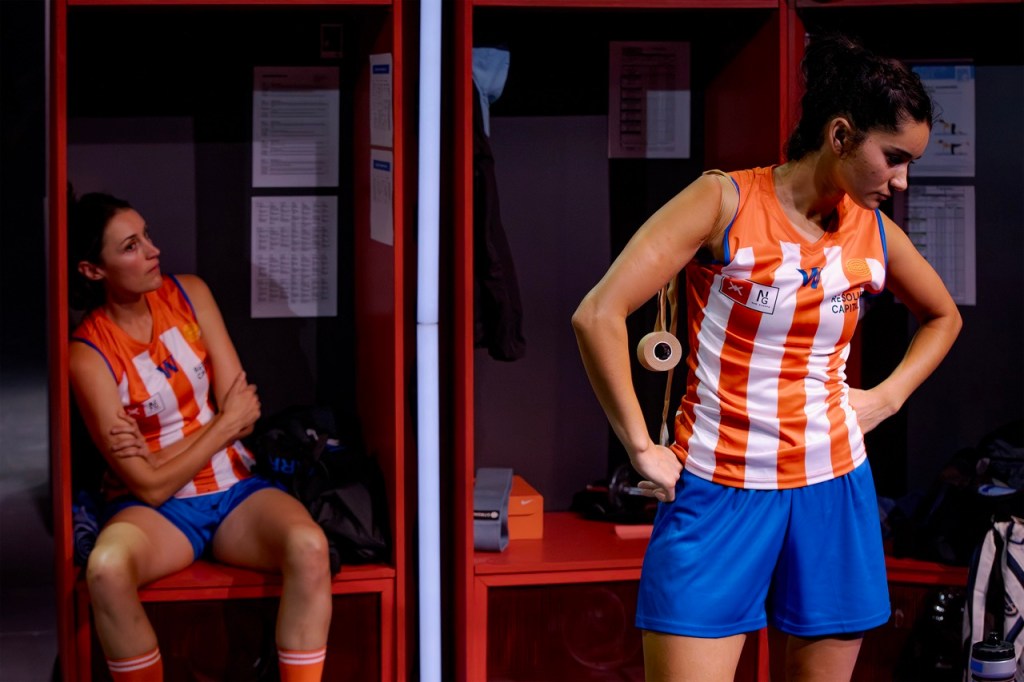
Shannon Ryan & Celesté Cortes-Davis. Photo: Phil Erbacher. The cast each give us clear, distinct characters. Ally Morgan’s Brigid, juggling motherhood and sport and using physical activity as an emotional release she can’t find anywhere else, is a real highlight. Shannon Ryan gives Rosie a focused, stoic outlook that crumbles as she has to ask herself what she really wants out of life. Celesté Cortes-Davis makes an impact as the ambitious but undisciplined Casey pushing past others on the way to her goal. And Danielle Cormack’s Coach Sue is a well-pitched balance of comedy and heart.
As the play progressed I started to question the title W. I assumed it stood for “Women”, but it could easily stand for “Why”, “What’s next” or “Who am I?” There are big questions lurking just underneath the battered skin of this sporting drama and it’s a rich field to play in.
-
Alfred Kouris and Harry Stacey Bake a Cake (Old Fitz Late) ★★★★★
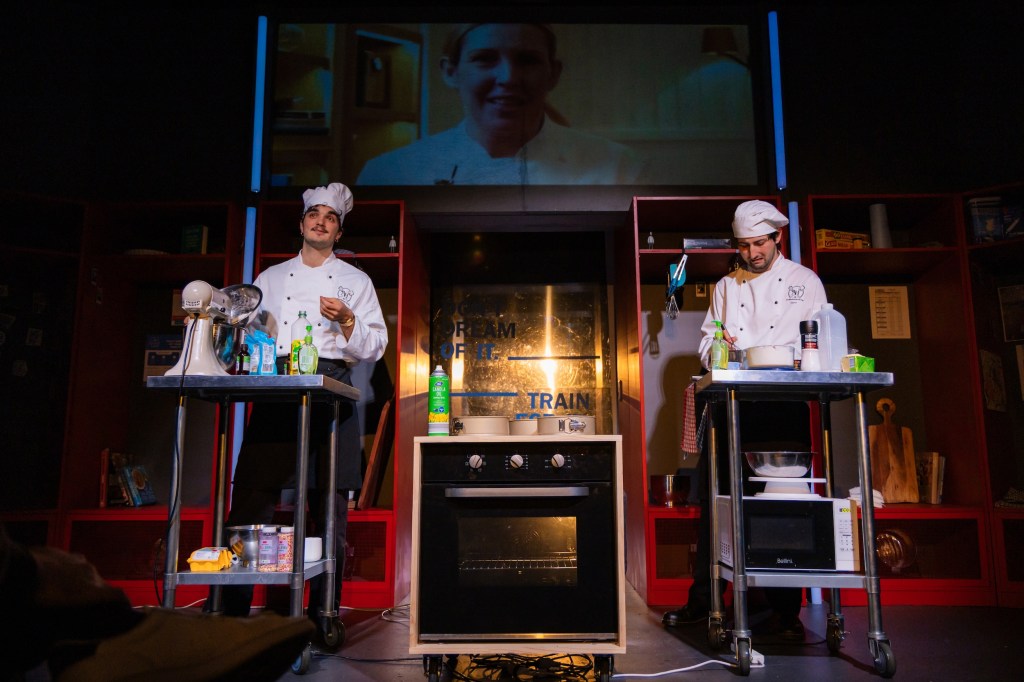
Created & Performed by Alfred Kouris & Harry Stacey. World Premiere. Presented by Irregular Programming. The Old Fitz. 2-7 Jun 2026.
What’s with the culinary-themed theatre at the moment? Broadway has the transfer of London’s Two Strangers (Carry a Cake Across New York) and we’re about to get the dessert pie-themed Waitress in Sydney – but if you want bang for baked buck, there is only one late night stop to sate your theatrical munchies and it’s the Old Fitz.
Alfred Kouris and Harry Stacey Bake a Cake does exactly what it says on the tin – over the course of roughly 70 minutes, Alfred Kouris and Harry Stacey bake and ice a three-layered cake from scratch. It’s part morning TV segment, cooking reality TV competition, lip-sync for your life, computer game, surreal variety show, and a love story, that ends with, you guessed it, a cake to share with the audience.
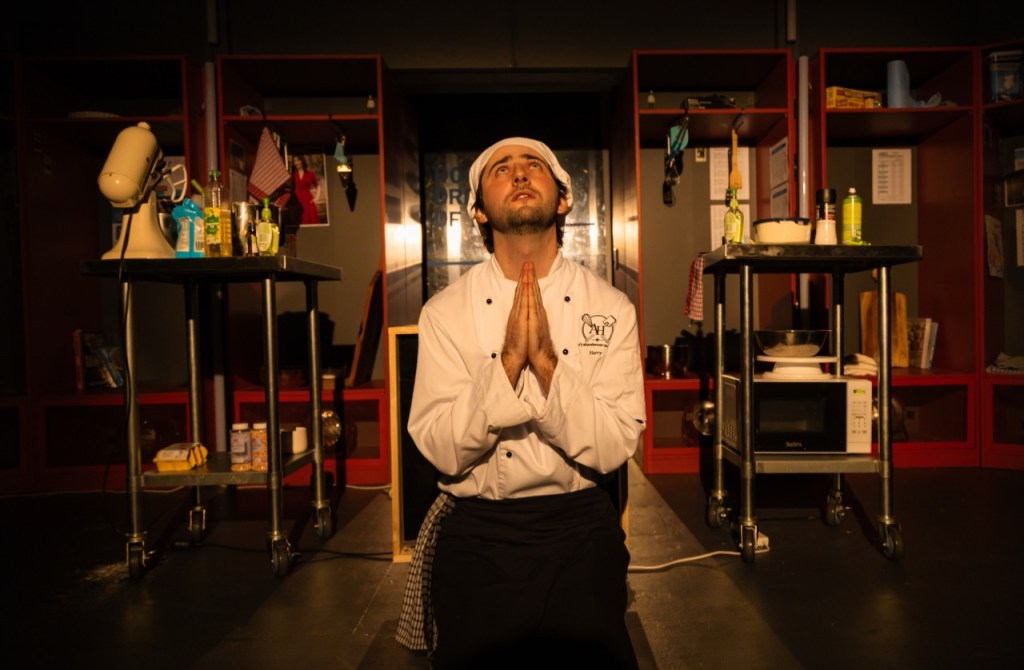
Photo: Braiden Toko. I have no shame in saying it – I was more invested in both the friendship of Alfred and Harry, and in the fate of the cake, than I have been in most plays I’ve seen recently. Something about this insane show drove me to 80s-rom-com-punch-the-air joy. Strangely this is a show filled with an unbridled sense of hope (and the ghost of a fictional chef).
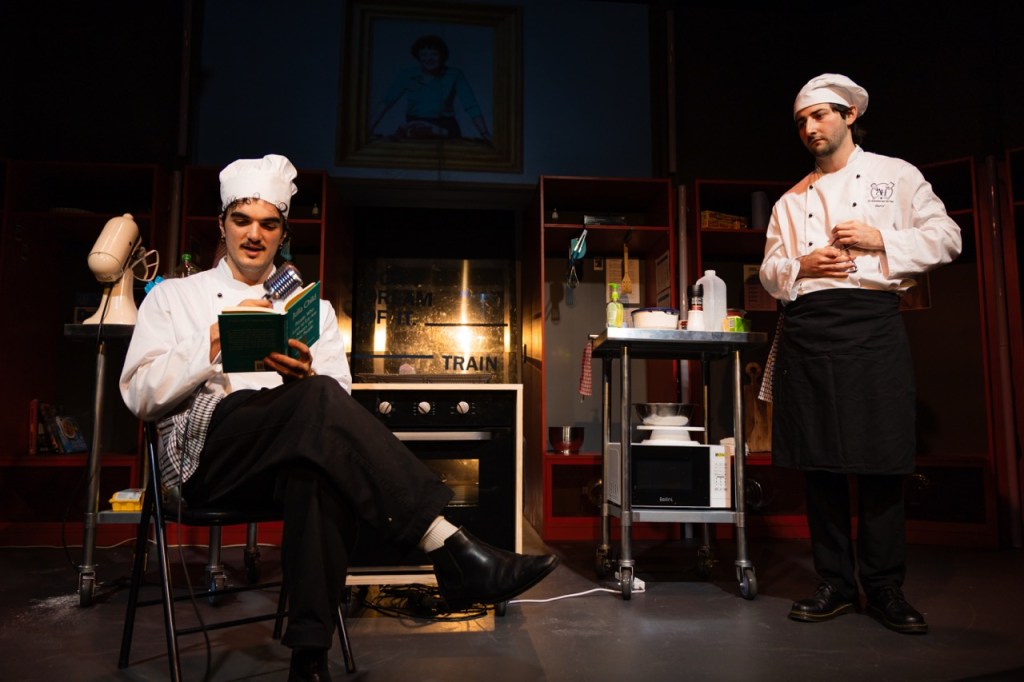
Photo: Braiden Toko. As Alfred and Harry vamp to pass the time as the cake bakes in the on-set oven (with a countdown ticking above their heads) things inevitably go off the rails – and these two young men keep things loose and unpredictable. Along the way we get a group singalong, some choreography, interactive mobile games and emotional drama. It’s hard to tell where the scripted moments end and the ad-libs begin, and that fluidity makes this genuinely “lean in” theatre. There may not be much plot, but there is a Mixmaster full of jeopardy.
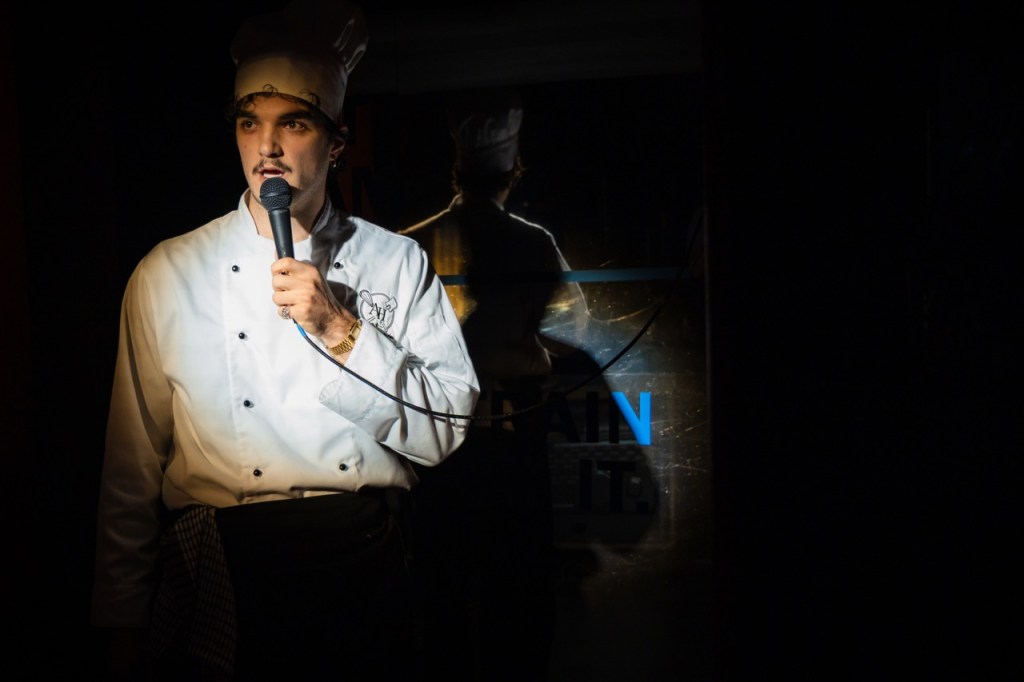
Photo: Braiden Toko. For my day job, I have worked on reality TV cooking shows (new season of MKR coming soon), and this is by no means the most chaotic cook I’ve watched unfold live, but it is easily the most entertaining. As they parody cooking shows and lip-sync to clips of famous TV chefs I was left in stitches. I demand a longer season, I demand spin-offs — Alfred Kouris and Harry Stacey Make a Sunday Roast, Alfred Kouris and Harry Stacey Make a Pavlova…
I’m rushing this review out (I left the theatre just over an hour ago) as this initial run at The Old Fitz has a painfully short shelf life so you’ll need to be quick, but if we’re lucky this isn’t the last we’ll see of Alfred Kouris and Harry Stacey. I say this as both a theatre reviewer and as a producer of reality TV cooking shows – this is a must see.
-
Prima Facie (Roslyn Packer) ★★★★★
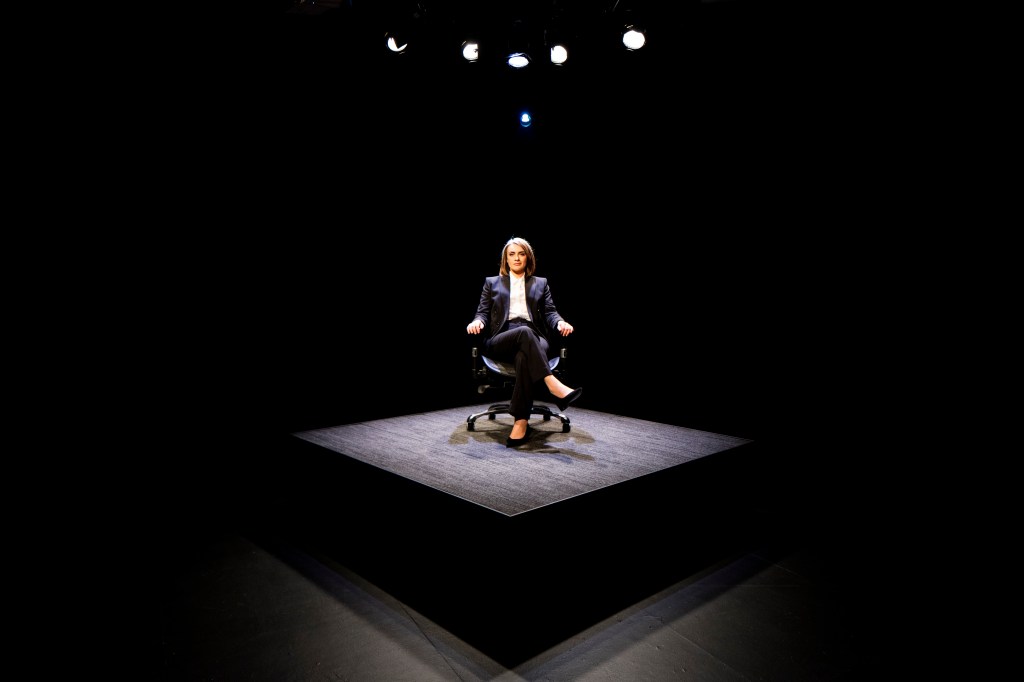
Written by Suzie Miller. Griffin Theatre Company & Andrew Henry Presents. Roslyn Packer Theatre. 3-21 Jun, 2026.
Theatrical juggernauts are a rare thing, especially juggernauts that start in Australia, but Suzie Miller’s one-woman legal drama Prima Facie is nothing short of a phenomenon – and it’s back for a victory lap in its original form with Sheridan Harbridge back in the lead.
Tessa (Sheridan Harbridge) is a confident, you could say cocky, defence barrister who excels at playing “the game” of law. She believes in the legal system, and dispassionately argues the case of her clients. When she finds herself on the other end of the system, as the victim being cross-examined, she sees the flaws in the law that she believed to be pure.
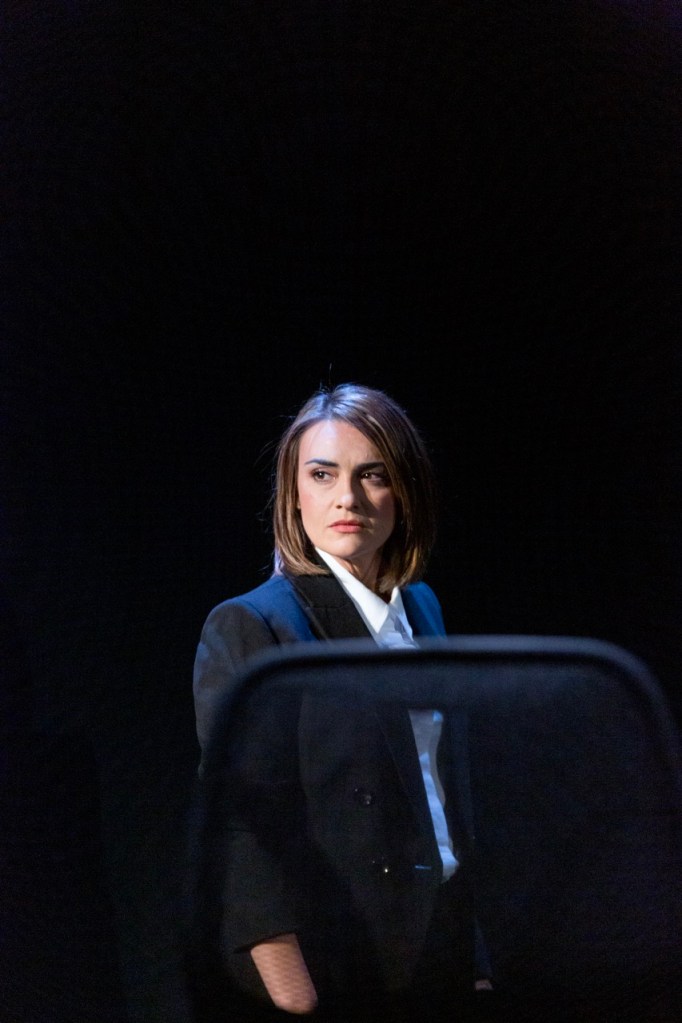
Sheridan Harbridge. Photo: Brett Boardman. At this stage, there isn’t much left to be said about Miller’s global smash hit (Olivier Awards, Tony Awards, AWGIEs) that hasn’t already been said. Few plays can take credit for changing the legal landscape, with Prima Facie now mandatory viewing for new judges in Northern Ireland, and the formation of the UK group The Examination of Serious Sexual Assault (TESSA) by female barristers to rewrite legislation. The impact has been broader still in raising awareness and advocacy for clearer consent laws and educating audiences on the complex matters of sexual assault cases.
And it all stemmed from this one-woman show at Sydney’s Griffin Theatre back in 2019.
If you’ve never seen the show, then it simply is a “must see”. This is the most significant Australian work of the last decade, probably longer. If you saw the Jodie Comer-led London or Broadway productions (or the NT Live broadcast) it’s worth revisiting both for the sheer power of the play, and to see the original while you can. Think of the Comer version as “The Force Awakens” to Harbridge’s original “Star Wars” – it’s a flawed analogy but I’m sticking with it.
There is a simplicity to this restaging of Lee Lewis’ original direction, in the larger space of the Roslyn Packer – it trades in The Stables Theatre’s intimacy for a sense of scale and power. When Tessa stands alone under a spotlight you feel her isolation. When she swaggers across designer Renée Mulder’s clean open stage with pride, you feel her power fill the space. Paul Charlier’s audio work floods the imagination, while Trent Suidgeest’s lighting has a subtlety that speaks volumes.
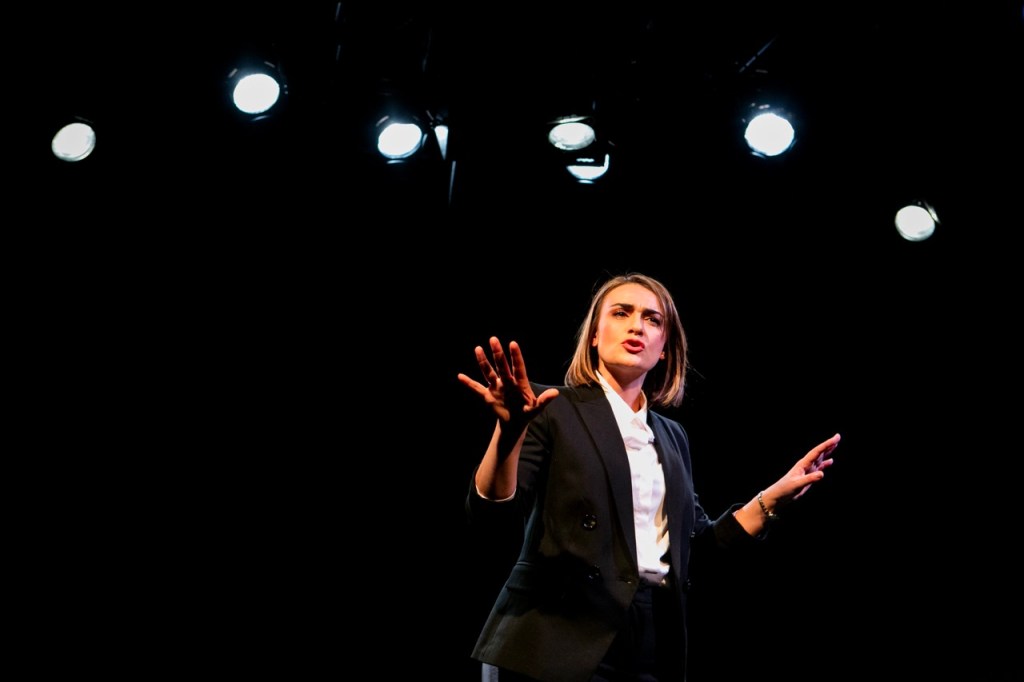
Sheridan Harbridge. Photo: Brett Boardman. It seems almost wrong to talk about how funny and entertaining Prima Facie is, due to the severity of its subject matter and the importance of its message about sexual assault. But the truth is, Miller’s script and Harbridge’s performance bring an enormous amount of light and shade to the story – making the 90-minute running time fly by.
Harbridge’s chameleonic performance brings the cast of characters to life, painting a detailed picture of Tessa and her world – and the key to Prima Facie is the moment Tessa directly addresses the court and lays out the show’s thesis in clear, concise language. It’s almost as if Tessa steps away and Miller herself takes the stage to plead with the audience to understand: the system doesn’t work for these cases. When so many playwrights hide behind ambiguous endings or an emotional sleight-of-hand to avoid tackling big issues, Miller boldly makes her case. It’s utterly compelling and convincing.
In short – go and see it. The hype is real, and the reality more than lives up to it.
If you need support please reach out:
-
Sheltering (Bangarra) ★★★★
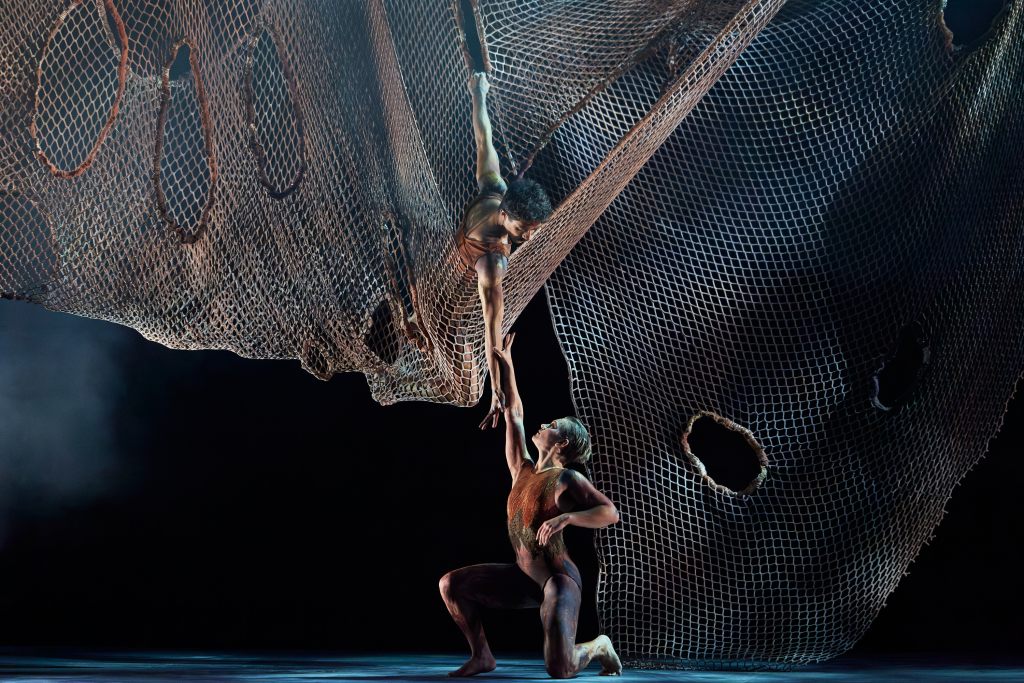
Choreographed by Frances Rings, Glory Tuohy-Daniell, Daniel Mateo and the Dancers of Bangarra Dance Theatre. Sydney Opera House. 3-13 Jun, 2026.
Three different existing works are expanded and brought together by their thematic connection to First Nations cultural legacy in Sheltering, the new full-length show from Bangarra Dance Theatre, that celebrates the breadth of form in the community.
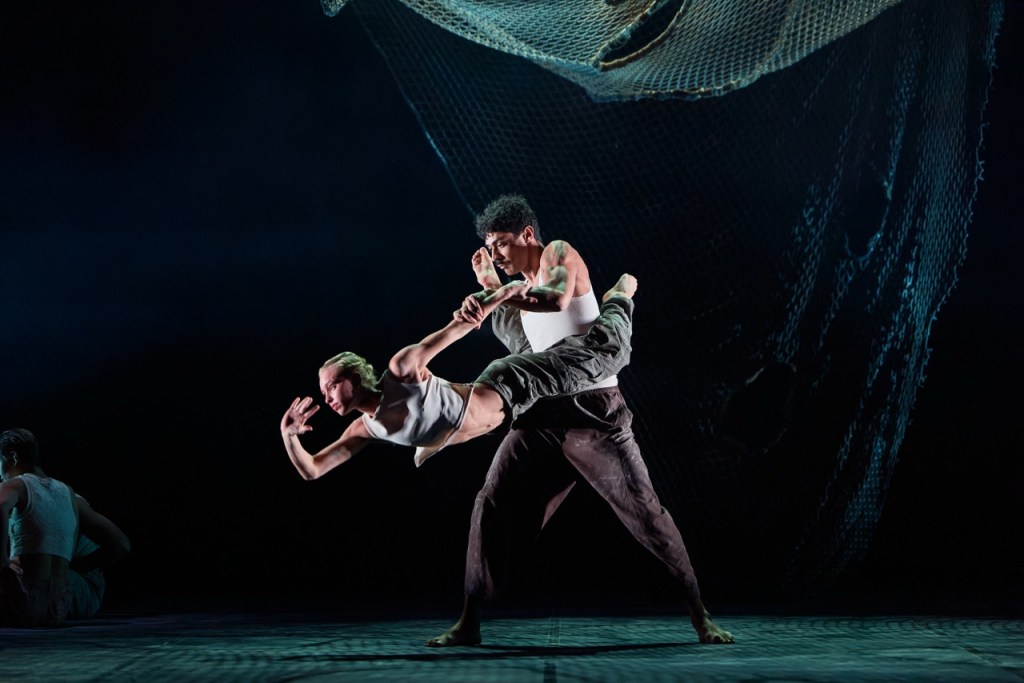
Keeping Grounded. Photo: Daniel Boud. The opening piece, Keeping Grounded (choreographed by Glory Tuohy-Daniell) focuses on the literal, physical connection to land – the earth beneath our feet. The most recent of the three works performed, it was first created in 2023 before being reimagined and expanded for the Joan Sutherland Theatre stage. Opening with a writhing mass of bodies released as a giant net is raised into the sky – there is a fiercely kinetic energy to the movement – a sharpness of execution that blends contemporary, commercial dance motifs into the storytelling. Shana O’Brien’s design, the rippled netting that gives texture to the dark stage, gives the work a dramatic sense of height, allowing the dancers to suspend in the air without defying the gravity that connects them to the ground. Of the three works, it was my favourite – I was left wanting more.
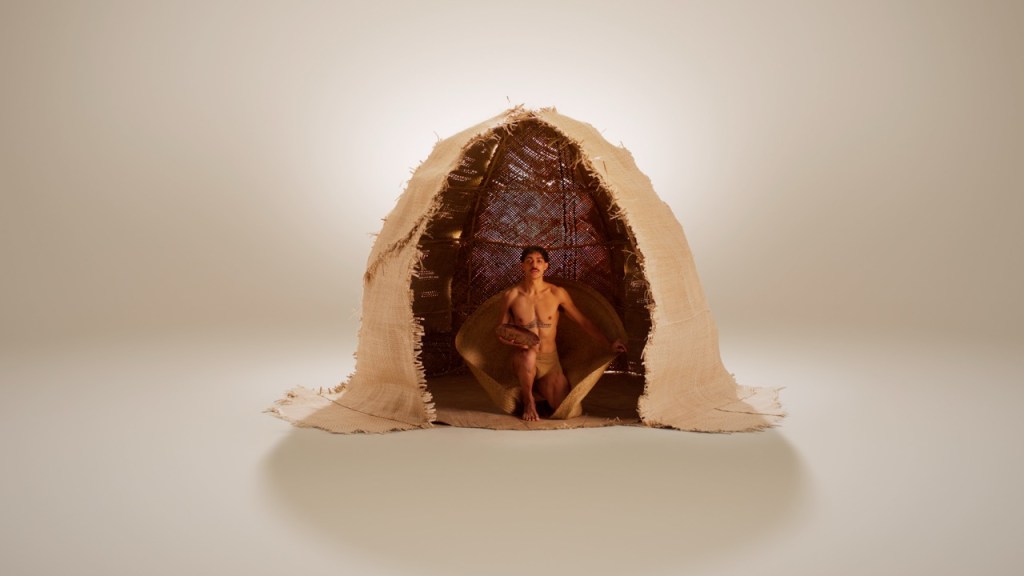
Brown Boys. Photo: Cass Eipper. The second work, the stunning short film Brown Boys by Daniel Mateo, is possibly the most exciting of the three for its sheer, refreshing change of form. Brown Boys is poetry, told through words and movement, captured by excellent direction, design and editing. There is a well-planned elegance to its execution (the slow transformation of Elizabeth Gadsby’s set itself has a choreography all its own). Filmmakers Cass Mortimer Eipper and Liam Brennan bring a sympathetic and emotive lens to Mateo’s words and movement. There is a richness of tone to the video-work that amplifies Mateo’s poetry, which affirm the beauty and power of brown skin – elevating Brown Boys from a “music video” into video art in its own right. It’s only six minutes long, but those six minutes are beautifully realised.
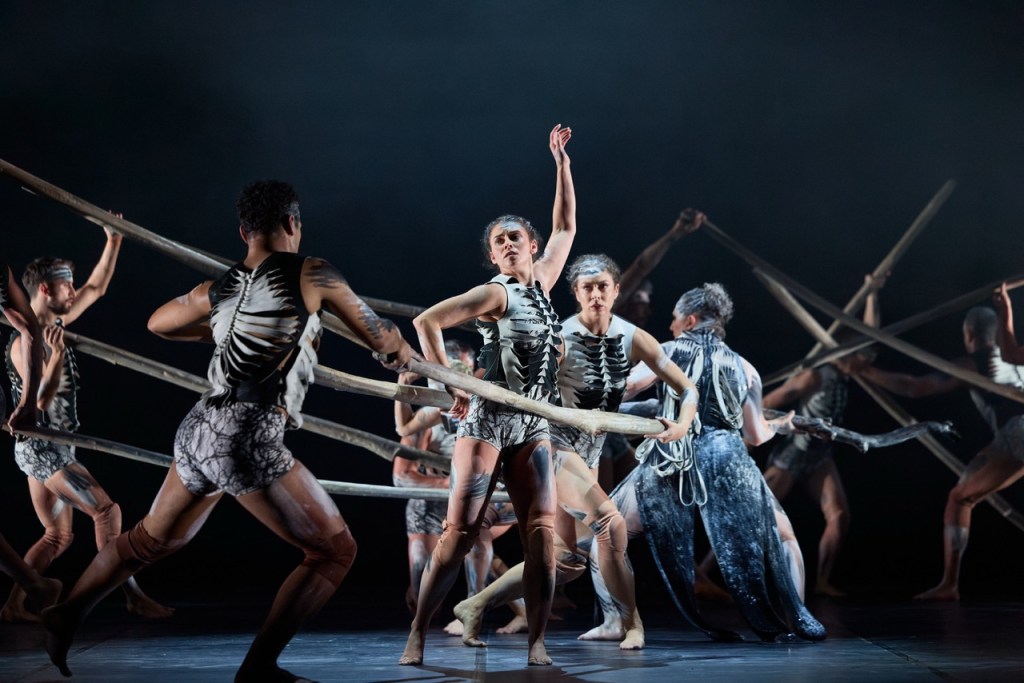
Sheoak. Photo: Daniel Boud. The major work of the night is Frances Rings’ Sheoak, first developed in 2015 in response to the Abbott administration. Of the three works in Sheltering, Sheoak carries the most weight – there is a defiance and pain that runs through it that now, more than 10 years on from its first staging, acts as a reminder of broken promises. From the symbolic use of suspended wooden beams, to the ethereal glow of a blanket of light – the piece transforms across its 48 minutes. While I feel like Sheoak perhaps starts to dip into indulgences at times, it is still a work of rebuke and resilience, of the long memory of culture, and of the power to stand – and even generate new hope – against pressure.
It’s another beautiful collection of works from Bangarra Dance Theatre that demonstrates their breadth of dancing and choreographing talent across generations. Sheltering revives the old through the new (new voices, new dancers, new media) and shows that legacy can form a strong foundation for the future.
-
Subscribe
Subscribed
Have a WordPress.com account? Log in now.

