-
Welcome to Cultural Binge

The rating system is simple:
★★★★★ – Terrific, world-standard. Don’t miss.
★★★★ – Great, definitely worth seeing.
★★★ – Good. Perfectly entertaining. Recommended. Individual mileage may vary.
★★ – Fine. Flawed and not really recommended, but you may find something to appreciate in it.
★ – Bad (& possibly offensive).
See more reviews over at The Queer Review.
Instagram: @culturalbinge
Substack: culturalbinge.substack.com
Email: chad at culturalbinge.com
-
Es & Flo (Old Fitz) ★★★
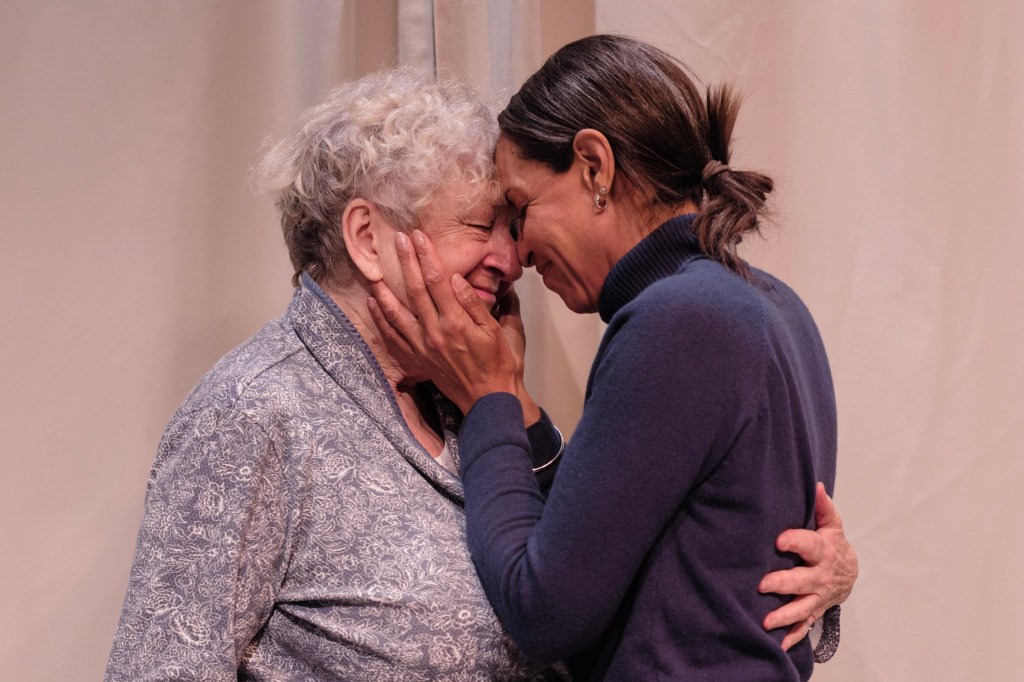
Written by Jennifer Lunn. Australian Premiere. Mi Todo Productions. Old Fitz Theatre. 13-28 Feb, 2026.
“Some girls marry girls – get over it,” says the fantastically precocious Kasia in Jennifer Lunn’s play Es & Flo.
The play charts the changing landscape of gay rights over the last 50 years, while also revealing how things that seem simple can be emotionally complicated for those who lived through harsher times.
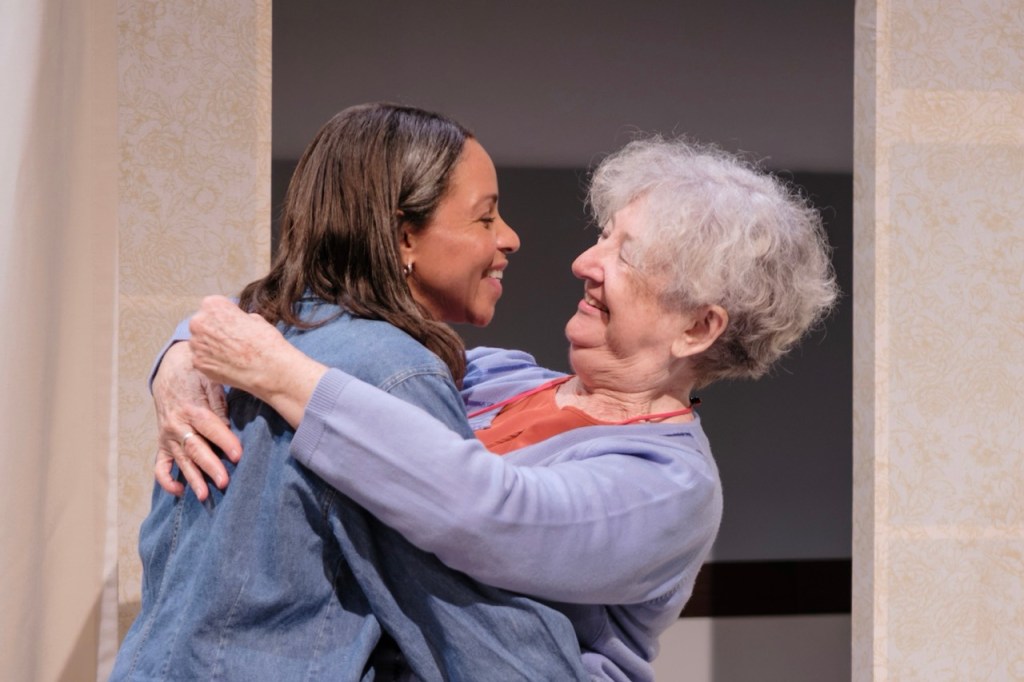
Fay Du Chateau & Annie Byron. Photo: Robert Catto. Esme (Annie Bryon) is slipping from “occasionally confused” into “potential dementia”, and it’s taking a toll on her nearly 40-year relationship with Flo (Fay Du Chateau). Es, like many older people in her situation, doesn’t want to face the reality of what’s happening. For Flo, however, the stakes are immediate and frightening. If Es goes into care – or, God forbid, dies – Flo could lose not only her partner but her home and any say in what happens next. They’re not married, they’ve kept their relationship hidden from Es’s son, and the house is in Es’s name.
When Es’s son, Peter, sends in a part-time carer, the Polish Beata (Charlotte Salusinszky), and begins talking about moving Es to a care home closer to him in London, it becomes a tug-of-war. Who will Es give power of attorney to – her long-time secret partner, or her beloved (but often absent) son?
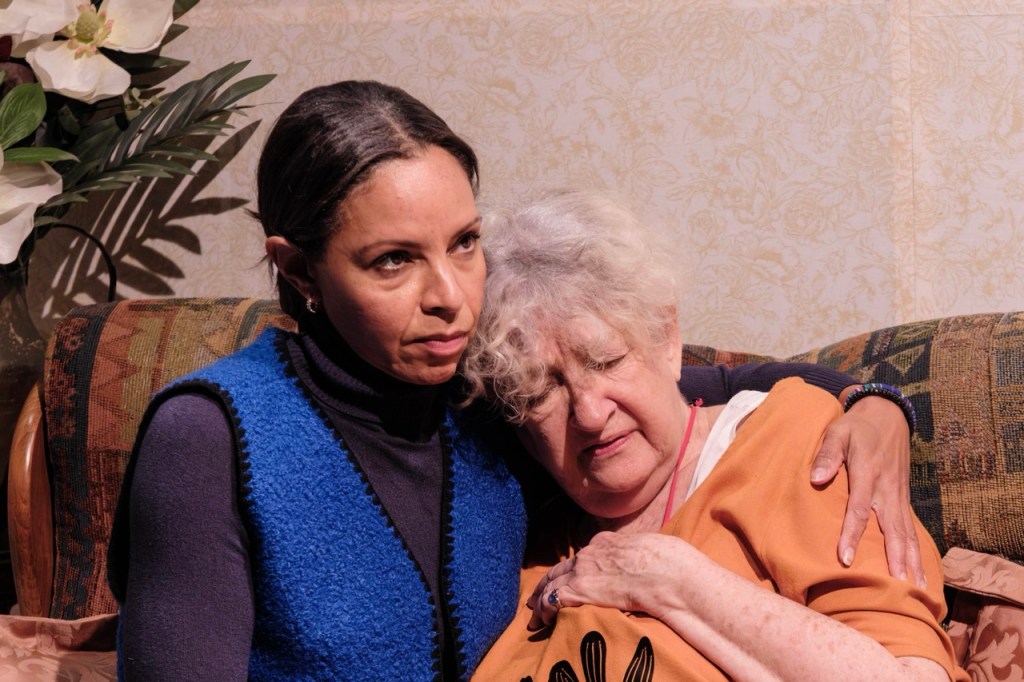
Fay Du Chateau & Annie Byron. Photo: Robert Catto. The beauty of Lunn’s script lies in the way it weaves British political history into deeply personal lives while building strong, believable characters. Es and Flo met at the Greenham Peace Camp in the 1980s, protesting against nuclear weapons at what became a political hotbed. Their same-sex relationship was later condemned under Margaret Thatcher’s infamous Section 28 legislation. These forces pushed schoolteacher Es further into the closet, fearful for her job and for her son from a previous marriage. Lunn also doesn’t shy away from exploring the racial dynamics at play on stage.
Director Emma Canalese brings these memories to life in scene transitions that sometimes feel overlong, washing the stage with projected photographs and fragments of memory, supported by evocative video and sound design from Aron Murray and Keelan Ellis. Soham Apte’s set has an intriguing impermanence – paper-thin walls heighten the unsettling atmosphere.
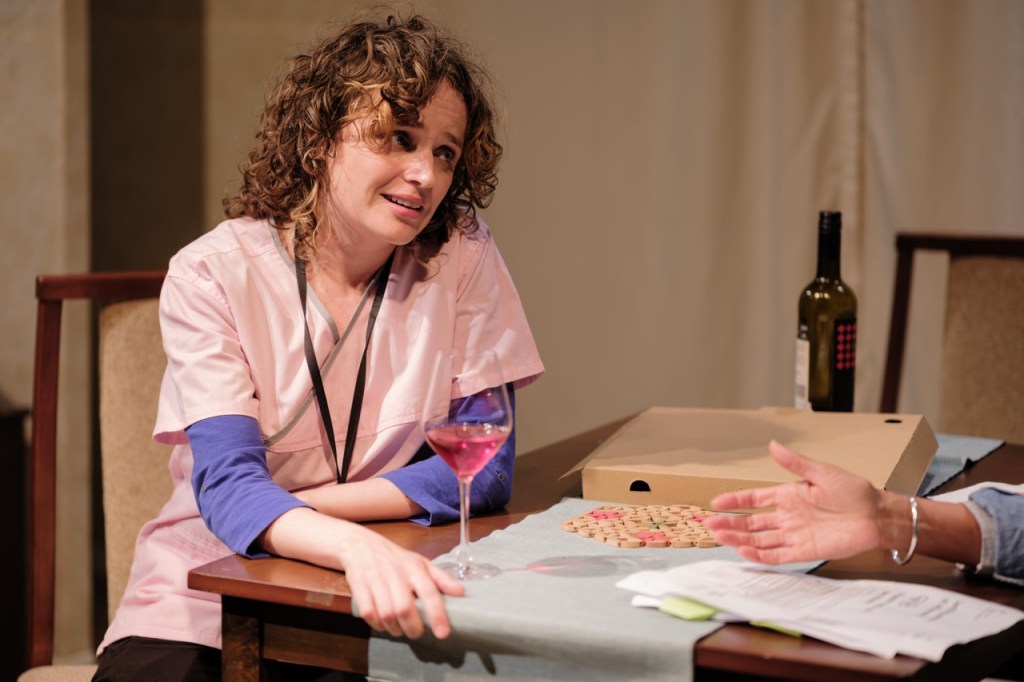
Charlotte Salusinszky. Photo: Robert Catto. Where the script and production occasionally lack pace or tension, there are nevertheless some beautiful performances. Salusinszky’s Beata offers a compassionate voice of reason, trying to care for Es and support Flo without overstepping boundaries. Eloise Snape shines as Katherine, Peter’s wife, who undergoes the most significant transformation – a white, middle-class housewife exposed for the first time to the realities unfolding around her.
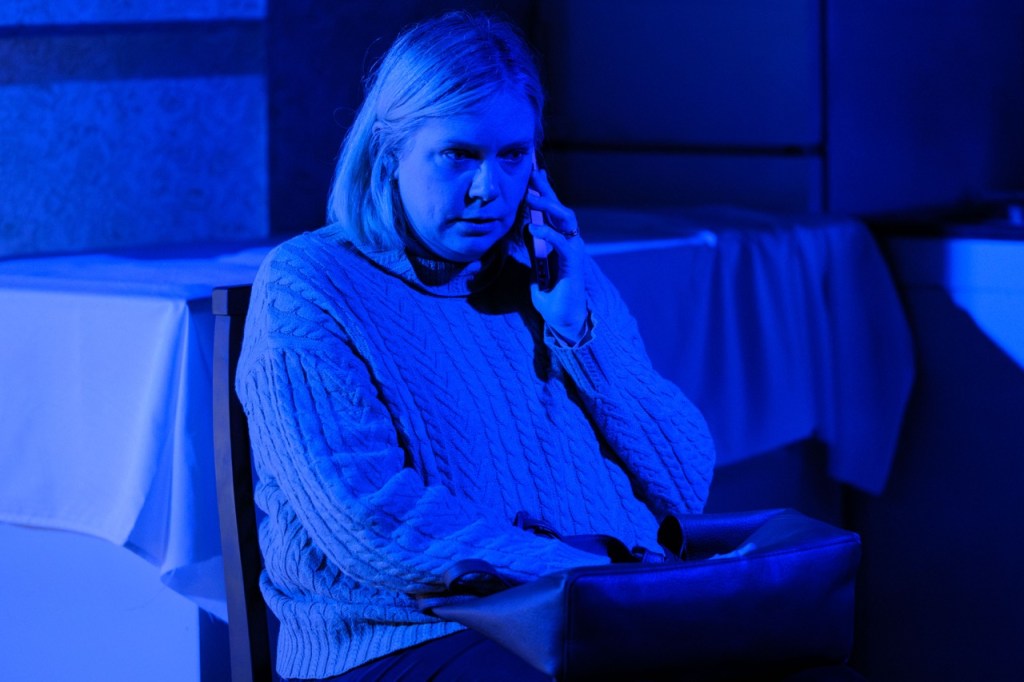
Eloise Snape. Photo: Robert Catto. At its core are Annie Bryon’s Es and Fay Du Chateau’s Flo, who exude charm but never fully convince of the depth of their relationship. The more compelling connections emerge elsewhere. Es shares a natural affinity with Beata’s daughter, Kasia (Erika Ndibe), while Flo’s shifting dynamic with Beata carries genuine tension and momentum.
For all its discussion of dementia, elder care, long-held trauma and queer rights, the play’s most striking moment comes in its final scene, gently seeded throughout and landing on a note of grace. Some narrative threads remain unresolved, but the emotions are undeniable.
-
Gia Ophelia (KXT on Broadway) ★★★★
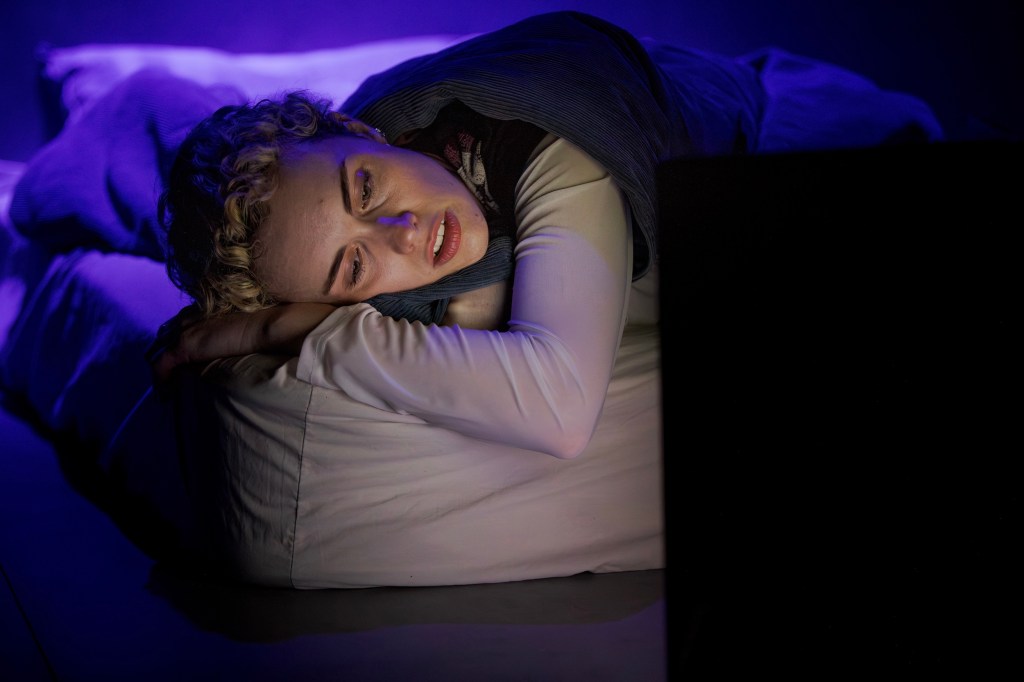
Written by Grace Wilson. JB Theatre Co in association with Bakehouse Theatre. KXT on Broadway. 11-15 Feb, 2026.
What’s the appeal of actors playing actors on stage? What do plays about plays tell us? Is this just “write what you know”, or some kind of catharsis, an exorcism of your creative demons? Whatever it is, it’s bloody good theatre.
Which brings me to Grace Wilson’s well-observed Gia Ophelia. After hitting at Sydney Fringe in 2025, the production gets a short second life at KXT on Broadway, and it’s worth rushing to see.
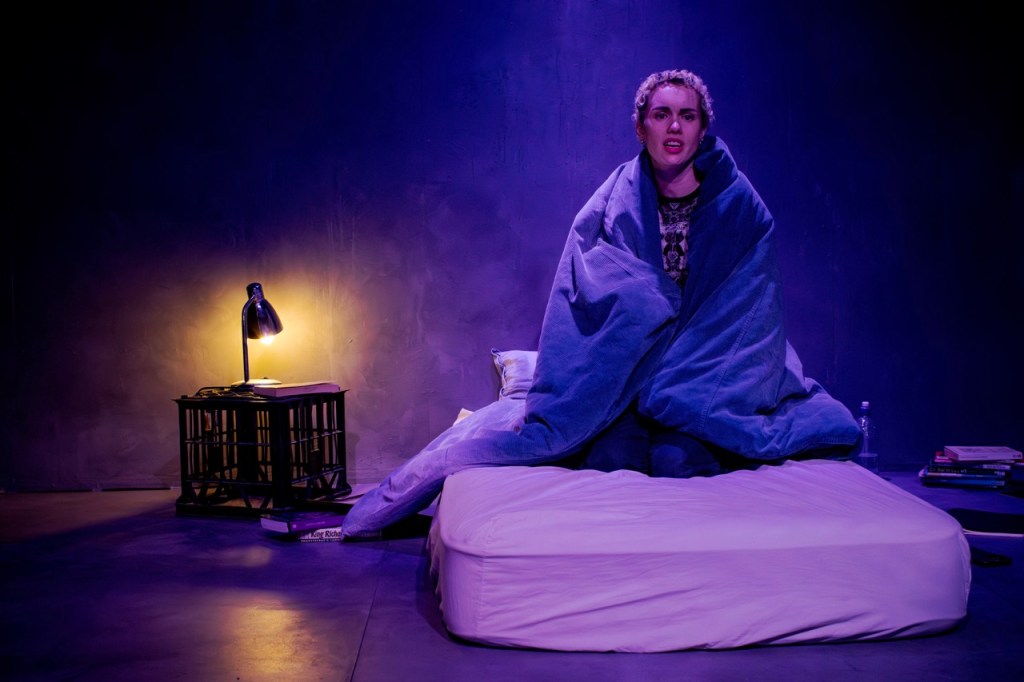
Annie Stafford. Photo: Phil Erbacher. What begins as a comedy about the life of a young actor descends into melancholy & madness as Gia (Annie Stafford) fights to pursue her dream of playing Hamlet’s doomed love interest.
Stafford gives a complete 360-degree performance as Gia, a 29 year old struggling actress at a crossroads. She has a youthful connection to Ophelia, a role she feels she can really embody if someone would only cast her. Meanwhile day-to-day life stuff like paying the bills, auditions, maintaining a relationship, are starting to scream more loudly in her ears. Her partner wants to have a child and settle down – but Gia wants to be playing the tortured Ophelia, not the maternal Gertrude, and she’s not ready to give up just yet.
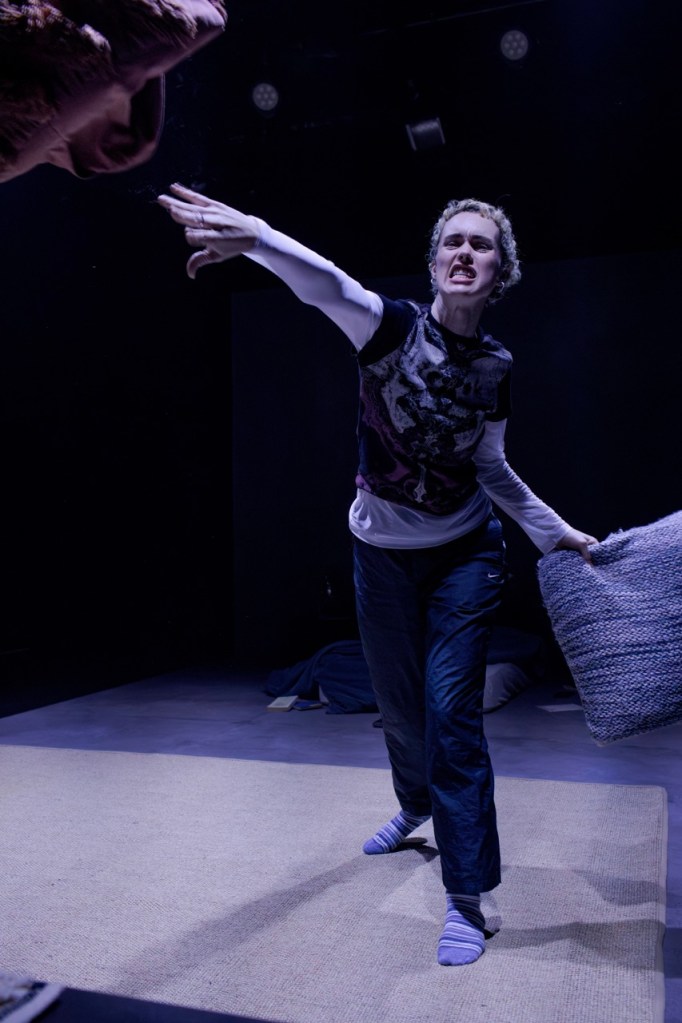
Annie Stafford. Photo: Phil Erbacher. The first two thirds of this sharp, 60 minute play are caustically funny as playwright Grace Wilson pokes at the foibles and insecurities of life in the performing arts. But the writing never descends too far down the “actor speak” rabbit hole. Wilson keeps things accessible while still leaning into the specificity. It’s a very entertaining blend of sarcasm and sincerity, love and loathing that propels the work.
In the final third the penny drops. Slight spoilers ahead for anyone who hasn’t read the synopsis online. Gia is running away from the commitment of her relationship because she has learnt that she is infertile. As her mind wraps itself around the implications of this fact, Gia bounces from impulse to impulse pushing her way through stages of grief that may drive her insane.
It’s here the energy drops (depression will do that to you) and the story flounders for a moment. For about 5 minutes of stage time I worried the production had lost its spark. But I was wrong – it has merely morphed into a new form to deliver its final blow as Gia embodies Ophelia is ways she didn’t predict.
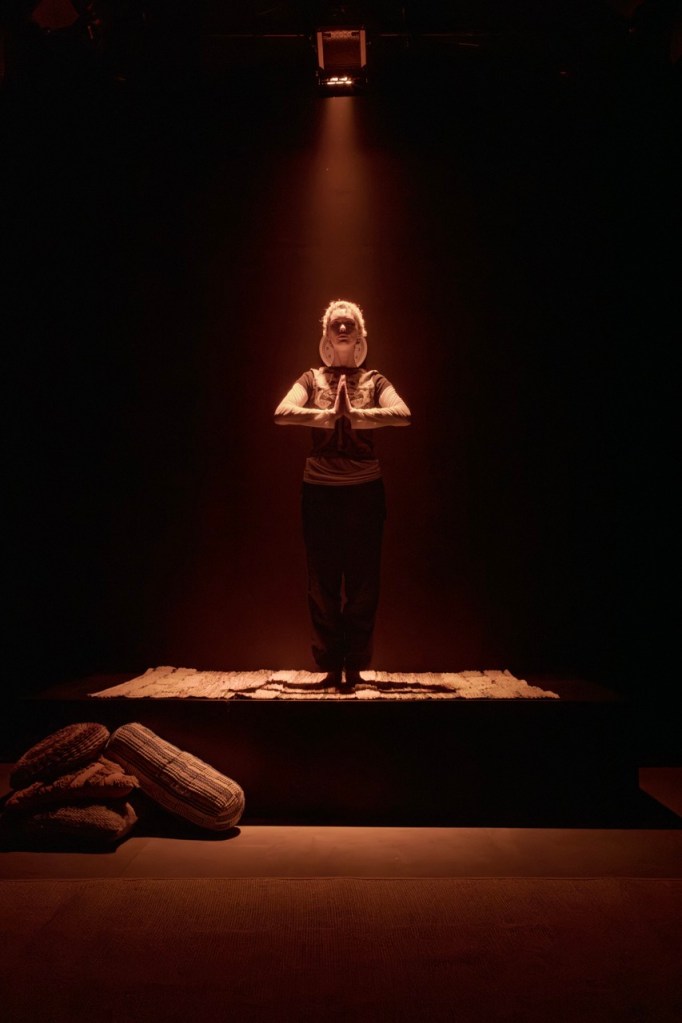
Annie Stafford. Photo: Phil Erbacher. Director Jo Bradley brings this all to life by keeping Gia almost always on her feet – moving around the stage with a nervous energy – till the moment she hits a wall. Stafford is ever engaging as she brings us into the world from Gia’s point of view, and Bradley has crafted the performance for maximum momentum.
Gia Ophelia boasts genuinely excellent lighting (Holly Nesbitt) and sound design (Otto Zagala) worthy of a much larger production. I’m assuming this is a perk of moving from “fringe” to “independent” theatre – a space with more resource. This short run has a level of polish and technical storytelling that amplifies the already excellent writing and performance. I’d be intrigued to see what this production team could do with even more time, and more money – but to be frank, they don’t need it. This works perfectly as it is.
If you’re wondering whether to see or not to see (see what I did there), I’d implore you to book ASAP and jump in. With only a handful of performances left don’t wait.
-
The Normal Heart (Sydney Theatre Co) ★★★★★
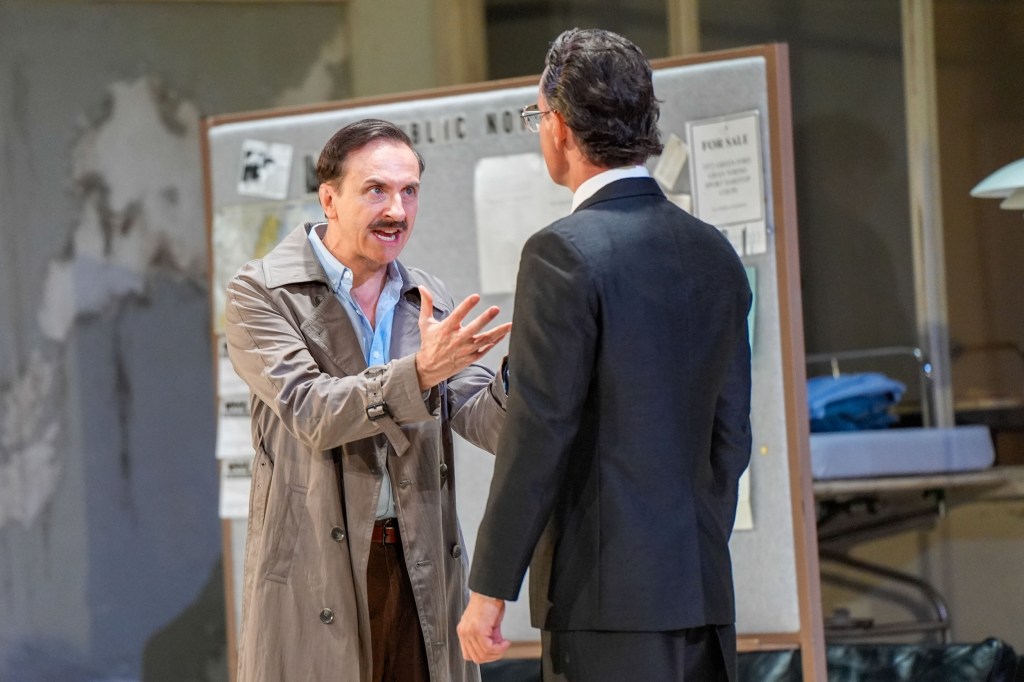
Written by Larry Kramer. Sydney Opera House. Original Production by State Theatre Company South Australia. Sydney Theatre Company. 9 Feb – 14 Mar, 2026.
Forget the reputation. Forget the history. Forget any sense of “worthiness” or “obligation”. The reason you want to see STC’s The Normal Heart is the superb performances combined with an articulate, intelligent script that is expertly presented. This is what I go to the theatre for.
A retelling of the early days of the AIDS crisis in New York City, Larry Kramer’s The Normal Heart proves itself truly timeless, almost prophetic, in its dissection of the competing impulses within a minority community, the ways activism works and the emotional toll of fighting for your life against those who don’t care.
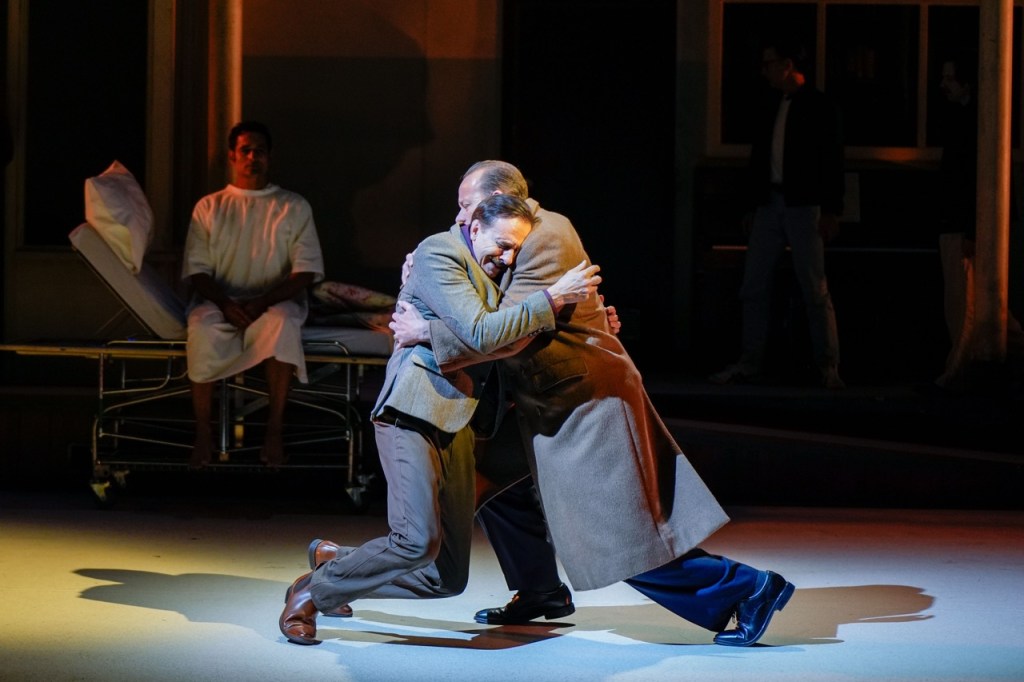
Nicholas Brown, Mitchell Butel & Mark Saturno. Photo: Neil Bennett. Kramer lightly fictionalises events while bringing real history to the stage. Despite not being either reportage nor verbatim theatre, it comes remarkably close. While it’s not always an easy watch, it’s also laced with humour, love and honesty.
You can almost hear the voices leaning over Kramer’s shoulder asking, “Why do you write like you’re running out of time? How do you write like tomorrow won’t arrive? How do you write like you need it to survive?” (to borrow from a very different show). The result has an immediacy that is hard to replicate.
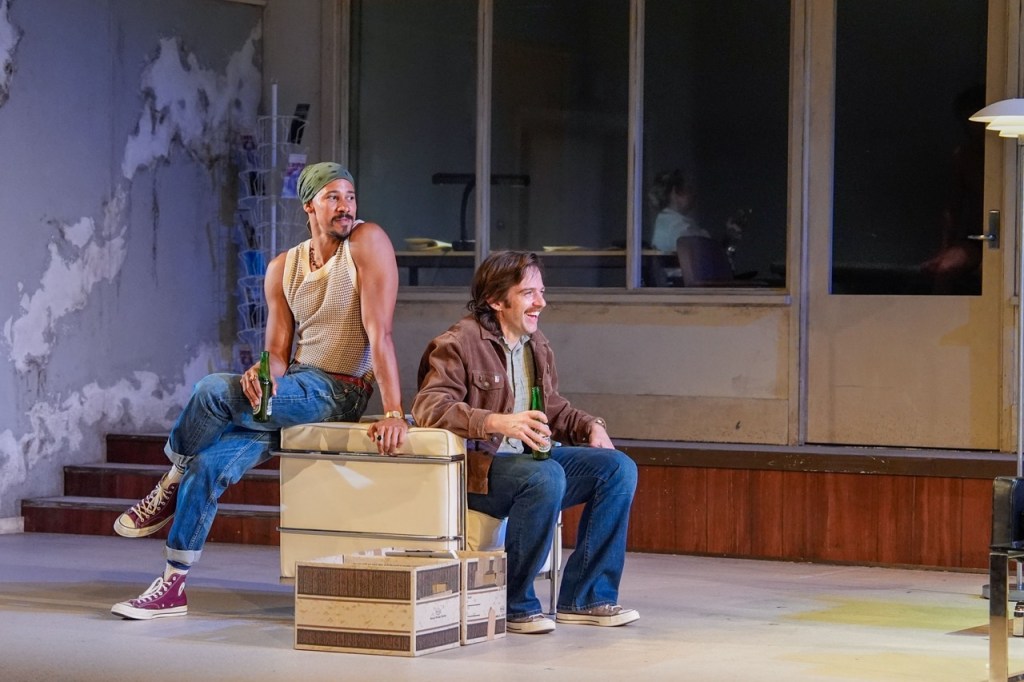
Keiynan Lonsdale & Evan Lever. Photo: Neil Bennett. But it’s the contemporary relevance that hits hardest.
Post-Covid, we all understand the impact of an epidemic. From the deniers to the conspiracy theorist and most of all, the neverending atmosphere of fear and rage it creates. And now, as tales of infighting at Mardi Gras hit the headlines, and as the ongoing omni-crisis of climate change-Ukraine-Gaza-the far right-billionaires swirls around us, the question is constantly asked: “What can we do?”
The Normal Heart offers a clear response. We make noise. We organise. We do not give up.
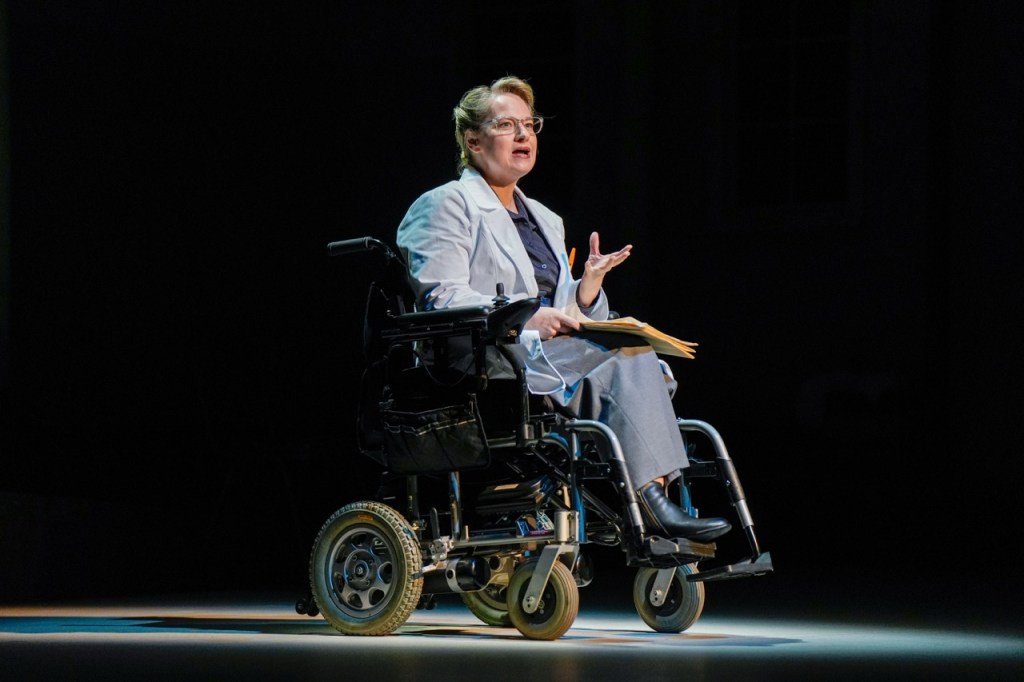
Emma Jones. Photo: Neil Bennett. This remounted production from State Theatre Company South Australia, with a predominantly new cast, is anchored by Mitchell Butel as Ned Weeks, a man desperate to save lives yet met with delay and indifference. Butel’s Ned Weeks is completely lived-in and well earned. It’s the kind of honest performance I crave and too rarely see.
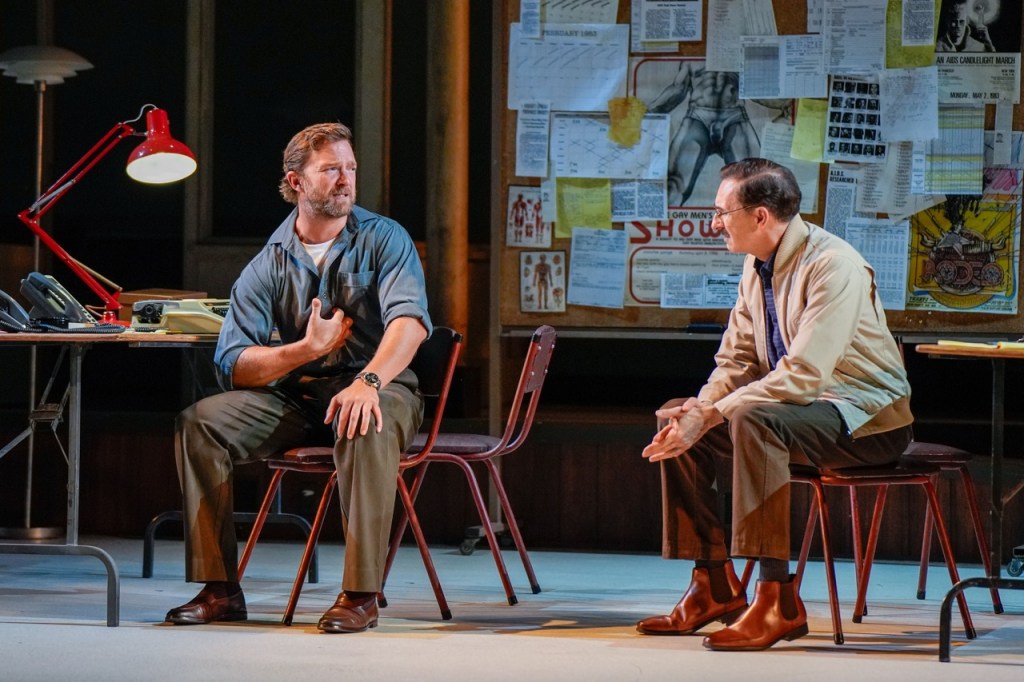
Tim Draxl & Mitchell Butel. Photo: Neil Bennett. Around him, the other characters orbit, providing counterpoints to his arguments — most notably Tim Draxl’s Bruce Niles, the polite face of respectability politics to Ned’s aggressive activism. His physical and emotional stoicism holds fast until it finally breaks in one of the evening’s most devastating monologues.
In truth, every performance on this stage is a heartbreaker in its own way.
Emma Jones’s Dr Emma Brookner, on the front line of the medical response, simmers with controlled fury before unleashing it on the powers above her. Evan Lever’s Mickey breaks down under the emotional weight of the ongoing crisis. Nicholas Brown grounds the play in intimacy as Ned’s lover, Felix.
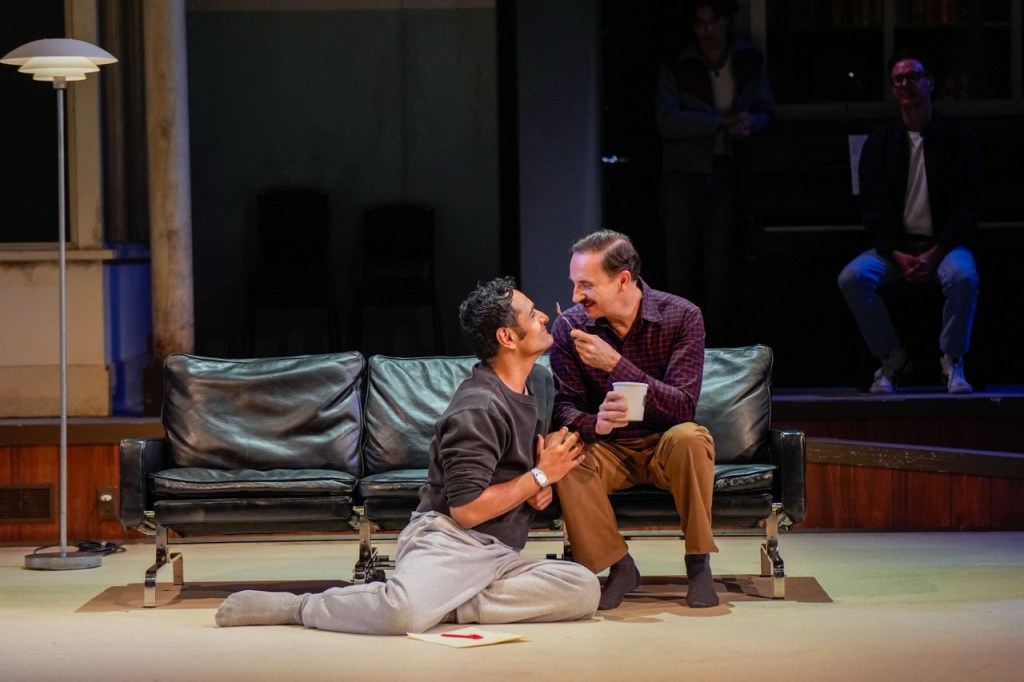
Nicholas Brown & Mitchell Butel. Photo: Neil Bennett. Thankfully, the play’s grief and anger are leavened by Keiynan Lonsdale’s funny and beautifully judged Tommy Boatwright — the “southern bitch” who becomes the voice of reason and compassion between Ned and Bruce’s warring factions. It’s a confident stage debut that stays grounded while reframing the intellectual debates with heart and pragmatism.
Director Dean Bryant presents the work with subtle flourishes aimed at emotional impact. It begins with a liminal disco set to New Order’s ‘Bizarre Love Triangle’ (a recurring motif), alongside live musical accompaniment from cellist Rowena Macneish and pianist Michael Griffiths, who alternates between speaking roles and musical duties.
The music adds a lyrical, emotive edge against Jeremy Allen’s expansive, decaying set.
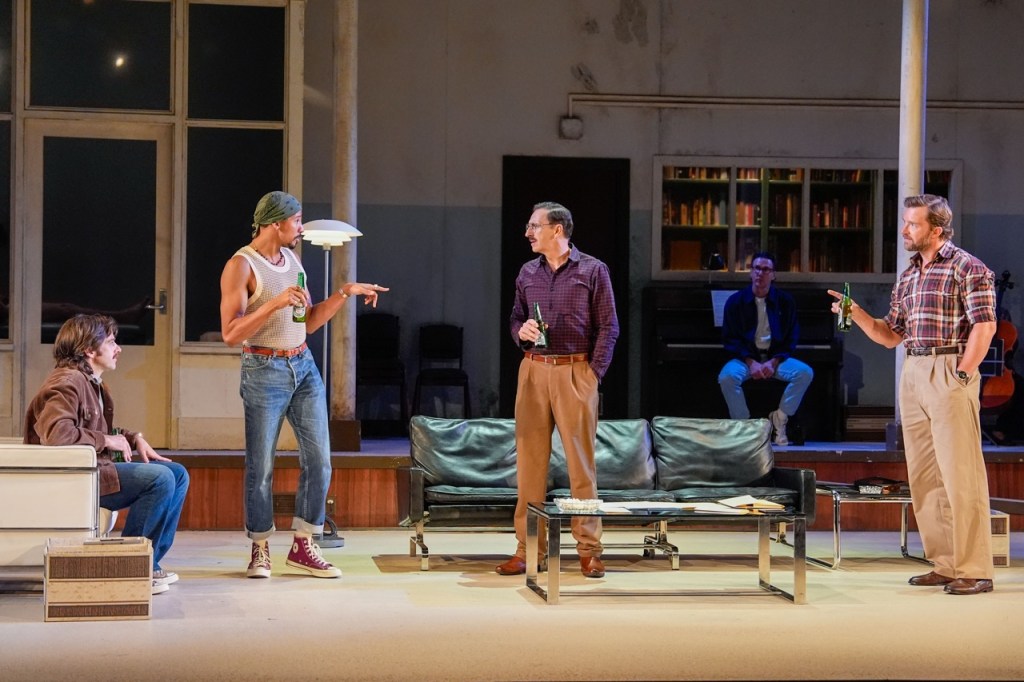
Keiynan Lonsdale, Evan Lever, Mitchell Butel & Tim Draxl. Photo: Neil Bennett. For me, however, the enduring strength of the production lies in Kramer’s script.
It eloquently lays out multiple viewpoints on gay life, history and culture with the empathy of someone who has wrestled long and hard with competing convictions — from Mickey’s long-time devotion to the fight for sexual freedom to Emma’s exasperated plea for gay men to stop having sex until the crisis passes. None of the arguments are shortchanged and all are grounded in emotional realism.The play has its detractors, but I personally find it hard to fault – either in the script or in this production. But do bear in mind that as a middle aged gay man, I am The Normal Heart‘s core demographic.
Every so often you see a play so well written, performed and staged that it reminds you what theatre can achieve — and makes you wonder why we ever settle for less.
-
Interview: The Cast of STC’s The Normal Heart
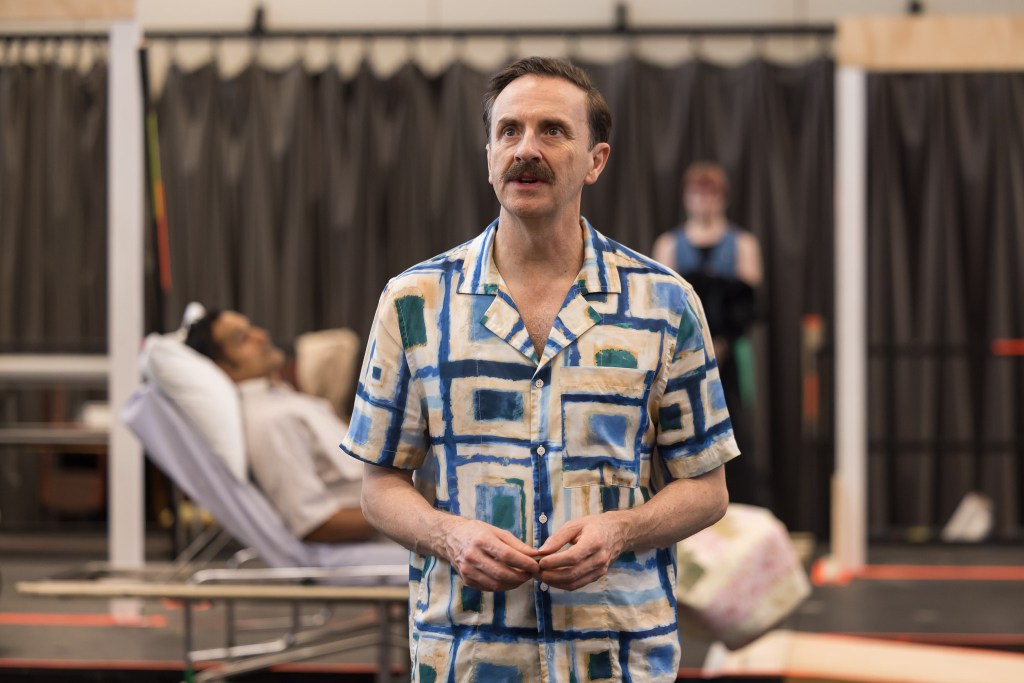
I got to sit down with some of the cast of Sydney Theatre Company’s production of The Normal Heart for The Queer Review.
Mitchell Butel, Nicholas Brown, Tim Draxl, Keiynan Lonsdale & Fraser Morrison were very passionate about the play, and generous with their time.
-
Perfect Arrangement (New Theatre) ★★★½
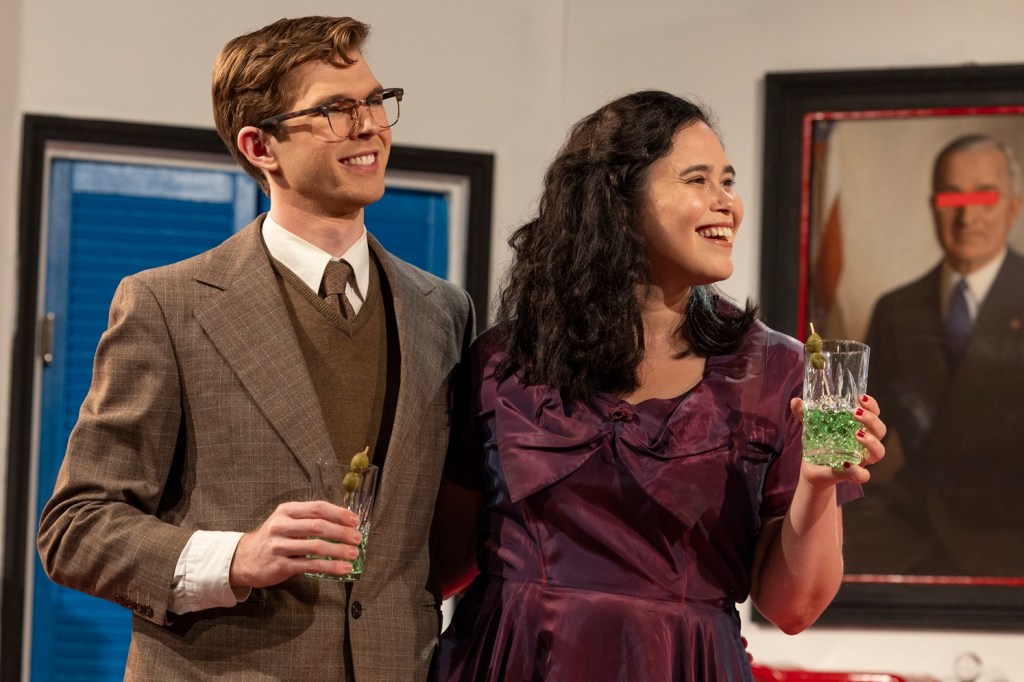
Written by Topher Payne. New Theatre presented as part of Mardi Gras+. 4 Feb – 7 Mar, 2026.
Watching Perfect Arrangement at New Theatre, my brain kept bouncing from one extreme to the other. Was I loving or hating this show? The reality is a bit of both. A major stylistic choice irritated me from the outset, yet the end result left me impressed and well entertained. Thanks to a sharp script and strong performances, the show ultimately shines through its own sometimes flawed execution.
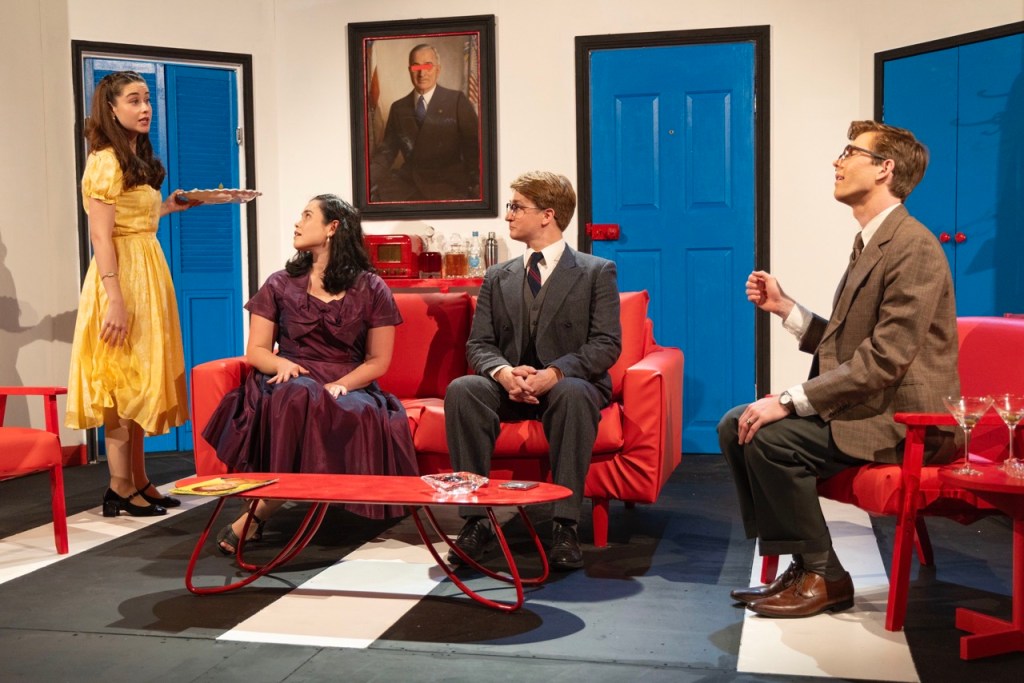
Jordan Thompson, Dominique Purdue, Luke Visentin & Brock Cramond. Photo: Bob Seary. Set in 1950s America, on the cusp of McCarthyism, two employees in the State Department, Bob (Luke Visentin) and his secretary Norma (Dominique Purdue) have a serious problem. The emerging “Lavender Scare” strikes uncomfortably close to home for them both. Bob is gay and secretly in a relationship with Norma’s husband Jim (Brock Cramond), while lesbian Norma is actually with Bob’s “wife”, Millie (Jordan Thompson).
To make their dual lives work, the two couples live next door to each other, with a hidden passage in the closet allowing the real lovers to meet up without anyone outside knowing. This elaborate fake-out works just fine until Bob and Norma are tasked with rooting out homosexuals and communists in their own office. Matters become even more dangerous when one employee — the embattled bisexual Barbara Grant (Lucinda Jurd) — starts digging into their lives.
Brooke Ryan & Dominique Purdue. Photo: Bob Seary. Let me get my biggest complaint out of the way early. The events of the play are dressed up like a 50s domestic sitcom, complete with ad breaks and a large studio “applause” sign looming above the audience. The stylistic flourish in the script aims to establish the juxtaposition between the “perfect” TV version of young married life and the messy reality they live in. It’s a gimmick, and a poorly executed one at that, making the whole opening scene an ordeal to get past. Once you do, things get progressively better.
Where playwright Topher Payne excels is in his plotting and construction. The comedic set-up is ripe for hi-jinx that feeds directly into the drama, with these two couples’ lives so intimately entwined that the emotional stakes feel genuinely high. As the unified quartet begins to fracture under mounting pressure, the story taps neatly into the real-world politics of the era — a time when LGBT men and women in corporate America began making themselves visible and demanding legal protections.
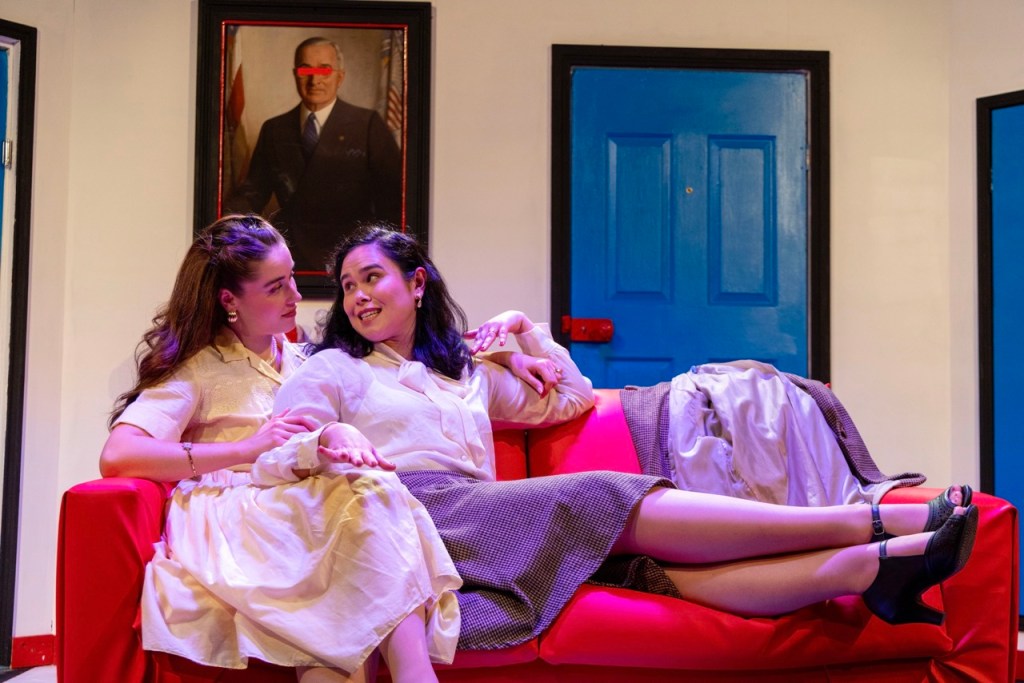
Jordan Thompson & Dominique Purdue. Photo: Bob Seary. Payne’s writing finds a natural comedic rhythm that gives the actors room to breathe, allowing the humour to serve the drama rather than undermine it. The dual house arrangement is silly and over-the-top, just the fact these couples can’t simply live their lives and love who they choose. The fact that queer people had to hide at all is the biggest farce on this stage.
Thankfully the cast bring genuine emotion to the play with some excellent performances in which the women shine brightest. Dominique Purdue brings an officious toughness to Norma that plays beautifully against Jordan Thompson’s femme housewife Millie.
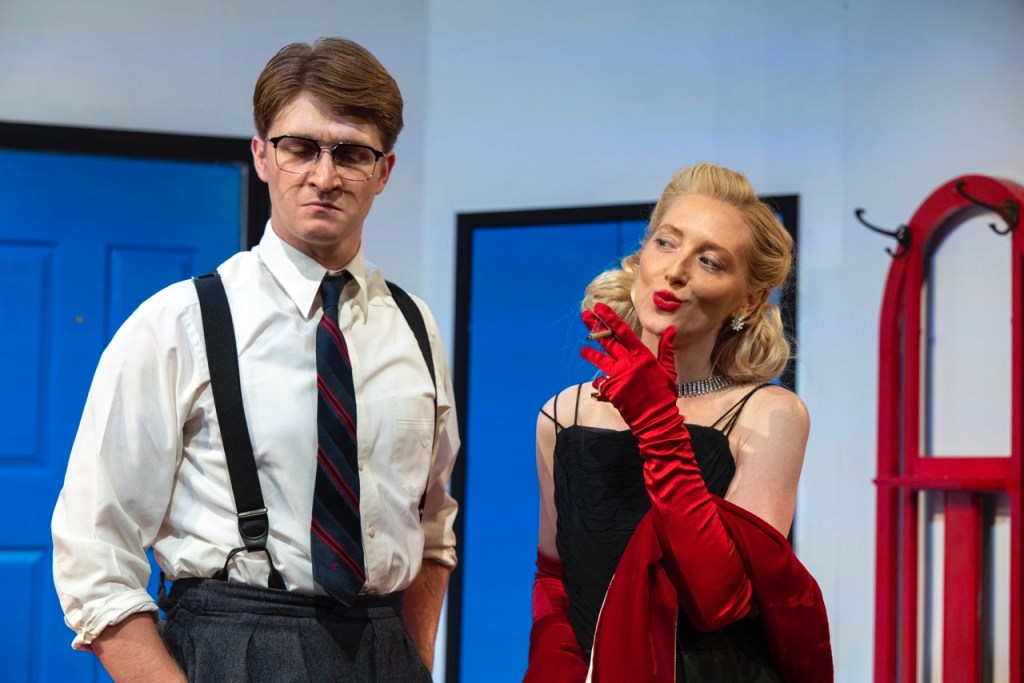
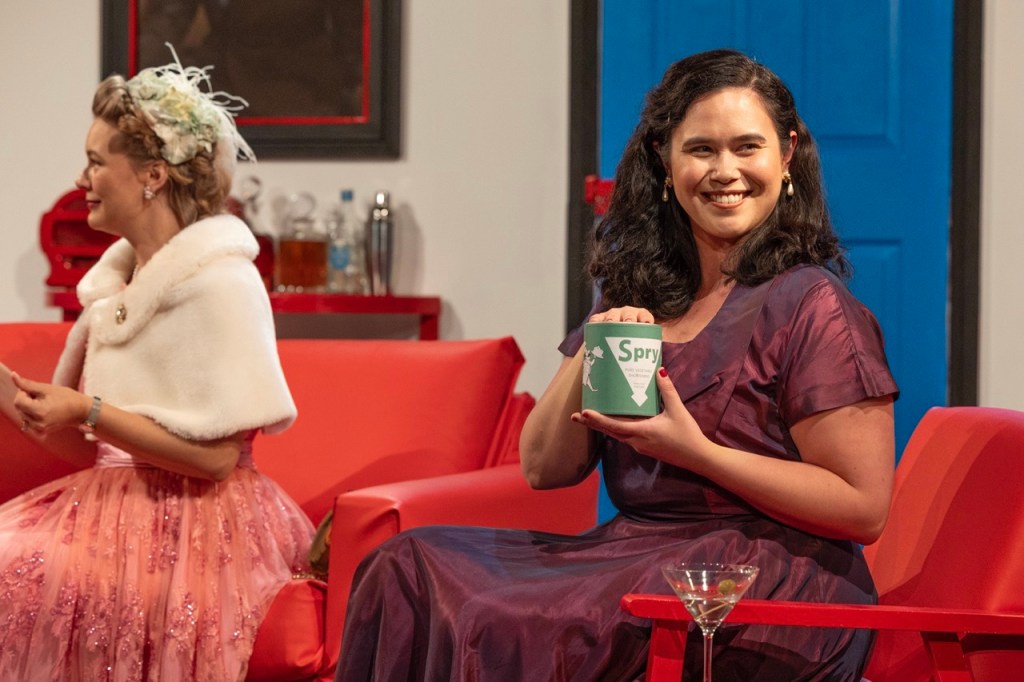
Luke Visentin & Lucinda Jurd. Photo: Bob Seary. And the supporting roles are really elevated by two well pitched performances. Lucinda Jurd relishes the chance to play both vampy villain and moral compass with the fabulously multifaceted Barbara Grant. Brooke Ryan is outstanding as awkward older housewife Kitty, a woman with a head of stones and a heart of gold. She’s a scene stealer. While the men more than hold their own, it’s the women who are given the richest material to work with.
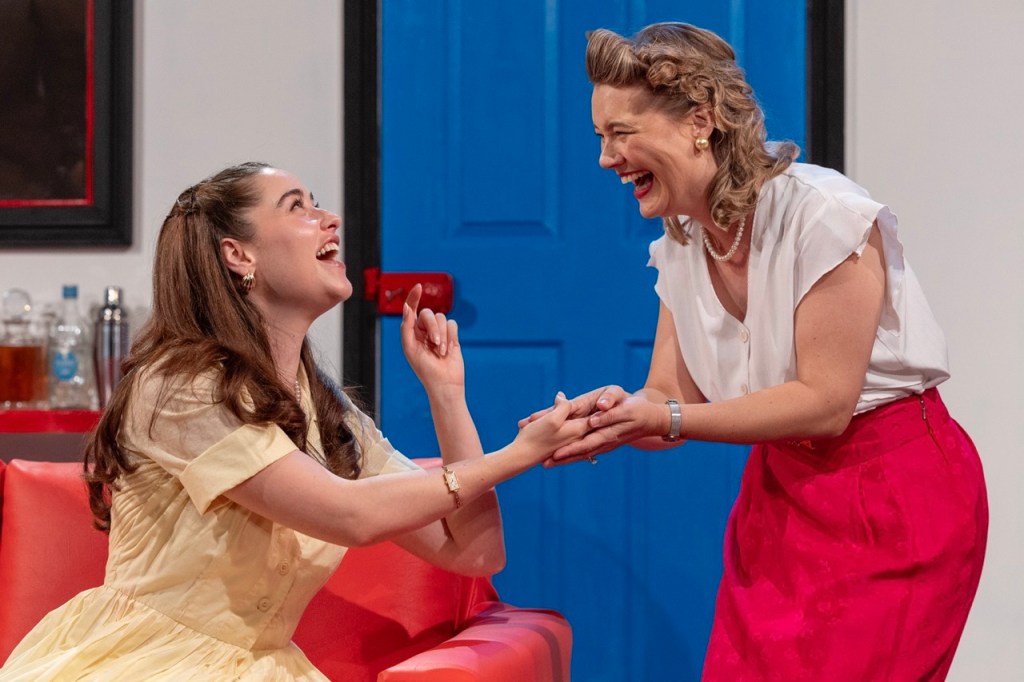
Jordan Thompson & Brooke Ryan. Photo: Bob Seary. Director-designer Patrick Kennedy’s dual role is less successful. As a director Kennedy shows good instincts. After the deliberately stilted opening scene, the emotional realism of the performances takes over. The natural rhythms of the dialogue and character relationships begin to carry the audience along, and the warmth and honesty of the acting cut through the visual noise to deliver a genuinely fulfilling experience. This show is at its best when stripped back to its core.
But the show’s design is its real failing. The overly conceptual set detracts from, rather than adds to both the 50s realism and the heightened perfection of sitcom pastiche. The bold graphic colour scheme aims for “Bauhaus” (according to the Director’s Notes) but lacks the finesse of execution to pull it off, leaving us in a prison of clashing primary colours.
Despite its gauche visuals, Perfect Arrangement succeeds where it counts. A well-written script and a terrific ensemble of performers come together to overcome any missteps and, like the characters themselves, defy the world around them to bring their truth to the fore.
-
Purpose (Sydney Theatre Co) ★★★★
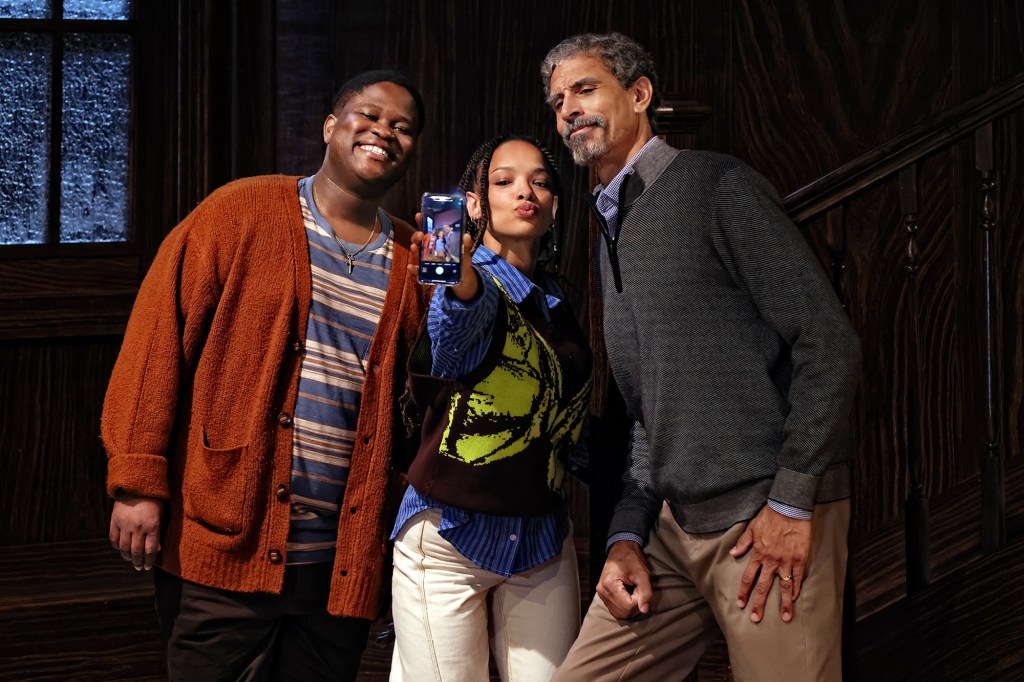
Written by Branden Jacobs-Jenkins. Australian Premiere. Sydney Theatre Co. 2 Feb – 22 Mar, 2026.
Winner of the 2025 Tony Award for Best Play, the 2025 Pulitzer Prize for Drama and the 2025 New York Drama Critics’ Circle Award, Purpose comes to Sydney on the shoulders of a lot of expectation.
So, is Purpose all it’s cracked up to be? I mean, I assume the first thing you looked at was the star rating, so you already have a pretty good idea where I’m going…
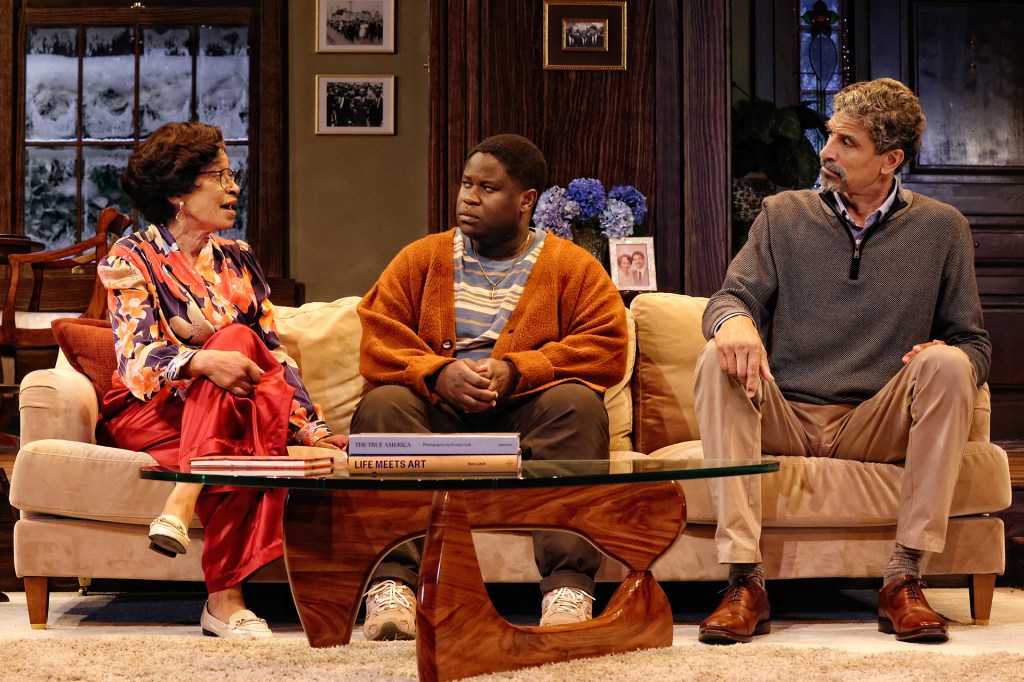
Deni Gordon, Tinashe Mangwana & Markus Hamilton. Photo: Prudence Upton. Nazareth “Naz” Jasper (Tinashe Mangwana) returns to his family home just as a snowstorm hits, forcing his neighbour Aziza (Sisi Stringer), who drove him there, to agree to stay the night before heading back to New York. As Aziza meets the family, she’s shocked to discover that her quiet neighbour is in fact the son of civil rights activist legend Solomon Jasper (Markus Hamilton) — a fact Naz has carefully kept hidden.
As the family gathers to celebrate the belated birthday of matriarch Claudine (Deni Gordon), it’s immediately clear there’s a lot simmering beneath the surface. When they finally sit down for dinner, the revelations come thick and fast.
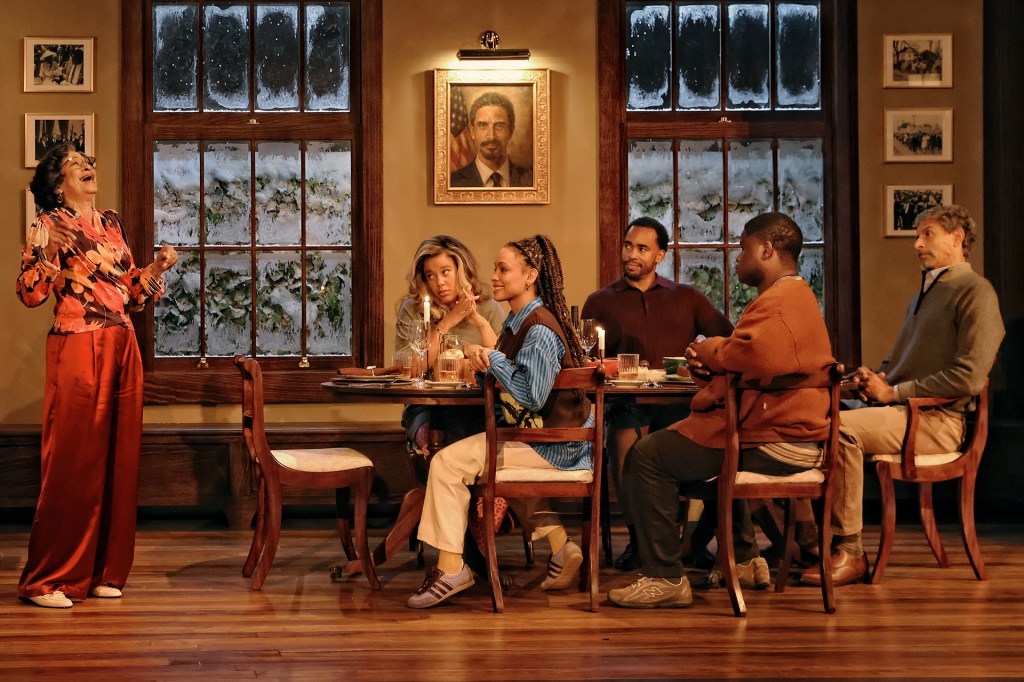
Full cast of Purpose. Photo: Prudence Upton. The set-up for Purpose could easily be that of a manor-house murder mystery: a big, beautiful house filled with complex characters, cut off from the world. There’s a stern father, revered publicly but tyrannical at home. A powerful, manipulative mother holding the family legacy together through sheer force of will. Solomon ‘Junior’ (Maurice Marvel Meredith), a disgraced former politician recently released from prison, and his bitter wife Morgan (Grace Bentley-Tsibuah). And in Naz, the wayward youngest son who’s avoided the family drama for years, now finally coming home.
Someone, or something, is going to die tonight, even if it’s only metaphorically.
Branden Jacobs-Jenkins’ script is a sharp-eyed blend of competing emotional needs, touching on dozens of ideas with wit and agility. When the characters are in direct conflict, the writing is energetic and busy without ever feeling overwhelming. Jacobs-Jenkins mines his characters for natural comedy (whether from everyone’s assumption that Aziza is Naz’s secret girlfriend, or from the bitter disdain of Junior’s wife) while allowing the drama to simmer just beneath the surface.
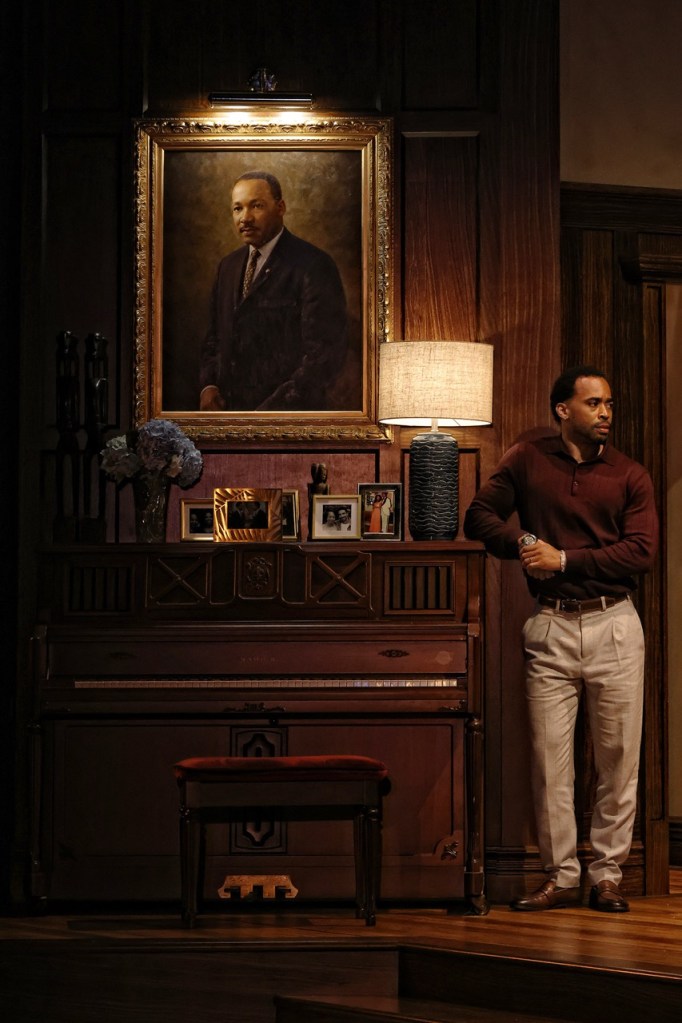
Maurice Marvel Meredith. Photo: Prudence Upton. In doing so, the play dissects the complex legacy of men like Jesse Jackson and Dr Martin Luther King Jr, whose political impact has been complicated by revelations of personal failings. It also turns that lens inward, asking us to consider our own legacies: those we leave in our careers, our families, and even on the planet itself.
The cast all get opportunities to shine, leaning into both the humour and the rage of the material. Markus Hamilton’s Solomon is a compelling portrait of an older man wrestling with his future. His struggles to come to grips with the spectrum of modern sexualities is one of the night’s biggest laughs.
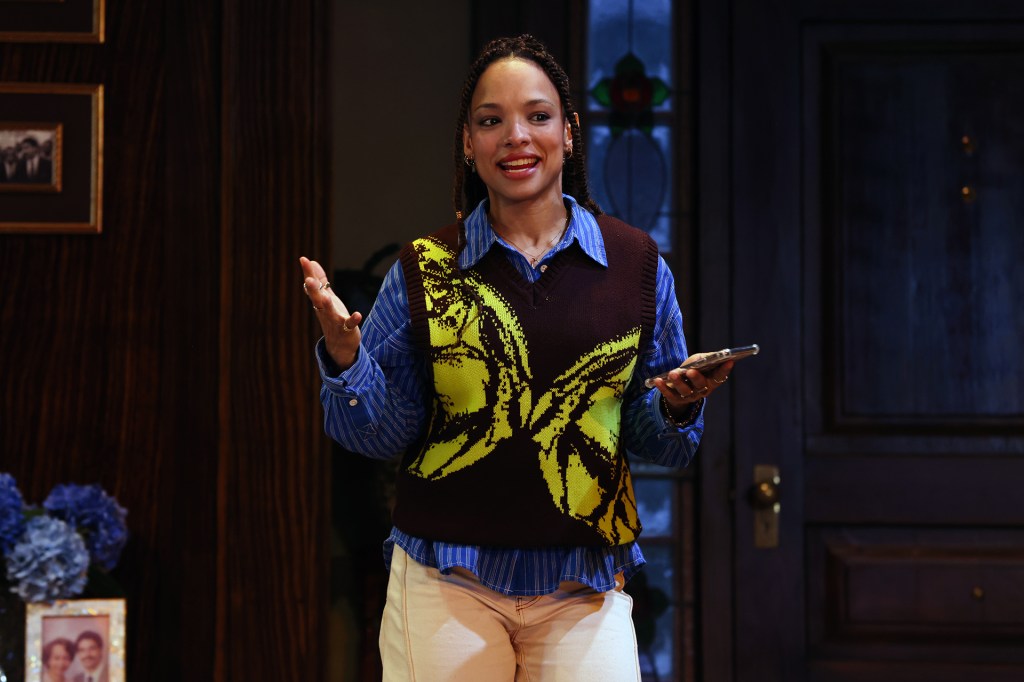
Sisi Stringer. Photo: Prudence Upton. Sisi Stringer’s Aziza — who moves from wide-eyed admiration to mounting horror as events unfold — is a breath of fresh air in the Jasper household. Deni Gordon is terrific as the manipulative, fiercely protective mother and power behind the throne, while Grace Bentley-Tsibuah brings sharp side-eye and earns every laugh she gets.
The most divisive aspect of Purpose is its heavy reliance on Naz’s fourth-wall-breaking monologues. This is a memory play, with Naz stepping in and out of the action to deliver long stretches of narration. Sometimes these moments add clarity or help land a joke, but more often they sap momentum with pages of dry exposition. It’s in these extended narrations that the play begins to stumble, and I found myself dreading the musical cue that signalled yet another break from the action. Mangwana and director Zindzi Okenyo struggle to inject life and dynamism into what can feel like emotionally deadening pauses.
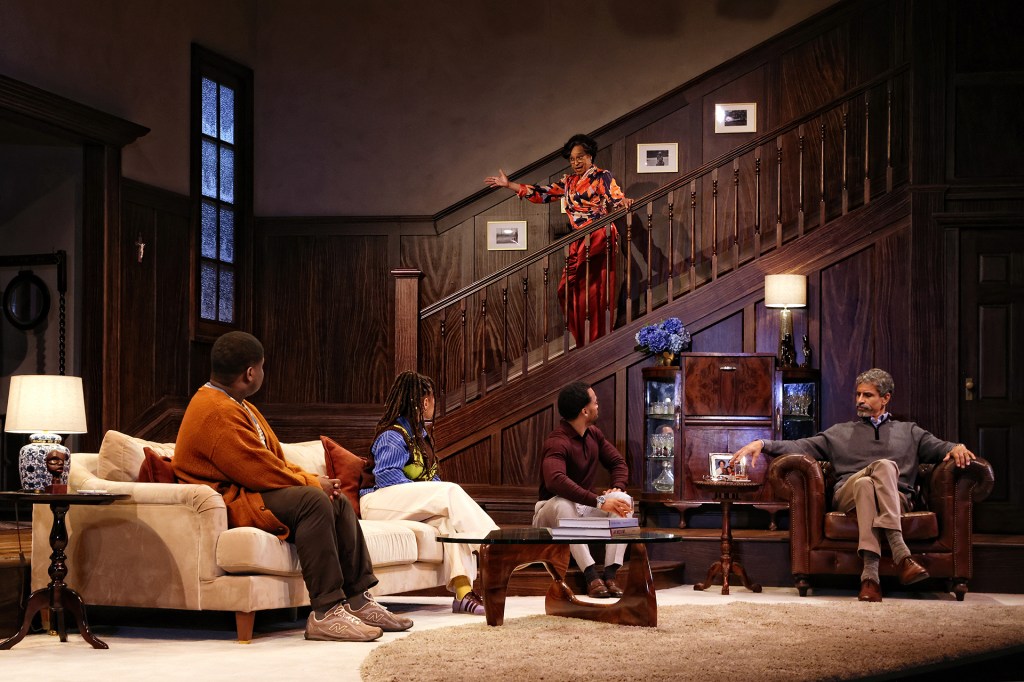
Cast of Purpose. Photo: Prudence Upton. This is a negative in an otherwise gorgeous production. Jeremy Allen’s set is rich and expansive, complete with an almost comedically long staircase for the cast to descend on cue, while the costumes add layer upon layer of texture to the characters. Kelsey Lee’s lighting is almost sitcom-like in its consistency and clarity.
Still, Purpose is an excellent play — and one that earns its accolades. It delivers its ideas wrapped in genuinely hilarious moments and populated by characters who feel fresh and recognisably human. In the end, it acknowledges just how vital a sense of meaning is to us all, and how difficult that meaning can be to find in modern life.
-
Traffic Light Party (KXT on Broadway) ★★★½
Written by Izzy Azzopardi. Jezebel Productions in association with Bakehouse Theatre. KXT on Broadway. 28 Jan – 7 Feb, 2026.
You simply could not pay me to be a twenty-something again. The drama. The confusion. The messy emotions and mistakes of youth. Hard pass. And they’re all captured perfectly in Izzy Azzopardi’s Traffic Light Party.
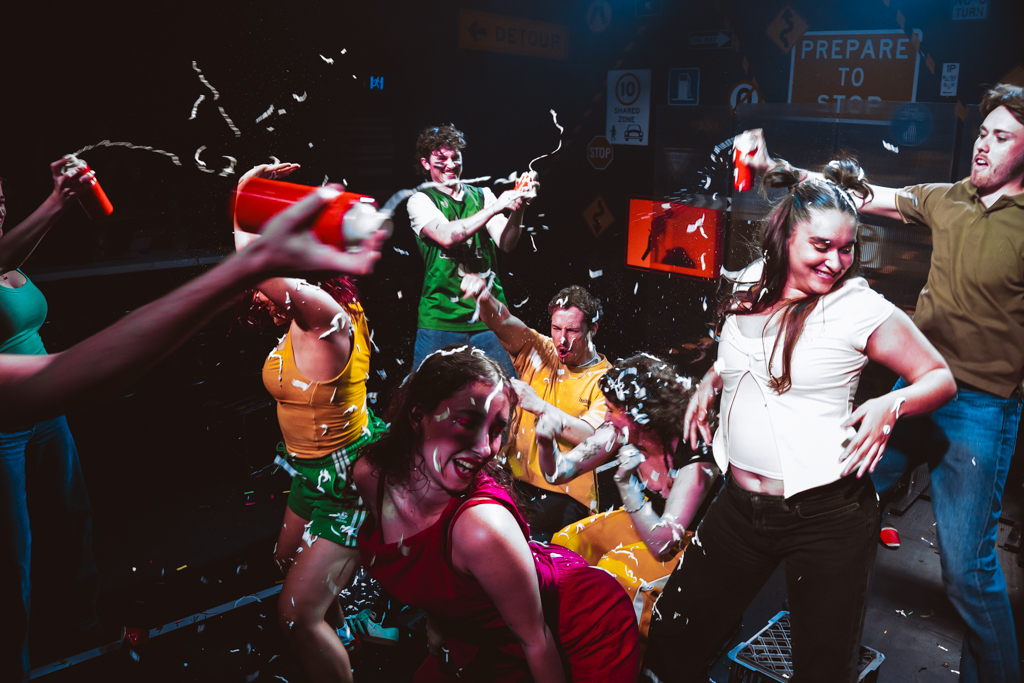
A group of uni students are throwing a “traffic light party” where, to make things clear, you dress in the colour of your relationship status. Green means you’re looking. Yellow means it’s complicated and you want to go a bit slow. Red means you’re taken. But for some of them, making hard and fast definitions of their status is confronting — what’s meant to make things clear ends up making things worse.

Isaac Harley & Jordy Stewart. Photo: Jade Bell. Azzopardi attacks the scenario with an abundance of style, using the “traffic” theme to set things up and play with the audience. It instantly elevates the writing, and even if it’s overused, it shows a clear voice that’s exciting to see. Similarly, director/designer Brea Macey delivers visuals with music breaks and clever staging that makes the KXT thrust infinitely rearrangeable. This is a great looking show that maximises the space and budget.
Yes, I would say there is potentially more style than substance at times. The multiple music breaks lose their impact and the traffic metaphor wears a bit thin. Some of the scenes in the latter half become didactic, with sophomoric messages. But hey — they are literally uni students, so sophomoric is probably perfectly pitched.
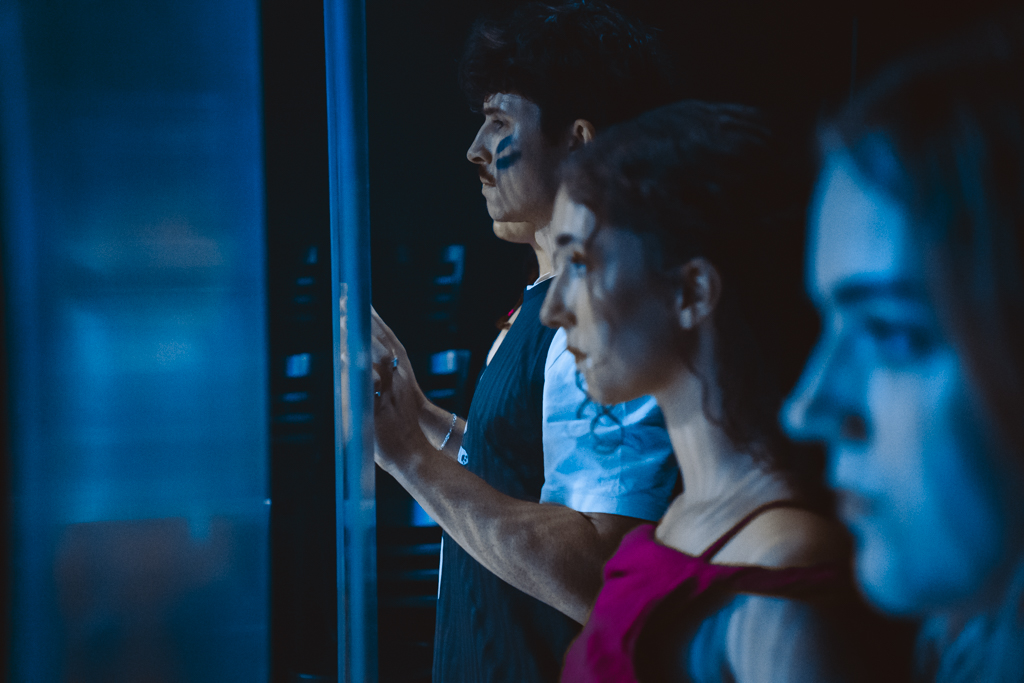
Caleb Jamieson, Meg Denman, Grace Easterby. Photo: Jade Bell. Traffic Light Party really shines when the characters stop preaching and get to honestly react to one another. It’s there that the natural drama and comedy come to the fore, and these actors show their skill. This cast (all excellent) has the mixed energies of a real group of friends, each bringing different flavours to the relationships.
Not all of the storylines in this ensemble piece reach the same heights. With nine characters, there is a lot of ground to cover.
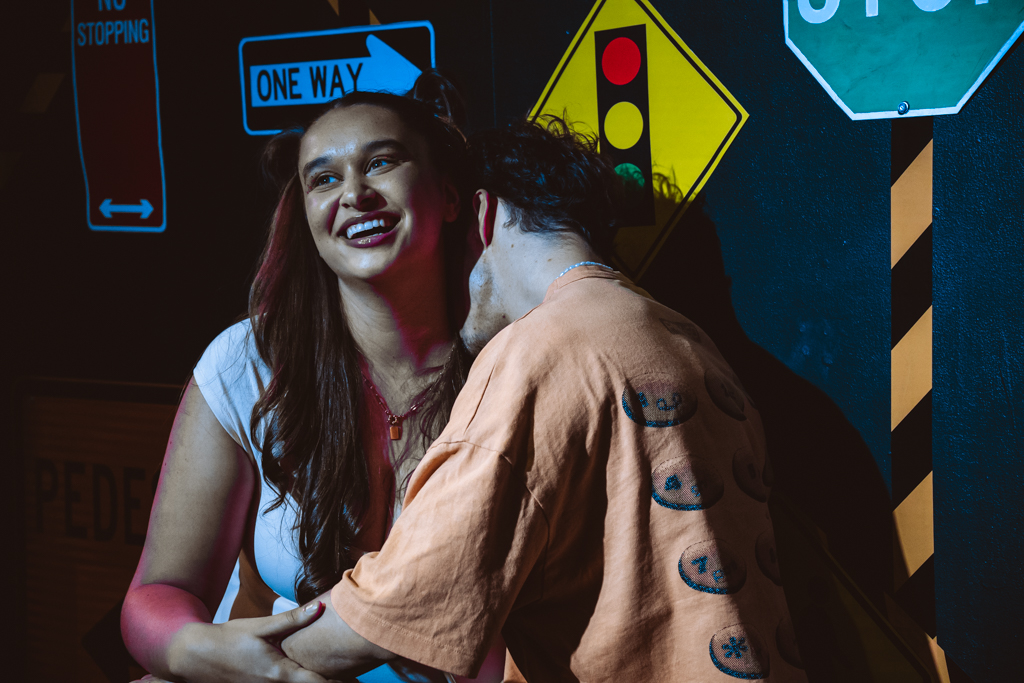
Caitlin Green & Isaac Harley. Photo: Jade Bell. The scene between Amber (Caitlin Green) and Samson (Isaac Harley), who have been seeing each other for five months but where she’s been left uncertain of their status, has a natural ebb and flow — a push and pull that was gripping. So too is the confrontation between best friends Ivy (Izzy Azzopardi) and Scarlett (Meg Denman), navigating their friendship now that Scarlett is in a committed relationship. Similarly Sunny’s (Renée Billing) relationship (told through one-sided phone calls) hits the mark perfectly. It’s these very twenty-something mini dramas that give the show life.
In contrast, a storyline between gay student Phoenix (Travis Howard) and rugby player Reid (Jordy Stewart) felt more contrived.
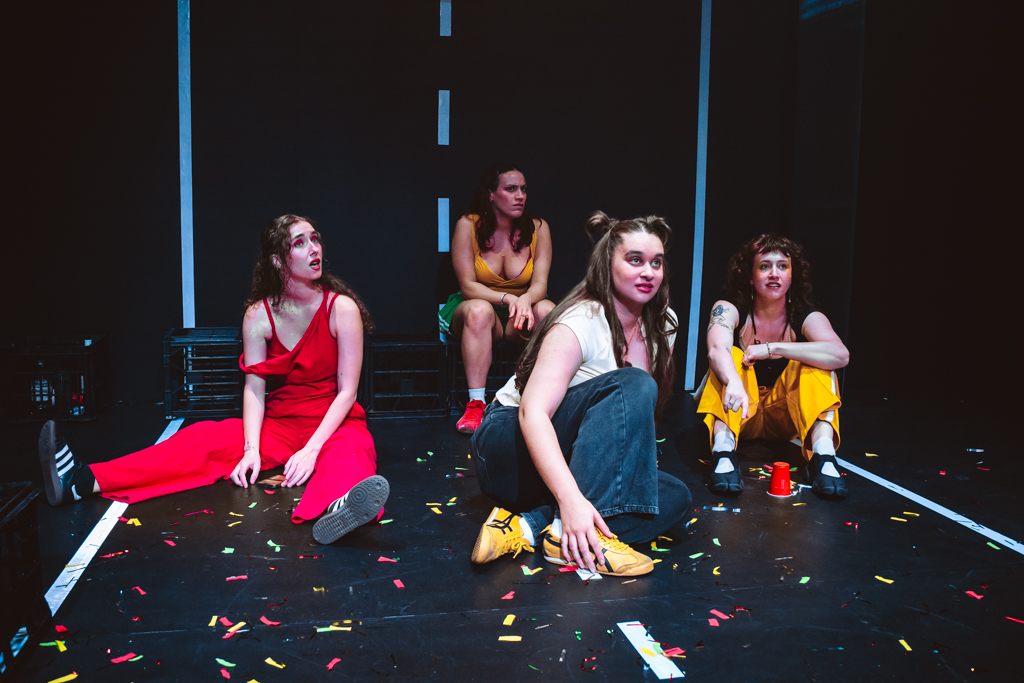
Meg Denman, Izzy Azzopardi, Caitlin Green & Renée Billing. Photo: Jade Bell. When the play hits its mark, it’s really damn great. There are definitely more hits than misses in this production. Having had a successful, award-winning run at the Sydney Fringe last year, it’s great to see Traffic Light Party continuing to grow. There is a lot of exciting talent in this production, and I can’t wait to see where they all go next.
-
Amplified: The Exquisite Rock & Rage of Chrissy Amphlett (Belvoir) ★★★★½
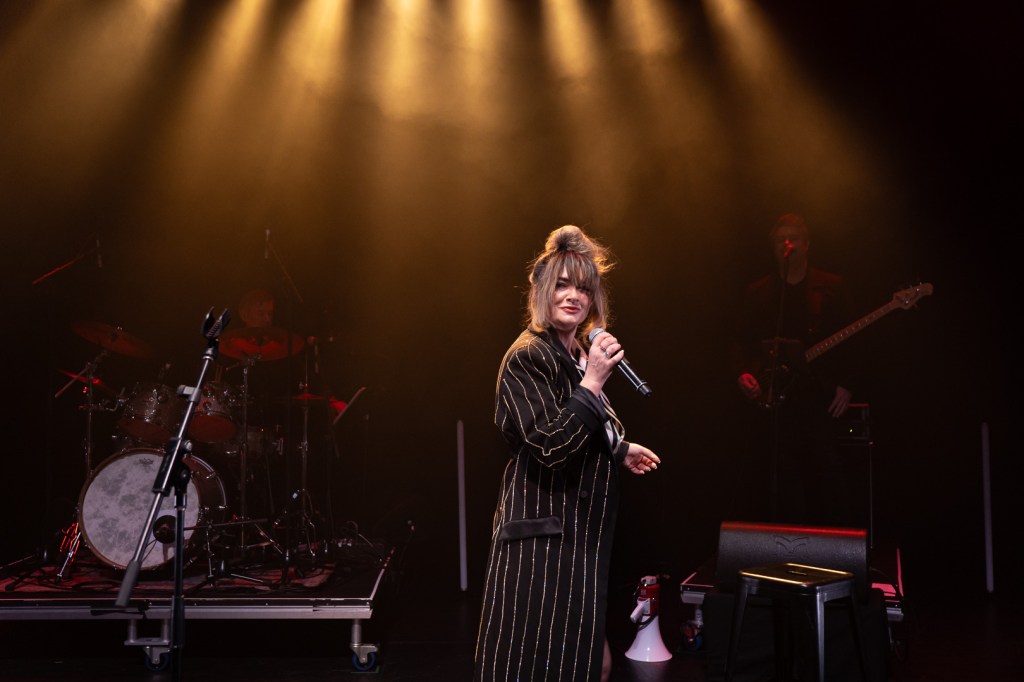
Written by Sheridan Harbridge. Co-Created by Sheridan Harbridge, Glenn Moorhouse and Sarah Goodes. Belvoir. 29 Jan – 8 Feb, 2026.
Sheridan Harbridge is here to ensure we give Australian rock icon Chrissy Amphlett her due in tribute show, Amplified. Don’t worry if you’re not up on Amphlett’s life story or the back catalogue of The Divinyls. It’s a fine line between concert and cabaret. You’ve done it once, you can do it again.
My first thought was: this feels like a festival show, not a main stage show. But then I jumped on the Belvoir website and saw the entire run is already sold out — so the appetite is definitely there. And this review is probably totally redundant because you can’t get a ticket now anyway… but for what it’s worth, here we go.

Harbridge lets her fangirl self run amok in these 80 minutes of rock and revelry, channelling Amphlett’s ethos, if not her actual stage acts (pissing on the Belvoir stage would be frowned upon). The result is a loving, soulful remembrance of a different era of Aussie rock.
Harbridge’s vocals offer a convincing likeness of Amphlett’s tone, and her attempts at crowd provocation elicit amusingly middle-aged results. And yes, Harbridge goes clawing her way through the aisles and seats — this is an immersive event. You’ve been warned.
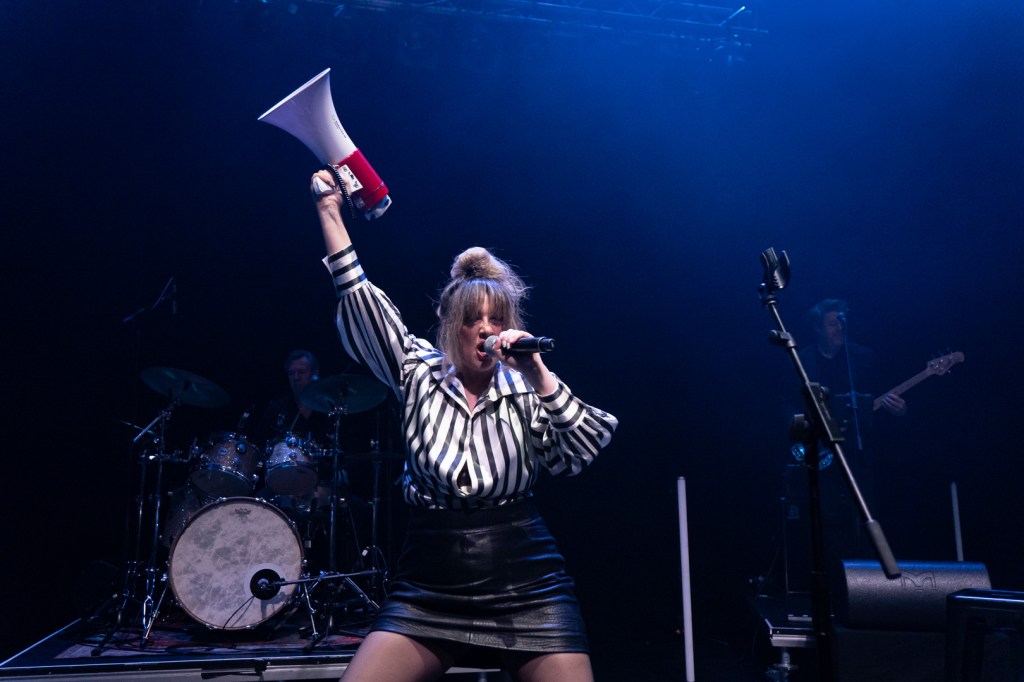
But Amplified is not just a mid-life crisis of rock memories. Harbridge’s genuine love for Amphlett’s impact is clear in the compassionate telling of her later years, including her battles with MS and the breast cancer that would eventually take her.
It’s clear the show has already struck the right chord with Sydney audiences. The finale was less a standing ovation and more a sense that we’d been given permission to treat the Belvoir like a rock gig. And on that note, you might want to bring earplugs — it does get suitably loud.
-
The Girl’s Guide to Saving the World (Old Fitz) ★★★½
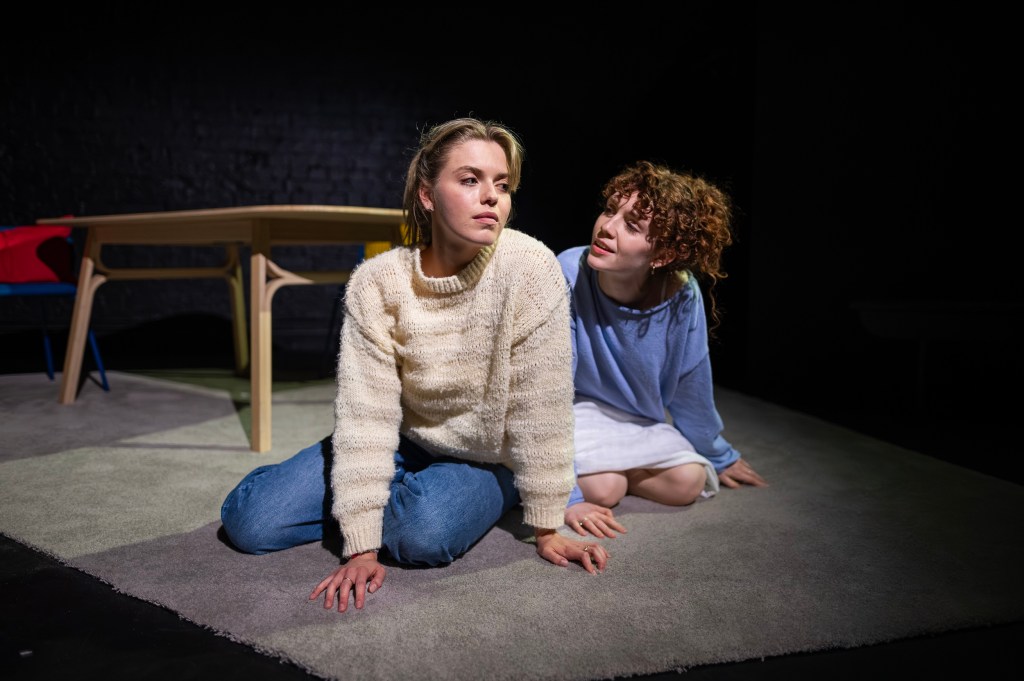
Written by Elinor Cook. With Pleasure Productions. The Old Fitz. 27 Jan – 1 Feb, 2026.
Twenty-something insecurities hit home in Elinor Cook’s funny The Girl’s Guide to Saving the World, part of The Old Fitz Theatre’s Late Night programme.
Two best friends, Jane (Bridget Bourke) and Bella (Mia Fitzgerald), set forth on the internet to preach their gospel of millennial feminism as they navigate young adulthood. Their online bravado is confident and loud, but it quickly raises the question of whether it matches their real lives. As they attempt to balance love and work while figuring out what they actually want out of life, reality has a habit of biting back.
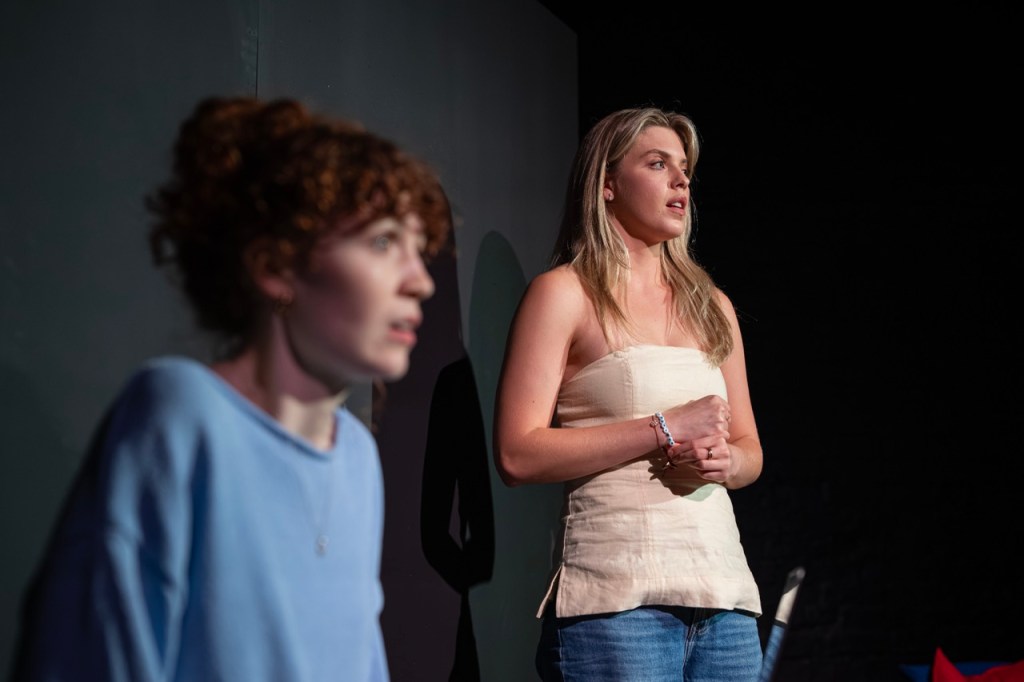
Bridget Bourke & Mia Fitzgerald. Photo: Robert Miniter. Cook’s play captures the early-life crisis of young adults facing serious, life-changing decisions with confidence and humour. It opens with Jane and Bella waiting on the results of a pregnancy test, workshopping Bella’s options in either event. This moment becomes a catalyst: the two decide to stop delaying and start doing the kind of work they really want to do, confronting the everyday sexism of modern life through sharp, personal editorials online. Predictably, their writing attracts both praise and backlash, including threats of rape and murder from online trolls.
Alongside this, Jane is dealing with upheaval at home. Her boyfriend Toby (Alex Kirwan) has suddenly quit his job as a teacher, making her the sole breadwinner in their household. When his proposed solution is to try for a baby, Jane is forced to process her conflicting emotions at speed.
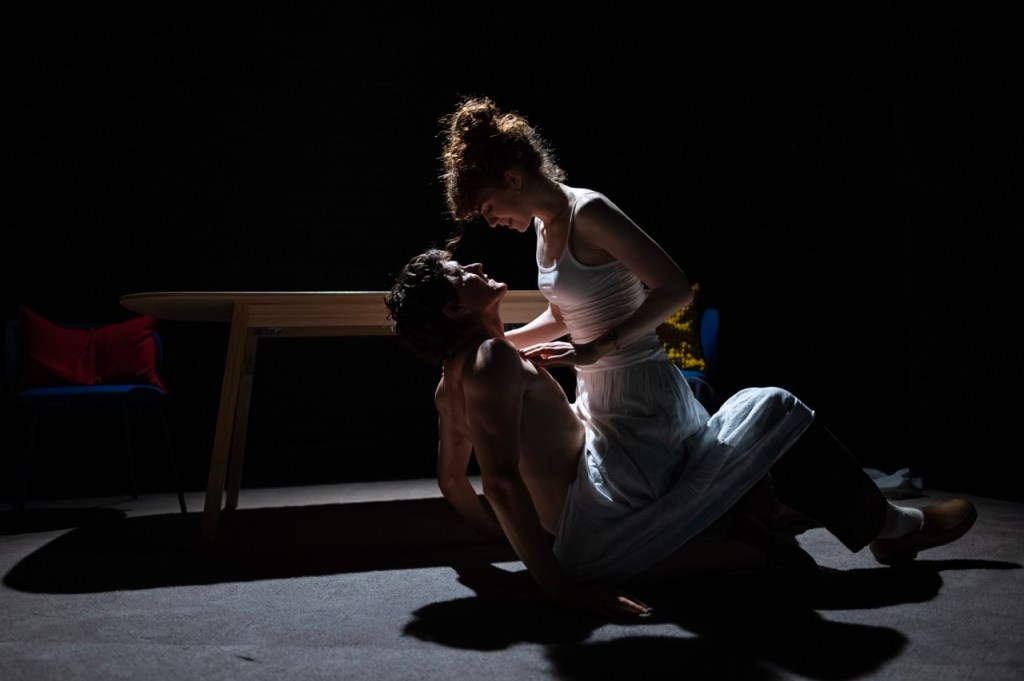
Bridget Bourke & Alex Kirwan. Photo: Robert Miniter. That said, while the script is adept at portraying the growing pains of young adults with big aspirations and childish traits, it is let down by its first-base take on gender. The men in the show are drawn as simple, cartoonish figures — either menacing rapists or nice guys hiding a mean streak. The women joke about the long list of things women often do to placate and please men, but the ideas feel well-worn, and even in 2014, when the play debuted, this material would have felt undercooked.
Where the script lacks real teeth, however, the performances more than compensate. Bridget Bourke and Mia Fitzgerald share clear chemistry as best friends, balancing girlish energy with sharp, bright minds ready to take on the world. Alex Kirwan continues to make his mark as the slightly doe-eyed boyfriend (see also Ensemble’s Fly Girl), and his conviction in the comedy ensures the character lands. Cook has a strong ear for dialogue, and this core trio are a pleasure to watch as they bring the text to life.
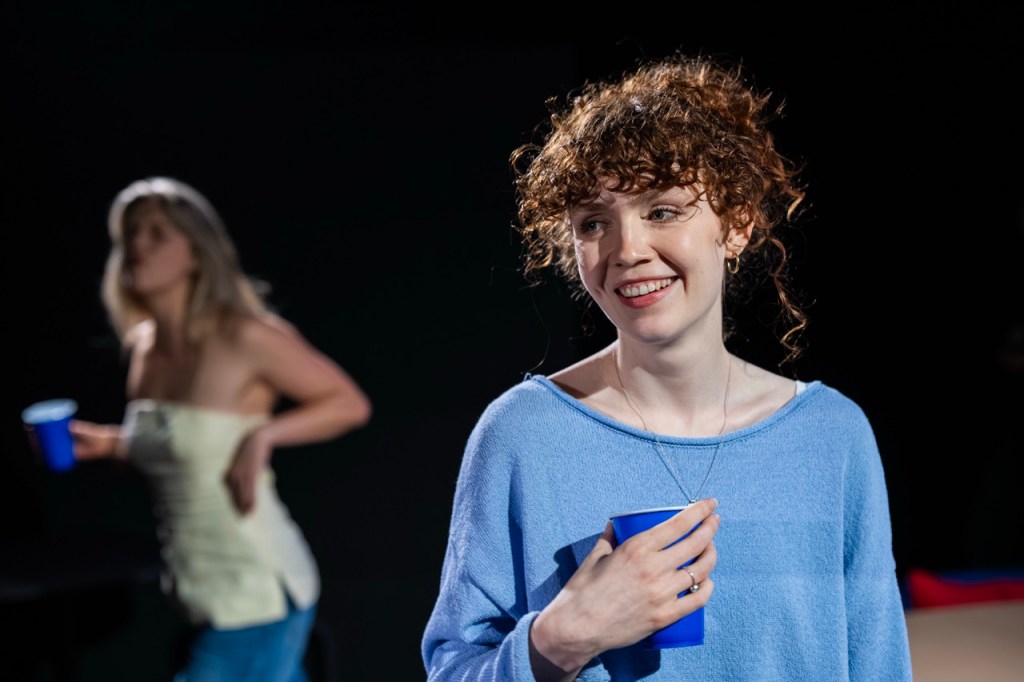
Mia Fitzgerald & Bridget Bourke. Photo: Robert Miniter. The focus on performance is supported by clear, unobtrusive direction from Roisin Wallace-Nash, alongside Riley Warner’s clean set design and Angelo Torres’ effective use of music. Given the constraints of the “late night” slot and the short run, the production makes a series of smart, economical choices.
With feminism that barely goes beyond chanting “Who run the world? Girls”, The Girl’s Guide to Saving the World isn’t doing anything new, but it gives its performers space to play to their strengths, making it a light and enjoyable watch. With witty dialogue and characters that balance the silly with the sad and sweet, it provides a welcome counterbalance to the intensity of the main show, Danny & the Deep Blue Sea, and makes for a strong double-bill.
-
Barbra: The Greatest Star (Hayes) ★★★★★
World Premiere. Hayes Theatre Company. 21 Jan – 14 Feb, 2026.
The Greatest Star is a tribute show — a concert of big emotional ballads (and some disco hits) united by one common theme: songs Barbra Streisand made famous. And as someone who likes, but doesn’t love, the famous diva, I’ve got to say I was thoroughly transfixed.
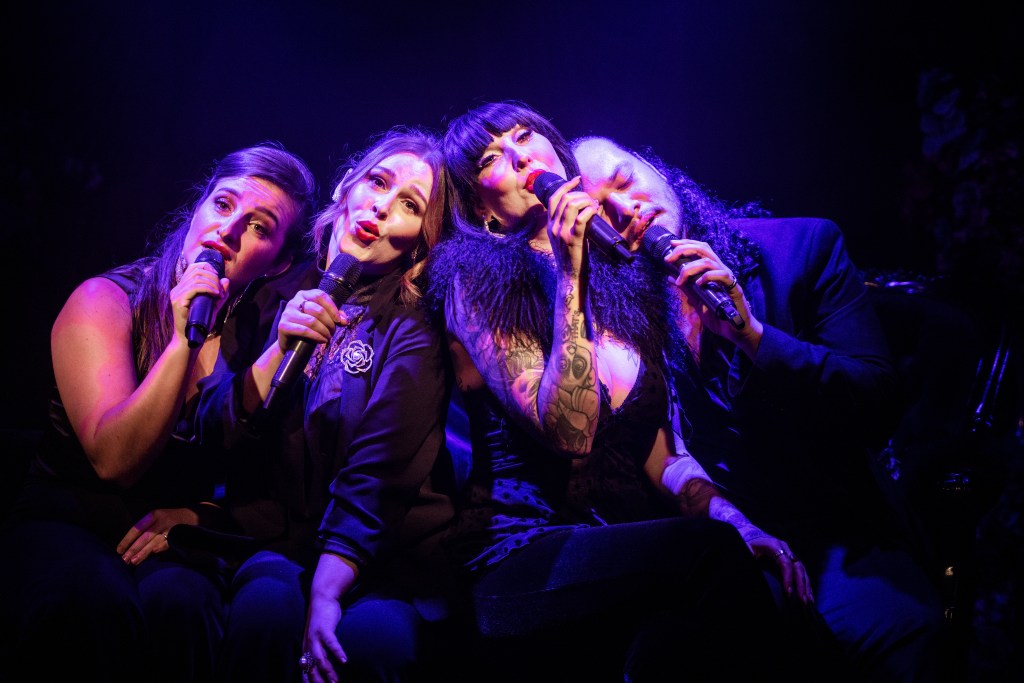
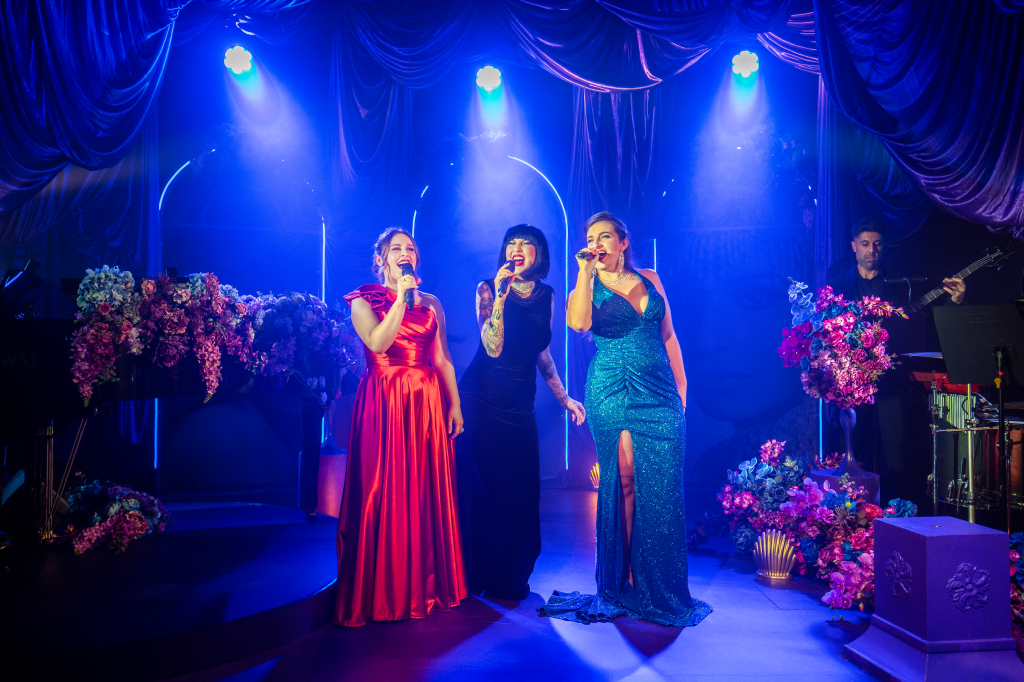
Brittanie Shipway, Laura Murphy, Stellar Perry & Tana Laga’aia. Photo: John McRae. This is a lyrical love-in. There’s no plot and only minimal, occasionally awkward banter. It’s not a biographical walk-through of Streisand’s career. Instead, it’s hit after hit after song-you-don’t-know-she’d-covered after hit. No one is doing Streisand drag. These are simply four formidable voices doing their best to keep up with the legend. As the cast joke, this is the only show where the singers aren’t vying to be the one to have to hit the high notes.
The cast is exceptionally well balanced. Brittanie Shipway pulls double duty as both director and the quartet’s powerhouse musical theatre voice, bringing clarity and control to even the most demanding numbers. She’s joined by Stellar Perry, who clearly relishes Streisand’s pop catalogue with buoyant performances of ‘A Woman in Love’ and ‘Guilty’, as well as standards like ‘Down With Love’. Tana Laga’aia taps into Streisand’s soulful side with warmly felt solos including ‘The Way We Were’ and ‘Bewitched (Bothered and Bewildered)’.
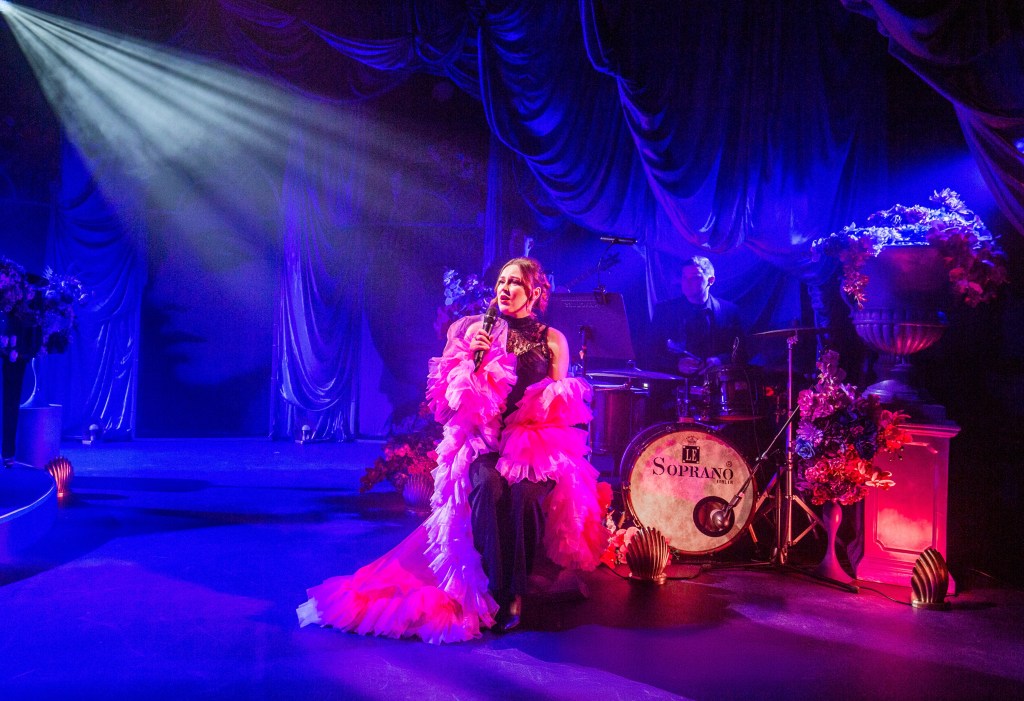
Laura Murphy. Photo: John McRae. The real surprise, though, is hearing musical theatre composer Laura Murphy step out from behind the scenes and belt alongside the best of them. Her contributions — from musical comedy to full-throated ballads such as ‘Funny Girl’, ‘Fifty Percent’ and ‘Evergreen’ — land with confidence and charm.
It’s when the ensemble come together, however, that the room really starts to lift. ‘Don’t Rain on My Parade’ becomes a triumphant trio for Murphy, Perry and Shipway. Clever mash-ups and medleys build satisfying crescendos, including a blend of ‘Tell Him’ (Streisand’s duet with Céline Dion) and ‘I Finally Found Someone’ (originally recorded with Bryan Adams), the classic Streisand and Judy Garland pairing of ‘Get Happy / Happy Days Are Here Again’, and the show’s harmony-rich finale of ‘Home’ and ‘A Piece of Sky’.
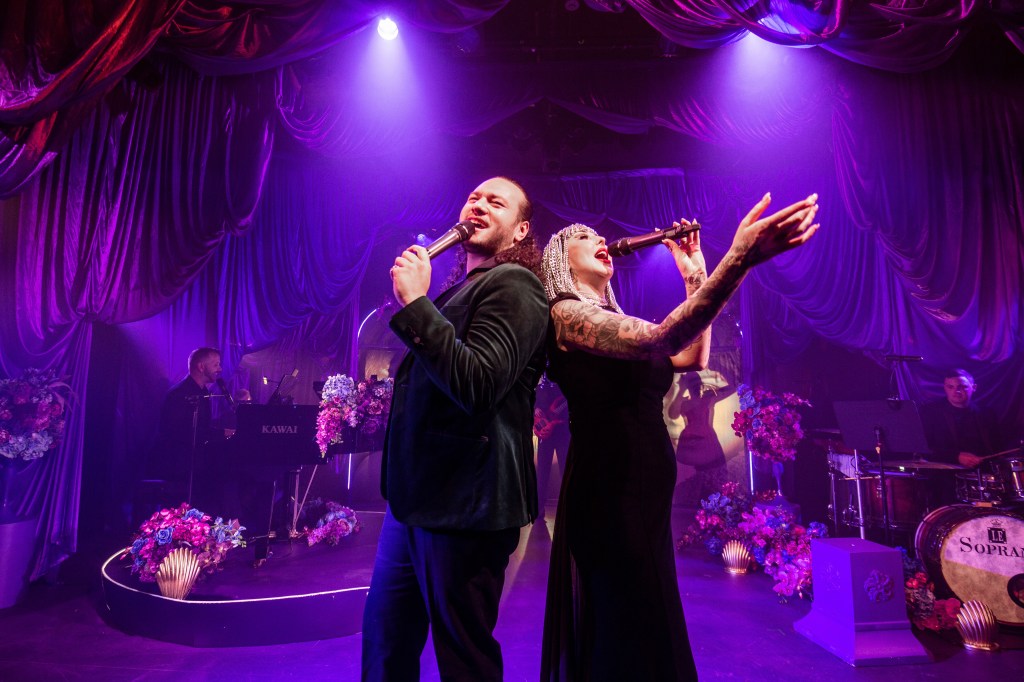
Stellar Perry & Tana Laga’aia. Photo: John McRae. Designer Brendan De La Hay delivers a set that more than meets the material, with Peter Rubie’s lighting providing some standout moments. The stage is dressed in soft, luxurious violets, magentas, lavenders and pinks, anchored by three classic portraits of Streisand framed at the back. It’s a space clearly designed for divas to rule — and they do. After the disappointing lack of design in last year’s Sondheim cabaret Being Alive, it’s refreshing to see so much care and attention lavished here.
The show also embraces a level of camp befitting the artist whose face launched a thousand drag queens. The heightened emotions of these songs, and the unrestrained passion of Streisand’s delivery, are easy to mock — yet they stubbornly resist the cynicism and numbness of modern life. Streisand’s music insists on embracing life’s extremes, and this production rides that emotional roller coaster with conviction: heartbreak, yearning, determination and joy in equal measure.
Lovers of big voices will be in cabaret heaven. Streisand devotees will be lip-synching in their seats. No one is raining on this hit parade.
-
Subscribe
Subscribed
Have a WordPress.com account? Log in now.

